Are Moroccan Dads the Funniest Unintended Comedians?
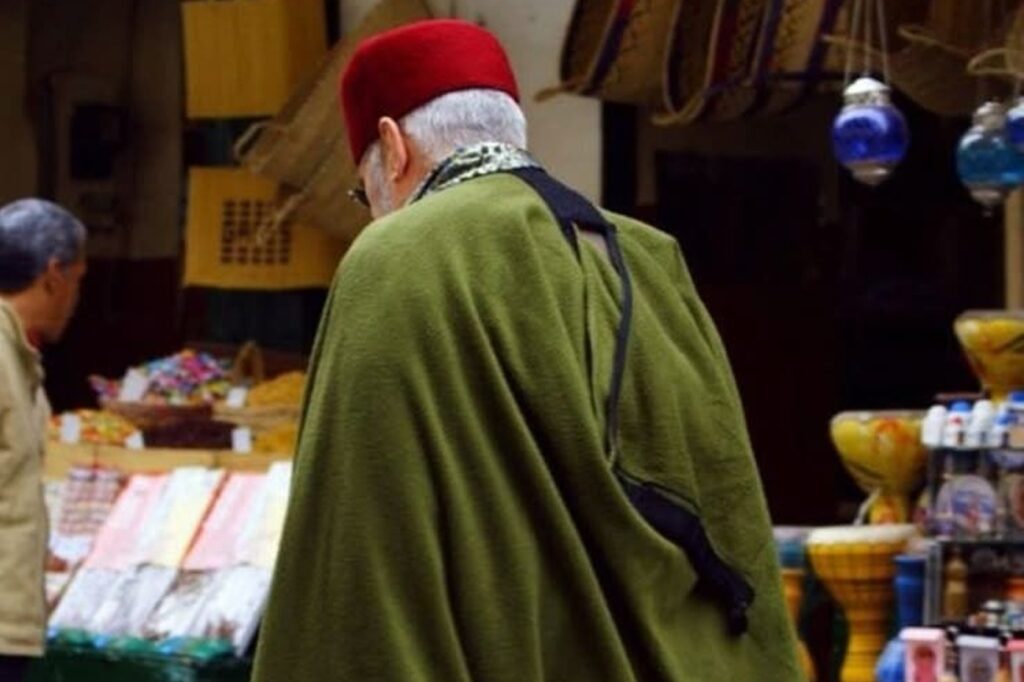
Moroccan dads may not try to be funny, but their daily habits turn them into the ultimate comedians. Fez– If you’ve ever met a Moroccan dad, you know one thing for sure: they are accidental comedic geniuses. They don’t try to be funny, yet every conversation, reaction, and life lesson somehow turns into a full-on stand-up routine. Let’s break down why Moroccan dads are the funniest unintended comedians. The mysterious Wi-Fi obsession Moroccan dads have a love-hate relationship with Wi-Fi. They claim they don’t use it, yet the second the connection slows down, they turn into IT specialists. “Why is the internet slow?” “Are you downloading the whole country?” And let’s not forget their special move: disconnecting the router as a punishment. Because clearly, bad grades are caused by too much internet, not too little studying. Their legendary negotiation skills Moroccan dads believe that no price is final. Whether at the souk or a luxury store, bargaining is a national sport. Shopkeeper: “This jacket is 500 dirhams.” Dad: “I’ll give you 100.” Shopkeeper: “Sir, this is a fixed-price store.” Dad: “Okay, 150, final offer.” Even at home, they negotiate everything. You ask for 200 dirhams? Expect a long lecture on “the value of money” before receiving exactly 20 dirhams and a pat on the back. Their legendary weather forecasting skills Moroccan dads don’t need weather apps. Their knee pain, the way the wind blows, or a random glance at the sky is more accurate than any meteorologist. You: “Should I take a jacket?” Dad: “No need, it won’t rain.” (10 minutes later, it’s pouring.) Dad: “This rain is fake. Back in my day, rain was REAL.” Their unique driving style Moroccan dads drive like they have VIP access to every road. Seatbelts? Optional (for him, not you). Speed limits? A suggestion. Honking? A language. And let’s not forget their commentary: “This guy found his license in a trash can.” “If I were the police, half of these drivers would be arrested.” “Back in my day, roads were empty. Now? Chaos!” Meanwhile, their favorite driving maneuver? Slowing down to stare at the construction site as if they’ve been personally hired to inspect progress. Their iconic fashion choices No one rocks pajamas with sandals quite like a Moroccan dad. Whether he’s picking you up from school or hosting guests, comfort is king. And if he’s wearing a djellaba? He’s officially in serious dad mode. Moroccan dads are unintentionally the funniest people on Earth. Their quirks, wisdom, and unmatched confidence make every interaction a comedy show. And the best part? They don’t even know they’re funny. Read also: Moroccan Culture & Elders: A Bond of Respect and Care
The Case for Being Unapologetically Single
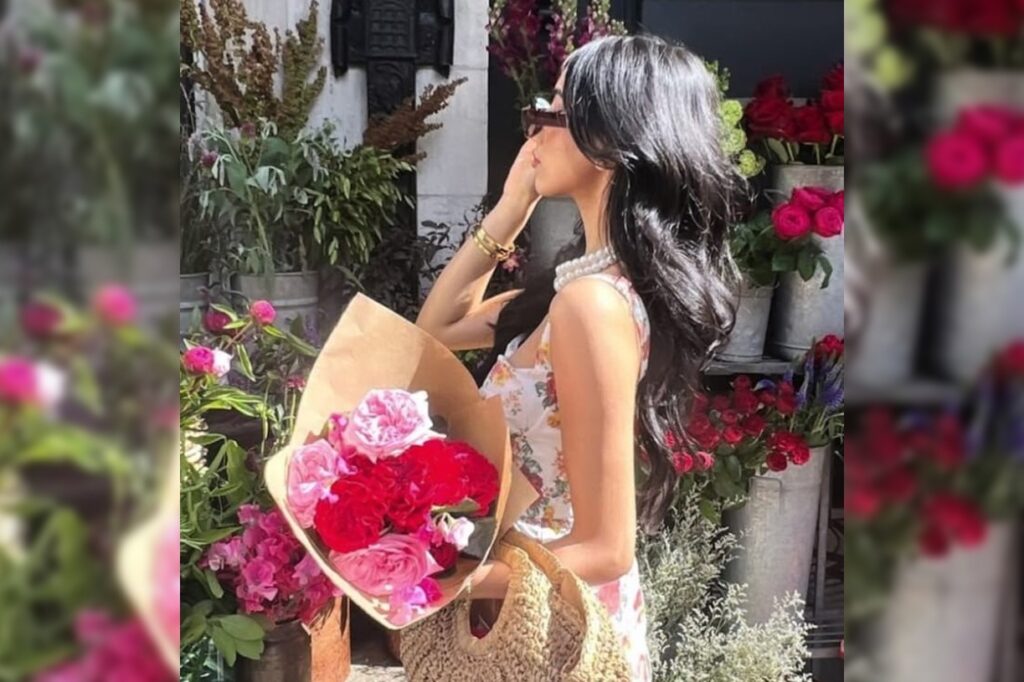
Some paths in life are meant to be walked solo, and that might just be the best choice. Fez– In a world that often defines success through relationships, be it romantic, familial, or social; being unapologetically single can feel like a rebellious act. We are constantly bombarded by the idea that happiness is incomplete without a partner, yet what if we’ve been sold an idea that only limits us? Singlehood, in its purest form, isn’t a void, it’s a powerful choice. It’s a conscious decision to embrace solitude, growth, and freedom without feeling the societal need to justify it. Yet, for many women, the pressure to be in a relationship is overwhelming. From dating apps to movies, the cultural narrative around love often reinforces the belief that happiness is only attainable in pairs. But why should our happiness depend on another person? When you’re single, you are free from the expectations that come with a partner. You are not defined by someone else’s idea of who you should be or how you should behave. You can set your own rules, pursue your passions, and make decisions based on your desires, not someone else’s needs. In a way, singlehood offers a chance to rediscover yourself without the noise of external expectations. Single life also provides the rare luxury of time; time to work on your personal growth, to strengthen your friendships, and to explore your ambitions without compromise. How often do we hear about women who feel stifled in relationships because their dreams and goals have to take a back seat? When you’re single, you are the CEO of your life, unencumbered by negotiations and sacrifices. There’s an underlying myth in our culture: the idea that a relationship completes us. But who decided that we’re incomplete in the first place? Society pushes this narrative, but let’s be clear, it’s a myth we don’t need to buy into. Being single isn’t about lacking something, it’s about being whole, independent, and content in your own skin. When we look at relationships through a lens of completeness, we forget that true fulfillment comes from within. We must challenge this narrative that suggests we need someone else to be whole. In fact, being unapologetically single allows us to become the fullest versions of ourselves, free from the suffocating expectations of conventional love. There’s an undeniable strength in solitude. When we’re alone, we are given the space to breathe, reflect, and truly know ourselves. Far from loneliness, singlehood offers empowerment. It’s not about being isolated, but about choosing independence. The solitude in single life often reveals more about who we are and what we want than any relationship ever could. Being unapologetically single is a stance of strength and confidence, one that says: “I’m enough as I am, and I don’t need validation from anyone else.” It’s a bold declaration of self-worth and a refusal to let society dictate what makes a person valuable. So, to all the single women or men out there, embrace your solo journey. It’s not a waiting room for a relationship; it’s a chapter in which you learn, grow, and thrive. Read also: The Clay Jars That Kept Thirst Away
The Silent Battles Men and Women Face

Behind every interaction between men and women lies a quiet struggle, shaped by years of societal pressure and unspoken rules. Fez – There’s a quiet tension that exists between men and women, one that often goes unnoticed but is felt in countless ways. It’s not a battle fought with words or fists, but a deeper, unspoken conflict, one that has existed for centuries, yet continues to shape our daily lives. The truth is, men and women are always in a silent battle, even if we don’t always realize it. This isn’t about domination or power. It’s about identity. Men and women have spent years being shaped by society’s expectations of what they should be. From the moment we’re born, we are taught how to behave, how to express ourselves, and what roles we must play. Men are encouraged to be tough, unemotional, and assertive. Women are taught to be gentle, caring, and nurturing. These expectations come with their own set of pressures and frustrations, creating a divide between the two. For men, this means they often feel they have to suppress their emotions, bury their vulnerabilities, and present themselves as the “strong” one. Society tells them that expressing weakness is a form of failure. Yet, in their silence, they are left fighting with their own feelings, battling a world that expects them to be something they may never feel they can truly be. For women, the battle is different. They’re often expected to juggle multiple roles: to be a caring partner, a dedicated mother, and a successful professional. Society places immense value on their ability to multitask and remain emotionally available at all times. The pressure to meet these expectations can feel suffocating, and any attempt to step outside the box is met with judgment. In this quiet struggle, women often find themselves questioning their worth and their place in the world. This silent battle extends beyond expectations. It’s in the way men and women interact with each other, the way they sometimes struggle to understand each other’s experiences. Men might feel they don’t have the space to express their true selves without being labeled as “weak,” while women might feel their voices are ignored or dismissed. Both sides have different battles, but they stem from the same underlying issue: a lack of understanding and the constant pressure to fit into roles that don’t truly reflect who they are. It’s not a simple fight. It’s a complex web of expectations, insecurities, and frustrations that both men and women face. However, the solution isn’t winning or losing. It’s about creating a world where both sides can feel free to be themselves, without the constant need for comparison or judgment. Ultimately, the battle isn’t about men versus women. It’s about a world that demands we be more than what we are. It’s time to break the silence, understand each other’s struggles, and realize that we’re all just trying to find our place in a world that expects too much of us all. Read also: Why Moroccan Moms Are Our Ultimate Life Coaches
Unspoken Cultural Rules Moroccans Follow Without Question
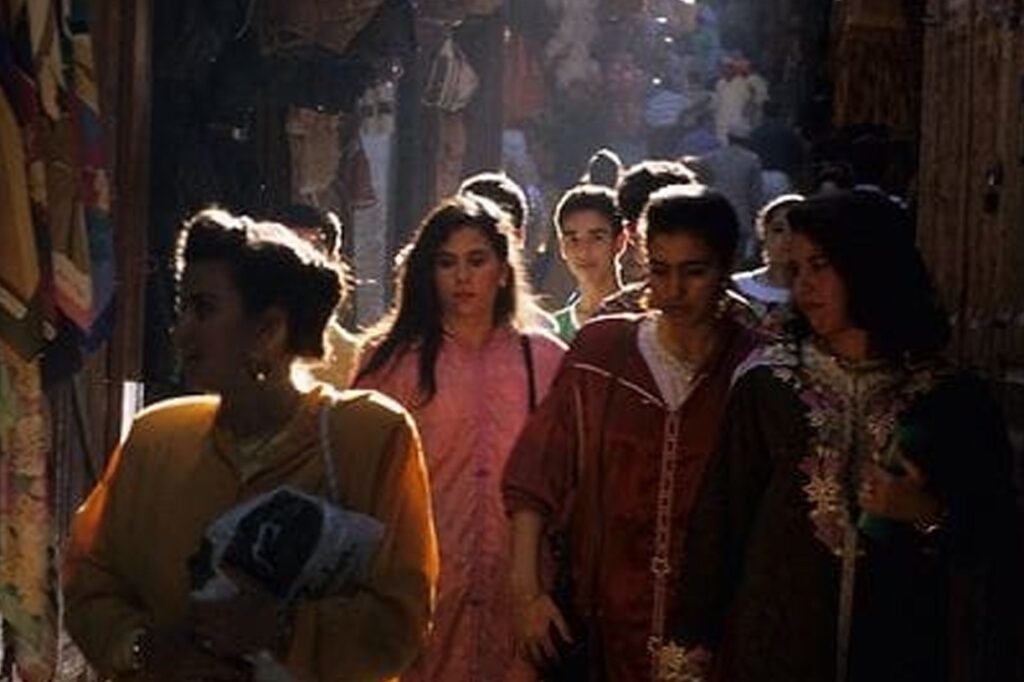
Some rules never make it into books or on signs, but people follow them every day. Fez– You walk into a Moroccan home. You sit. You smile. You drink the tea they offer you, even if you don’t want it. You thank them like they saved your life. You don’t think about it. They don’t either. But this is a rule. A rule nobody wrote. A rule nobody questioned. In Morocco, life moves under a sky full of unspoken rules. They are older than anyone alive today. They hide inside every meal, every greeting, and every goodbye. They live in hands that push more food into your plate, in eyes that avoid certain looks, in words that slip between jokes and silence. You can’t visit someone empty-handed. You must bring sweets, fruit, or at least something small. It doesn’t matter if they say, “don’t bring anything.” They don’t mean it. Everyone knows this, but nobody says it. When you eat with people, you wash your hands. You eat from your side of the plate. Your right hand reaches for the food. Your left hand stays quiet, resting on your knee or holding your glass. If you forget, someone’s eyes will remind you. In the street, greetings follow a rhythm. “Salam Alaikom.” “Alaikum Asalam.” How are you? How is your family? How are your parents? Everyone is good? No matter what the answer truly is, it always ends in a “Alhamdoulillah.” This dance never stops. Strangers, neighbors, shopkeepers, even the man fixing his motorbike, everyone knows the steps. You can’t escape this rule, even if you’re tired or angry. Silence feels too heavy. When a guest leaves, the hosts walk them to the door. Sometimes, they walk them halfway down the street. Nobody asks why. This is respect, love and this is the rule. During meals, the host keeps pushing food onto everyone’s plate. They say, “Eat! You ate nothing!” even when plates are full. Guests pretend they can’t eat more. But then they eat more. They follow the rules. When someone’s child gets sick, neighbors visit with prayers and whispers. They leave something sweet, even if they don’t stay long. They don’t announce these visits. They just appear – because this is what you do. In markets, haggling becomes an art. Buyers ask for a lower price, even if they can afford the full amount. Sellers pretend they can’t lower it, even if they can. Both sides know the game. Both sides follow the rule. Nobody teaches these things in school. No book explains them. They pass through stories, glances, and the silence between words. They create invisible threads between people, between generations, between strangers who feel like family for a few moments. These rules shape Morocco and build its heart, its soul, its warmth. They stay, even when nobody talks about them. They don’t need to, and that is their beauty. Read also: Moroccan Culture & Elders: A Bond of Respect and Care
Moroccan Culture & Elders: A Bond of Respect and Care
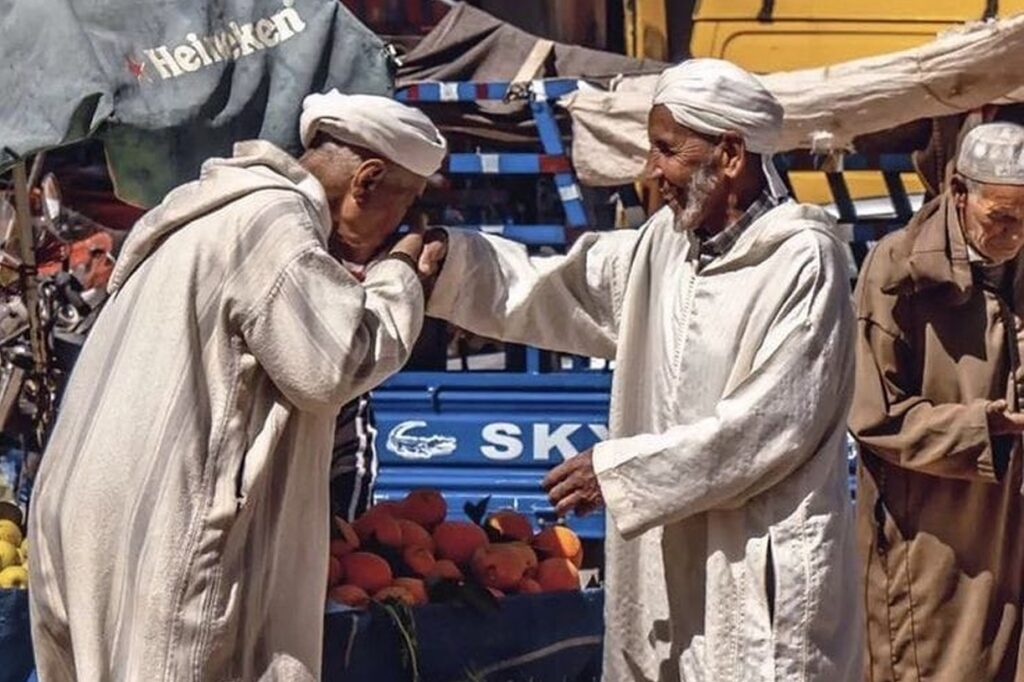
In Morocco, growing old is not a fear, it’s an honor carried with pride and love. Fez – In Morocco, respecting elders is not just a polite gesture. It is part of life and a rule written deep in the hearts of every Moroccan. From small villages hidden in the mountains to busy cities full of noise and rush, this respect stays strong. It holds families together and shapes how children speak, how they sit, and how they live. Moroccan homes often include three or even four generations under one roof. Grandparents, parents, and children share meals, stories, and moments. In many countries, elders live alone or in care homes. In Morocco, this idea feels cold and impossible. Elders stay with their families. Their wisdom guides younger generations. Their words hold weight. Their presence brings blessings. In Morocco, most elders live with their children. This is not because they need help only. It is because Moroccan culture sees elders as a treasure. People believe their prayers bring luck. Their advice brings success. Their stories carry history. Every wrinkle on their faces tells a tale of struggle, love, and survival. In traditional Moroccan society, respect for elders appears in daily life. Young people stand when an elder enters the room. They lower their voices when speaking to them. They offer the best seat and the first piece of food. In gatherings, elders speak first. No one interrupts. In public places, strangers rush to help elderly people cross the street, carry bags, or find a seat. Religious values also shape this respect. Islam teaches kindness to parents and elders. The Quran and Hadith remind people that serving parents opens the doors of heaven. Moroccans believe that even a simple smile to an elder brings blessings. But respect is not only about actions. It is about emotions too. Elders feel loved. They feel important. They feel seen. Moroccan families do not push their elders aside when they grow old. They invite them into every conversation, every celebration, and every decision. Even in modern times, when life moves fast and traditions face challenges, this respect stays alive. The majority of Moroccan youth believe caring for parents is a personal duty, not a social pressure. This proves that love for elders is more than tradition. It is a feeling passed down like a precious family heirloom. In Morocco, elders are not a burden. They are roots. They hold the family tree in place. They keep memories alive. They deserve every kind word, every gentle gesture, and every ounce of respect. In this land, respecting elders is not a choice. It is love in action. Read also: The Cherished Role of the ‘Naffar’ During Ramadan
The Loneliness Epidemic: Are We More Disconnected Than Ever?

It’s not the silence that hurts the most, it’s the noise without meaning. Fez– There’s a strange irony in our world today. We are more connected than ever, one tap away from a friend’s vacation photos, a cousin’s new baby, or a celebrity’s morning coffee order. Yet, somehow, we’ve never felt more alone. Loneliness isn’t just about being alone; it’s about feeling unseen, unheard, and disconnected. And let’s be real, we’ve all been there. Maybe it’s that moment when you scroll through Instagram, watching everyone live their best lives while you sit in bed, wondering if you should order another takeout. Or when you’re in a crowded cafe, surrounded by chatter, yet feeling like you don’t belong anywhere. The number of people feeling lonely has increased and it’s even higher for Gen Z, the most “connected” generation in history. But why? Blame it on the digital age, where likes and emojis have replaced deep conversations. Or maybe it’s the fast-paced culture, where everyone is “too busy” to check-in. We live in a world where friendships are often reduced to blue ticks and short replies, “Let’s catch up soon!” (spoiler: soon never comes). Social media tricks us into feeling connected. We see updates, we comment, we react. But do we really connect? Can a heart emoji on a sad post replace a real hug? There’s also the pressure to always appear to be happy, making loneliness even worse. No one posts about eating alone on a Friday night or feeling like they have no one to call. Instead, we see highlight reels, and we convince ourselves that we’re the only ones struggling. So, what’s the fix? Let’s start by being real: Text that friend you’ve been meaning to call. Tell them you miss them. Drop the “Let’s meet soon” and actually set a date. Next, detach from the screen: The next time you’re at a cafe, resist the urge to scroll. Look around. Smile at a stranger. (Yes, it feels weird, but trust me, it matters.) Prioritize quality over quantity: You don’t need a hundred friends. You need real ones. The ones who check in, who listen, who make you feel seen. Join Something: A book club, a sports team, a volunteer group, anything that brings people together. Community is the best antidote to loneliness. Loneliness isn’t just a feeling, it’s a wake-up call. It’s your heart telling you that something is missing. And the good news? You can do something about it. So, let’s put down our phones, open our hearts, and start truly connecting because we all just want to feel like we belong. Read also: The Ultimate Glow-Up Checklist
Why Do Moroccans Love Gossip?
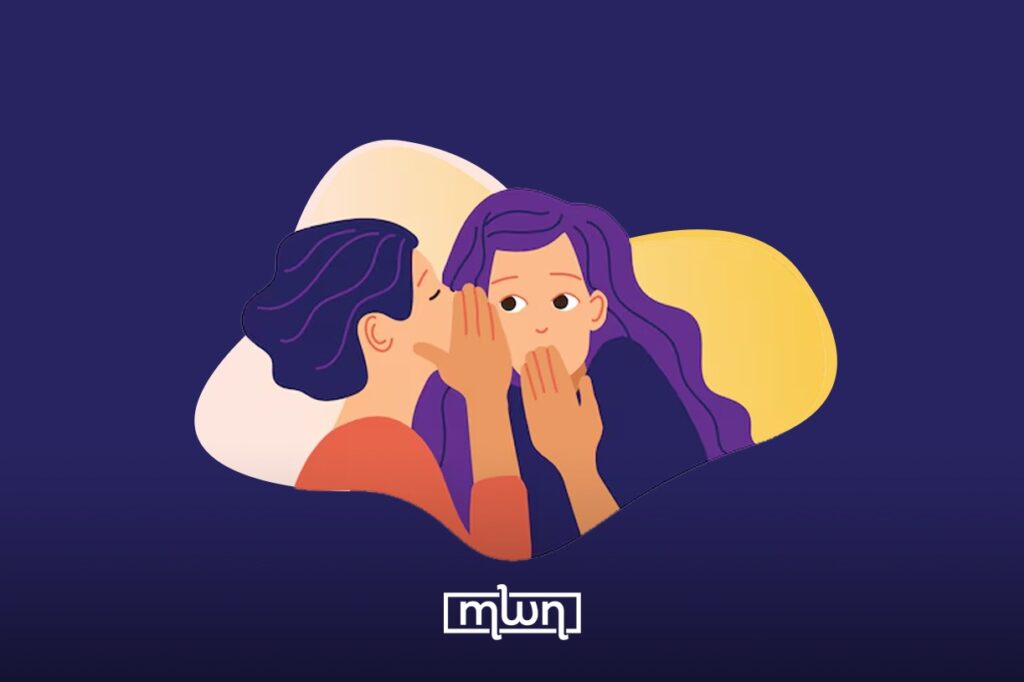
In every Moroccan home, café, and street corner, there’s one thing you’ll always hear, but never admit you love. Fez – If you live in Morocco or have Moroccan friends, you know one thing for sure: Moroccans love to gossip. It’s everywhere, at home, in the café, in the souk, and even at weddings and funerals. But why do we love it so much? A social tradition Gossip is not just talk; it’s part of our culture. In Morocco, people live close to each other. Families are big, neighbors know everything, and everyone is connected. In small towns, if someone sneezes, the whole street knows. Even in big cities, the habit has endured. We grow up watching our parents and grandparents talk about people. Not in a bad way, just sharing news. “Did you hear about Fatima’s daughter? She got engaged!” or “I saw Ahmed driving a new car. Where did he get the money?” Such inquisitive comments are natural in conversations across Morocco. The café culture For men, the café is more than a place to drink coffee. It’s a meeting spot, a news center. They sit for hours, sip their tea, and discuss everything, politics, football, and of course, people’s lives. If a neighbor buys a new house, if someone got divorced, or if there’s a new couple in town, they know. Women’s gatherings For women, gossip flows in a different way. The hair salon, the hammam, weddings, baby showers, these are all places where stories spread fast. A woman visits a friend, and after five minutes, the real conversation starts: “Did you see what she wore?” “Her son failed his exams.” “They say her husband is jobless.” Social media Before, gossip stayed between people. Now, it’s online. Facebook, Instagram, TikTok, and Moroccans use them all to share news, rumors, and scandals. A small fight in the street? Someone films it. A wedding dress that’s too modern? People comment. A celebrity did do something strange? Everyone talks. Social media turned gossip into a national sport. One click, and the whole country knows your business. Life is not always easy. Gossip is fun. It’s a way to escape problems, to laugh, to connect. When people sit together and talk about others, they feel entertained. Some say it’s bad, but let’s be honest, sometimes it makes life more exciting. Is gossip bad? Not always. Sharing news is normal. But when gossip turns into lies, jealousy, or destroys someone’s life, that’s when it becomes dangerous. Moroccans will never stop gossiping. It’s in our blood, part of who we are. The only question is: today, are you the one gossiping, or the one being gossiped about? Read also: The Art of Moroccan Mom’s Side-Eye
The Double Life of the Moroccan Girl: Who We Are vs. Who We Have to Be
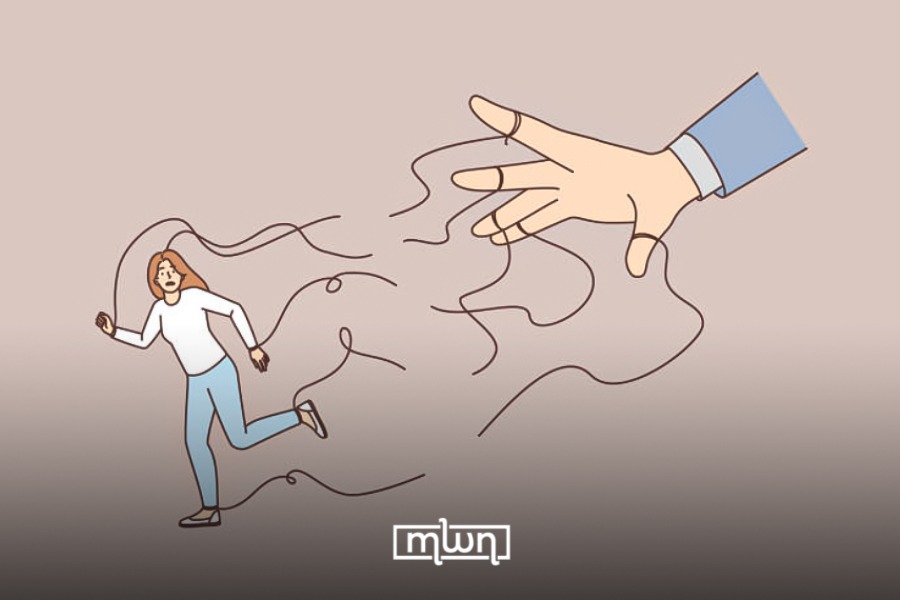
The lines between who we are and who we’re told to be blur every day, and the weight of this contradiction is unbearable. Fez – Moroccan girls often live with a constant weight on their shoulders. We are forced to balance two different identities, one for the world and one for ourselves. At home, we laugh freely, dream big, and express our personalities without holding back. But once we step outside, everything changes. We lower our voices, adjust our clothes, and become careful with our words and actions. Society watches closely, ready to judge, to shame, to remind us of the “proper” way to behave. But perfect for who? For the same people who break the rules behind closed doors? For the same men who preach respect but seek out what they claim to condemn? For the same women who judge us but defend their own when they break the same so-called rules? It’s a cruel game. They tell us to be pure, yet they give men the freedom to do whatever they want. They tell us to respect tradition, but they bend those traditions when it suits them. They say family honor depends on us, but where is their honor? Why does it never seem to depend on them? And if we dare to live authentically, we are labeled. If we speak up, we are “too much.” If we remain silent, we are “weak.” If we choose love, we are “shameless.” If we wait, we are “old.” No matter what we do, we lose. Every day, we watch as girls are forced to lie to survive. They pretend to be the “good” girl to avoid being disowned. They hide their struggles because of what others might say. They suffocate under a set of rules that even the rule-makers don’t follow. The question is: When will it stop? When will Moroccan girls be allowed to live freely, without the constant fear of judgment? When will society confront its hypocrisy? When will we be allowed to just be? It’s time for a change, not only in Morocco, but girls all over the world who face these pressures. It’s time to call out these double standards. It’s time to refuse to play this game anymore. Moroccan girls deserve to live without pretending. They deserve to be themselves, everywhere they go. Read also: The Truth About Love: Why Waiting for a Prince Won’t Make You a Princess