Marrakech – Once reserved for sacred moments and family celebrations, Moroccan henna is stepping confidently into the global spotlight, and it’s doing so with flair.
Across Morocco, from intimate wedding ceremonies to bustling city streets, henna remains a powerful symbol of joy, protection, and femininity.
Traditionally applied on the eve of weddings, births, and religious holidays, the deep reddish-brown designs are believed to ward off bad luck and mark life’s happiest transitions.
But today, henna has evolved beyond ritual, becoming a statement of identity, fashion, and cultural pride.
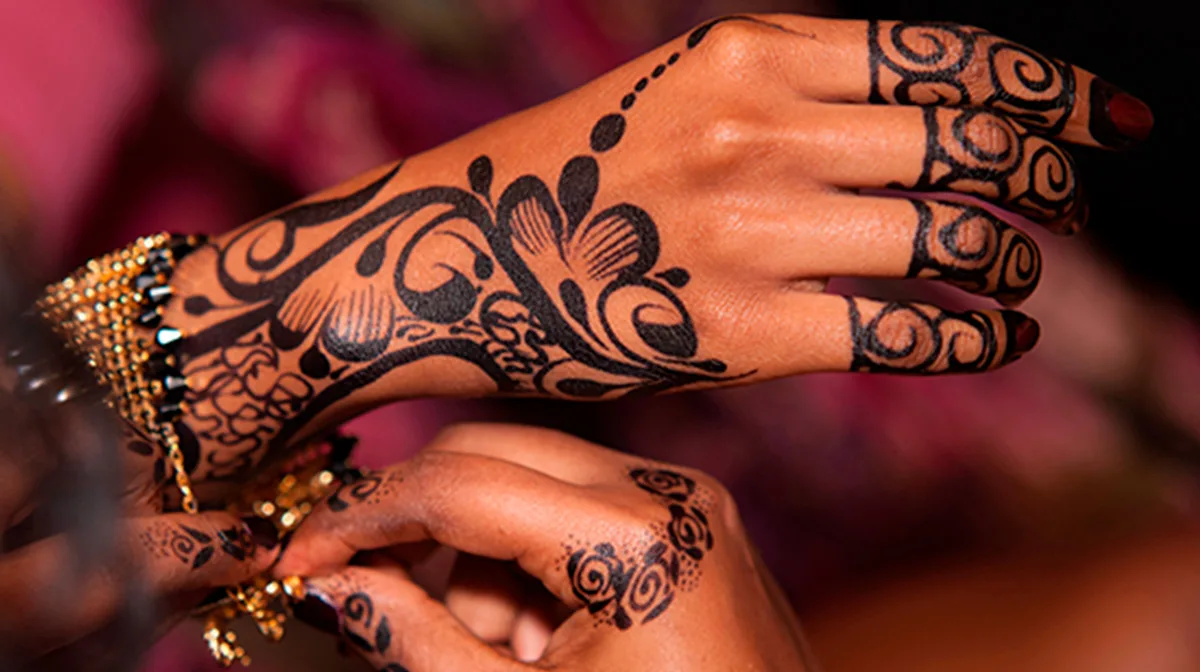
What sets Moroccan henna apart is its simplicity and strength. Unlike the intricate, lace-like patterns seen elsewhere, Moroccan designs often favor bold lines, geometric shapes, and symbolic motifs, a visual language rooted in Amazigh heritage.
Each pattern tells a story, whether of fertility, protection, or connection to nature, turning skin into a living canvas.
In recent years, henna has found new life through festivals, pop-up art spaces, and social media, where young Moroccans reinterpret ancestral symbols with a modern twist.
Fashion shoots, music videos, and even international runways now draw inspiration from henna motifs, blending tradition with contemporary aesthetics.
The result is a cultural revival that feels organic, playful, and unapologetically Moroccan.
Beyond its beauty, henna’s natural and eco-friendly appeal resonates strongly with a generation increasingly drawn to slow beauty and ancestral rituals.
In an age of temporary trends and fast fashion, henna stands out precisely because it fades, reminding wearers that beauty can be powerful without being permanent.
As Morocco continues to assert its cultural influence across Africa and beyond, henna remains one of its most recognizable yet evolving symbols.
Rooted in the past but written in the present, Moroccan henna proves that some traditions don’t need reinvention, they just need room to breathe.