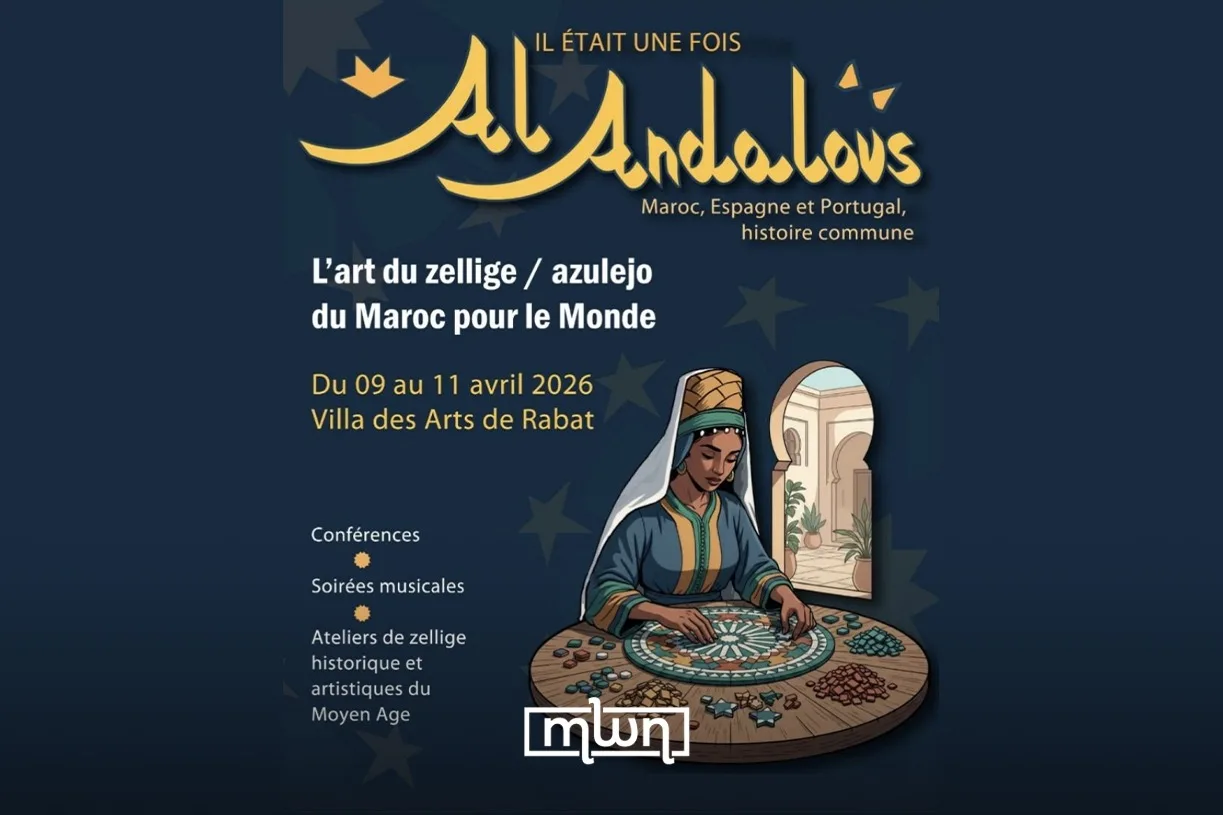
Fez — Rabat is hosting the third edition of “Il était une fois Al Andalous” (Once Upon a Time Al-Andalus) today at Villa des Arts, launching a three-day cultural program dedicated to the art of zellige and its Iberian counterpart, azulejo.
The event runs from today to Saturday, April 11, under the theme “The art of zellige/azulejo — from Morocco to the world,” according to event listings shared by organizers and partner platforms.
Held at Villa des Arts in Rabat, the gathering places Moroccan decorative heritage at the center of a wider story linking Morocco, Spain, and Portugal through centuries of artistic exchange.
Organizers described the program as a mix of conferences, musical evenings, and workshops aimed at exploring both the historical roots and contemporary relevance of the tradition.
A shared history in tilework
The focus on zellige and azulejo reflects a long-running cultural dialogue across the western Mediterranean. Zellige, known for its geometric compositions built from hand-cut glazed tiles, remains one of Morocco’s most recognizable artistic signatures. In the Iberian world, azulejo developed its own visual language while retaining clear historical ties to Islamic and North African decorative traditions.
This year’s Rabat edition appears to lean directly into that connection. Public event material describes the workshops as an exploration of a common history between Morocco, Spain, and Portugal, presenting tilework not only as ornament, but also as evidence of a shared civilizational memory.
Workshops, talks, and music
The event also promises hands-on experiences tied to traditional know-how. Organizers say visitors can expect workshops and public-facing activities designed to bring medieval artistic techniques closer to contemporary audiences. Musical programming is also part of the formula, reinforcing the broader Andalusian theme that links architecture, craft, and sound.
The choice of venue adds another layer to the event’s message. Villa des Arts is a cultural space created to preserve, promote, and make Moroccan artistic heritage accessible to the public. That mission fits neatly with a program built around transmission and historical memory.