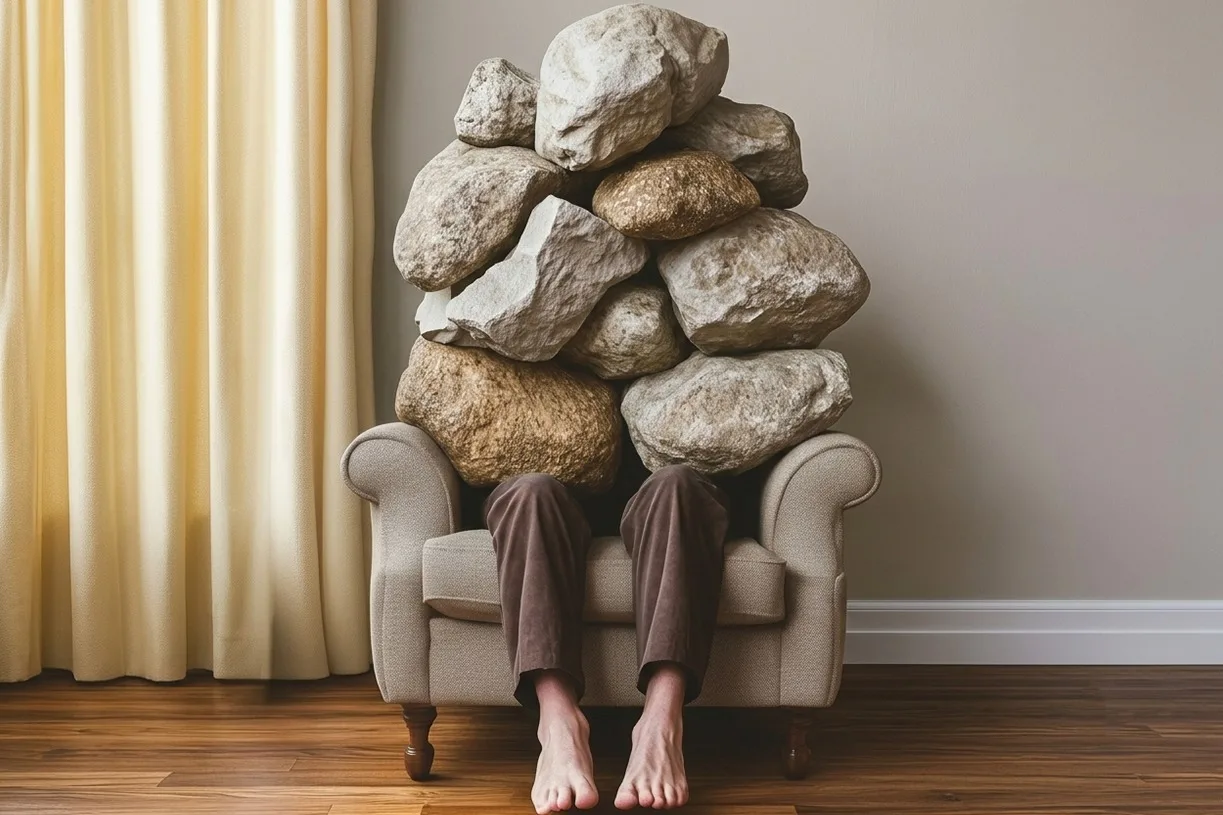
Casablanca – Every June, Men’s Health Month puts a spotlight on strength, fitness, and physical well-being. But behind that image of strength lies a quieter reality that is often overlooked, which is the emotional and mental pressure many men carry without saying a word.
Mental health remains one of the most important parts of the conversation, even if it is still the least openly discussed.
In many societies, men are often placed in a psychological framework that makes them more vulnerable in silence. This is not to undermine the emotional and psychological challenges faced by women, but rather to shed light on a segment of society whose struggles are often overlooked or under-discussed.
While both men and women experience emotional distress and can go through periods of depression, the way these experiences are socially received often differs significantly.
Women are generally given more space to express emotions, to cry, to speak openly, and to share what they feel. As simple as it sounds, this openness can play a meaningful role in easing emotional pressure. Not as a cure, but as a form of release that softens emotional intensity.
For many men, however, expressing vulnerability is far more complicated. In societies where masculinity is strongly associated with emotional restraint, crying or speaking openly about mental struggles is often stigmatized. In some cases, it is even interpreted as a loss of strength or masculinity.
This mindset, however, comes at a cost that extends far beyond emotional discomfort. It contributes to outcomes as severe as suicide.
A struggle that often goes unseen
Globally, men account for significantly higher suicide rates compared to women, and research consistently points to a combination of social, psychological, and structural factors behind this gap.
A 2021 report published by the World Health Organization (WHO) highlights this disparity clearly. The global age-standardized suicide rate was 12.3 per 100,000 for males compared to 5.6 per 100,000 for females, meaning the rate among men is roughly 2.2 times higher than among women.
This pattern is not limited to one region; it is observed across countries and income levels worldwide.
In Morocco, WHO estimates show a similar gender gap. The age-standardized suicide rate was 3.5 per 100,000 for males compared to 2.4 per 100,000 for females, with recorded figures indicating 633 suicides among men and 444 among women in 2021.
However, the report also notes that Morocco’s data quality is rated as “very low,” which is an important context when interpreting these figures.
Beyond the numbers, this gap also reflects a deeper societal issue. In many communities, stigma surrounding mental health and suicide can lead to underreporting or misclassification of cases, as families and institutions may avoid acknowledging suicide due to social or cultural pressure.
As a result, the real figures may be higher than official statistics suggest.
Ultimately, the issue is not only about statistics but about expectations. Society often places men within rigid roles: strong, productive, emotionally controlled, financially stable, and responsible for others. Yet at the same time, they are frequently discouraged from expressing fatigue, sadness, or emotional need.
This contradiction creates a silent pressure, where vulnerability is expected to remain hidden rather than acknowledged. And it is within that silence that the problem often deepens.
Breaking the cycle of silent pressure
This friction between rigid social expectations and the silent suffering of men is a core theme explored by Garrett Rossi in his 2026 Psychiatric Times article, “Men’s Mental Health: Redefining Strength in a Changing World.”
Rossi argues that modern society often places immense psychological pressure on men by narrowly linking their self-worth to financial productivity, social status, and emotional restraint. Within this framework, masculinity becomes less of an identity and more of a performance that must constantly be maintained.
When men struggle under the weight of economic anxiety and these expectations, their distress is not always expressed in familiar emotional terms. Instead of visible sadness or withdrawal, it is often internalized as self-blame or inadequacy, sometimes surfacing through irritability or anger, what clinicians describe as an “anger mask.”
Rossi’s approach suggests stepping away from trying to “fix” emotions in a direct way, and instead starting from what already exists in men’s everyday lives.
It also recognizes that emotional struggles are not always expressed in the same way, and that support can be more effective when it is adapted to how men tend to communicate stress and deal with pressure in practical, action-based ways rather than purely verbal expression.
Overall, the idea is not to redefine men, but to work with the reality they are already living in, where pressure is constant, expression is limited, and silence often replaces conversation until things reach a breaking point.
At the end of the day, mental health is not a question of one gender over another, but a shared human reality that deserves equal attention, understanding, and support for both men and women.