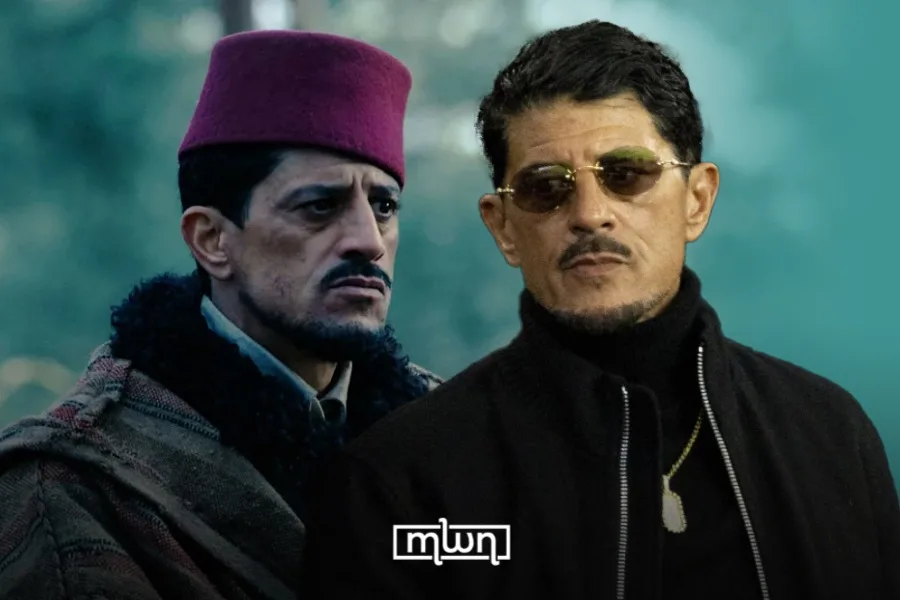
Fez — Said Taghmaoui has built one of the most distinctive careers among actors of Moroccan origin, moving from the raw urgency of French cinema to the global machinery of Hollywood without losing the edge that first made him impossible to ignore.
Born in France to Moroccan immigrant parents, Taghmaoui grew up far from the polished world of red carpets. Before acting, he pursued boxing and was once ranked among France’s top fighters in his category, according to biographical profiles of the actor.
That background matters because it still shapes his screen presence. Taghmaoui often brings a fighter’s alertness to his roles: sharp, physical, guarded, and emotionally direct. Whether playing a streetwise young man, a soldier, a guide, or a mysterious power broker, he rarely disappears into softness.
A breakthrough with ‘La Haine’
Taghmaoui’s defining breakthrough came with “La Haine,” Mathieu Kassovitz’s 1995 black-and-white drama about alienation, police violence, and life in the French suburbs. The film competed at Cannes and won the 1995 Award for Best Director, becoming one of the most influential French films of its generation.
In the film, Taghmaoui played Saïd, one of three young men moving through a tense day after riots in a housing project. His performance carried humor, restlessness, and anger, helping make the character feel both specific and symbolic.
For many viewers, “La Haine” was not only a film. It was a confrontation with France’s social fractures. For Taghmaoui, it became a passport and a burden: the role opened doors, but it also tied him to questions of race, class, and representation that followed him throughout his career.
Crossing into Hollywood
Unlike many actors who remain identified with one national cinema, Taghmaoui pushed outward. He appeared in American productions including “Three Kings,” “G.I. Joe: The Rise of Cobra,” “Wonder Woman,” and “John Wick: Chapter 3 – Parabellum,” building a career across languages and genres.
His role as Sameer in “Wonder Woman” introduced him to a new generation of global audiences. The character, a charming fighter and storyteller, gave Taghmaoui room to balance charisma with melancholy, turning a supporting role into one of the film’s memorable human touches.
In 2018, the Academy of Motion Picture Arts and Sciences invited Taghmaoui to join its membership class, listing him among actors recognized for “Wonder Woman” and “Three Kings.”
Still visible in a changing industry
Taghmaoui’s more recent credits show that he remains active across mainstream and international projects. AlloCiné lists recent roles in “The Family Plan,” “The Killer,” and “Tin Soldier,” reflecting his continued presence in action-driven and global productions.
His career also carries a deeper significance for Moroccan and North African visibility on screen. Long before diversity became a central Hollywood talking point, Taghmaoui was navigating the narrow space offered to Arab and Muslim actors, often pushing against roles shaped by stereotypes.
That makes his celebrity spotlight more than a story of personal success.
Taghmaoui represents a generation of Moroccan diaspora artists who entered global cinema through struggle, reinvention, and persistence. His path from the banlieues to Hollywood remains a reminder that talent can cross borders, even when the industry is slow to make room.