Rabat – For Sophia El Bahja, a photograph is never just an image, but a complete universe, built from concept, casting, styling, location, and light long before the shutter is pressed.
Through her lens, Morocco appears as a country in dialogue with itself, where centuries-old heritage shouldn’t sit untouched, nor preserved behind glass, but worn, reinterpreted, and carried forward by a new generation.
From the medinas of Rabat to international magazine covers, El Bahja’s work moves between fashion editorials and personal artistic projects, always anchored in storytelling and identity.
In an interview with MWN Lifestyle magazine, El Bahja explained that her approach to photography was shaped as much by her experience in communication and cultural project development as by the camera itself.
For her, every image carries a wider narrative, purpose, and audience.
“I see myself as both a photographer and a visual storyteller, someone who brings together people, ideas, and creative disciplines to transform a concept into a meaningful body of work,” Sophia said.
Morocco through the eyes of Sophia El Bahja
Born in Rabat, El Bahja spent her childhood and student years in the capital before moving to Tangier to complete her engineering studies and develop her first creative projects.
She later returned to Rabat and Sale, with family ties also pulling her toward Marrakech and Casablanca.
“I would say I’ve experienced many different sides of Morocco, as well as cultures abroad,” she highlighted, adding that early travel with her family broadened her outlook considerably.
This is what drives much of her artistic mission: showing a generation that confidently expresses its identity while remaining rooted in tradition.
“I also hope people see the richness, creativity, and diversity of Moroccan youth beyond the stereotypes they might already know,” she added.
‘Marroki Export’ and ‘Rooted’
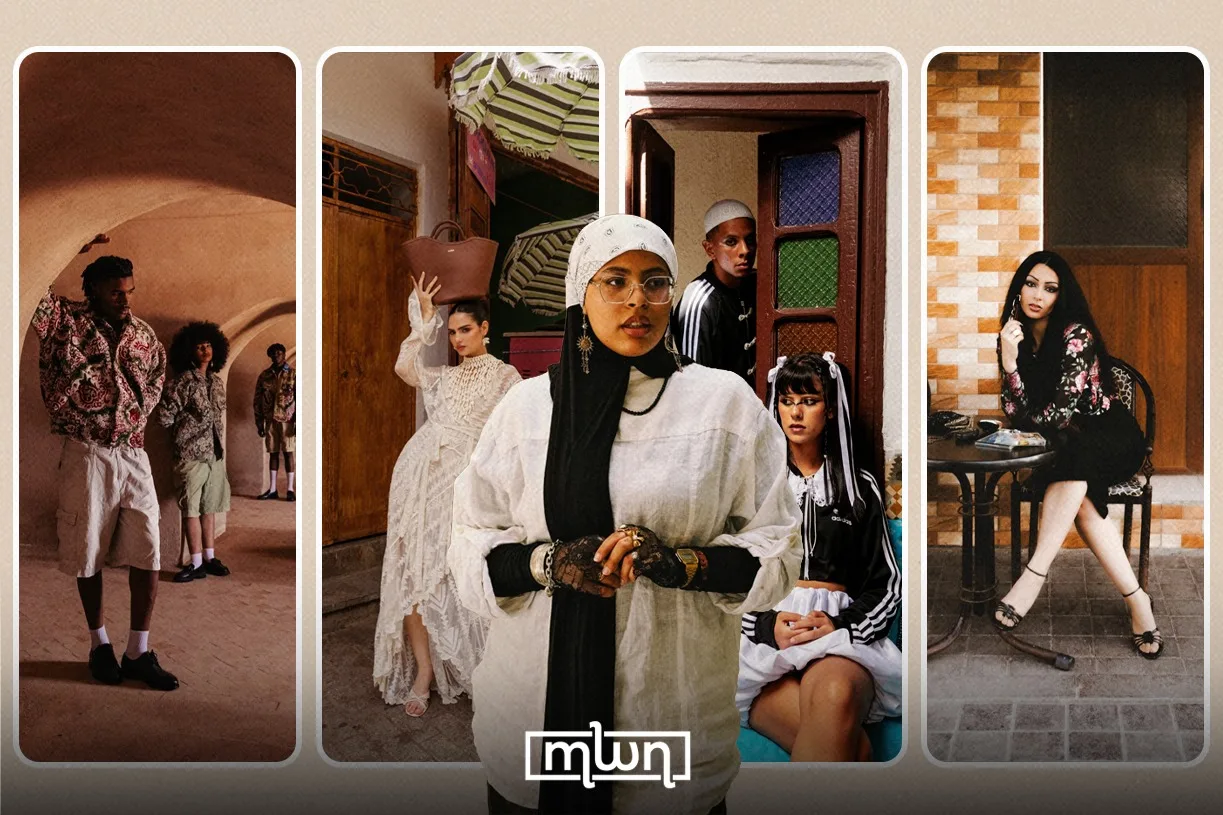
Among her body of work, El Bahja considers her personal project, “Marroki Export,” to be her most meaningful collaboration.
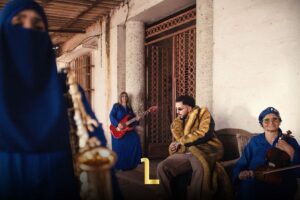
The series explores Moroccan identity through fashion, portraying how a new generation blends tradition with contemporary aesthetics, drawing from heritage, streetwear, and cultural symbolism.
“For me, it’s much more than a fashion editorial,” she said. “It’s a statement about identity, belonging, and the evolution of Moroccan culture through the eyes of today’s youth.”
That same instinct guided “Rooted,” an editorial featured by Hypebeast Style, in a historic monument corridor and the medina of Sale, with handcrafted jackets made from upcycled fabric.
Photographing the Atlas Lions for Onze Mondial magazine
One of the milestones of El Bahja’s career came when she was contacted to photograph footballers Achraf Hakimi, Yassine Bounou, and Mohamed Ouahbi for Onze Mondial’s special edition dedicated to the Moroccan national team, with Hakimi featured on the cover.
The timing made the shoot especially memorable.
“I had given birth to my second daughter only a month and a half earlier,” she recalled, describing it as a challenging period of adjusting to a newborn while caring for her older daughter. “But I knew I couldn’t miss such an opportunity.”
With her family’s support, the shoot came together smoothly.
“I’m incredibly grateful to have photographed such inspiring athletes, especially Achraf Hakimi, one of Morocco’s most internationally influential figures, for the cover of one of France and Europe’s most iconic football magazines,” she emphasized.
The challenge of shooting fashion and art in Morocco
Despite her growing list of collaborations, El Bahja admits to the obstacles facing photographers working in Morocco, mainly the difficulty of shooting freely in public or unconventional spaces.
“Current regulations can make that very difficult, and sometimes even discourage creativity before a project begins,” she stated.
For her, this is a structural issue that reaches beyond individual projects.
“If we want Morocco’s creative industry to continue growing internationally, the legal framework should support artists rather than limit them,” she said, adding that creativity depends on the freedom to explore ideas.
She also called for simplifying the necessary permit processes.
“Sometimes it feels so complicated that you can only navigate it if you have the right connections or you’re part of a large production company,” she acknowledged.
What shapes her visual identity
When asked about her influences, El Bahja points less to a single mentor or movement and more to repetition and practice.
Every personal project, she said, became a chance “to test new ideas, experiment with editing techniques, refine my artistic direction, and better understand what truly felt like me.”
She credits her experience in many different sides of Morocco, as well as cultures abroad
In making her very open-minded in the way she sees the world and approaches photography.
This exposure naturally appears in her work, as she leans more to creating a dialogue between cultures, generations, heritage, and contemporary aesthetics.
Over time, that process of trial and reflection is what built a visual style she now considers distinctly her own, one she describes as authentic and recognizable.
The takeaway
If there is one idea El Bahja hopes people take from her work, it is that culture is not static; it’s dynamic.
“I hope my work reminds people that culture isn’t something we inherit and preserve unchanged,” she said. “It’s something we live, reinterpret, and carry forward.”
It is a philosophy that runs through everything she creates, from intimate personal series like “Marroki Export” to magazine covers seen across Europe: Moroccan identity, she emphasized, is not fixed in the past.
It is being written, image by image, by the generation living it today.