Fez — Long before Moroccan designer Ihssan Ghailan brought her caftans to Milan, she was a little girl in Tangier playing with discarded fabric, cutting up her own clothes, and imagining designs that nobody else was wearing.
“I grew up among piles of colorful fabrics,” she recalled in a 2023 interview with Sayidaty magazine.
Her grandmother and mother both worked as seamstresses, surrounding her with sewing machines, colorful textiles, and the skills that would eventually shape her career.
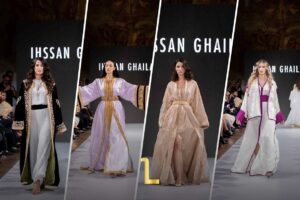
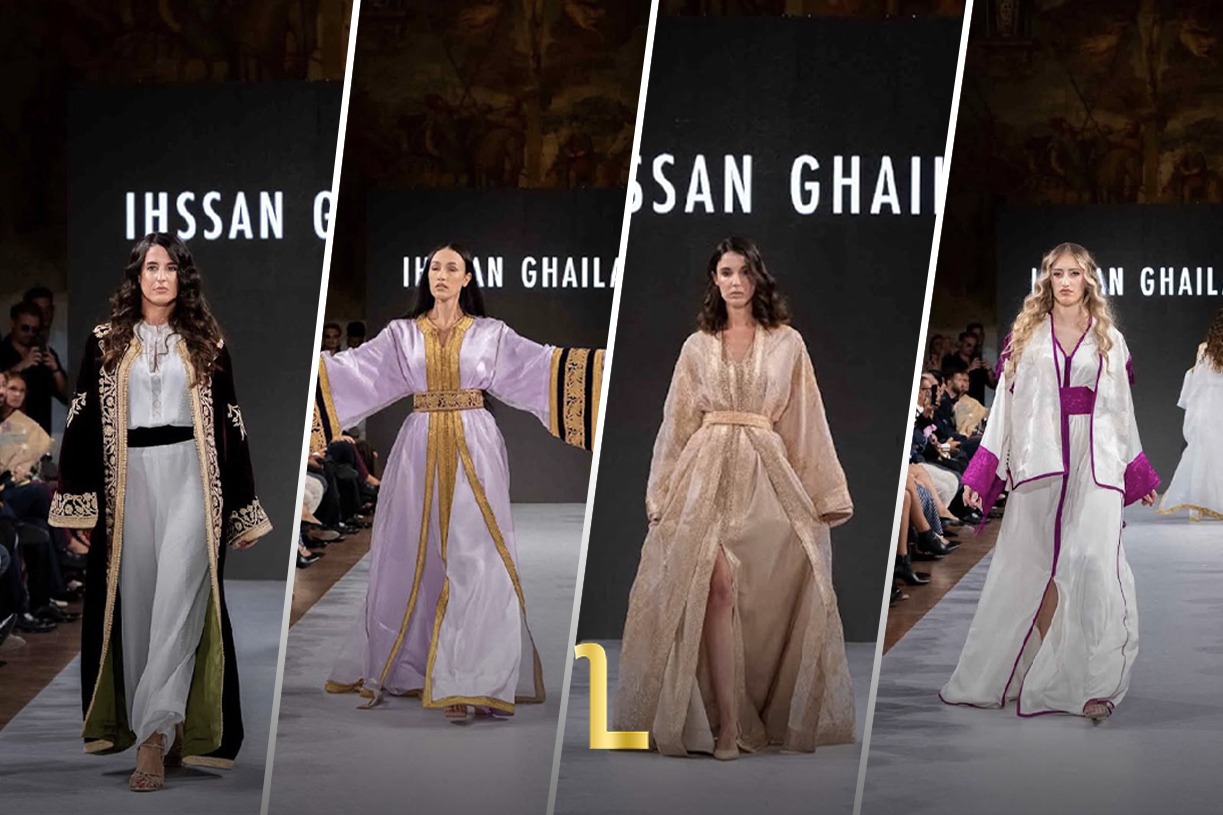
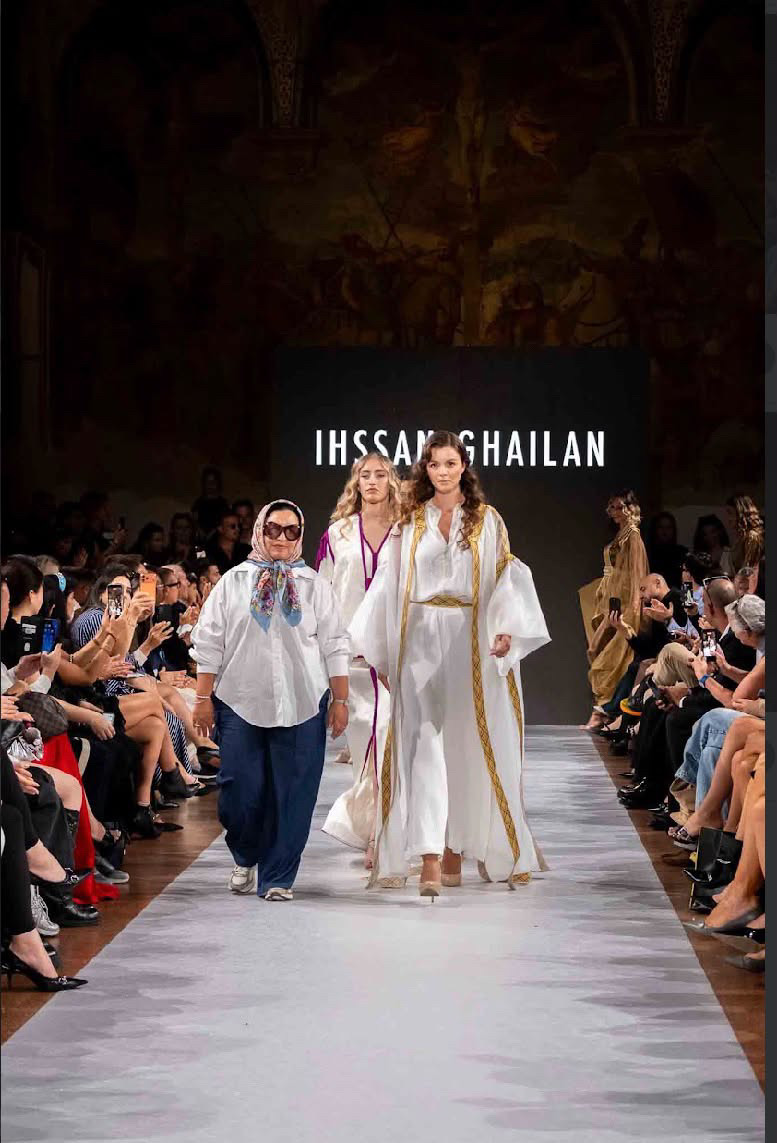
Nearly three decades later, Ghailan brought that family heritage to Italy with “Caftanesque Spring,” a collection she unveiled in Milan during the Spring/Summer 2027 fashion season in September.
The collection features spring colours inspired by Moroccan nature, alongside intricate embroidery, traditional weaving, and contemporary silhouettes.
But Ghailan’s approach goes beyond preserving traditional clothing. Throughout her career, she has explored how far the Moroccan caftan can evolve while remaining recognizably Moroccan.
The Moroccan caftan meets the world
Ghailan’s fascination with reinventing traditional clothing began long before her appearance in Milan.
As a child, she would cut, alter, and rearrange her clothes to create something different from what her friends wore.
That instinct continued into her professional career, where she experimented with the rules of Moroccan dress rather than simply following them.
In her earlier interview, she explained that she wanted to challenge established design conventions without stripping traditional garments of their identity.
One of her most memorable experiments came in 2000, when she traveled to Hong Kong for her first international fashion show.
There, she presented a collection blending the Moroccan caftan with the Japanese kimono, bringing two distinct clothing traditions into the same designs.
The experience marked an important moment in her career and helped shape her interest in combining Moroccan craftsmanship with influences from other cultures.
That philosophy continues in “Caftanesque Spring,” where traditional Moroccan techniques meet designs intended for contemporary international fashion.
Fez craftsmanship takes the spotlight in Milan
While Ghailan’s designs embrace different cultural influences, their craftsmanship remains rooted in Morocco.
Her latest collection incorporates ntaa, a traditional technique associated with Fez and distinguished by its elaborate gold embroidery.
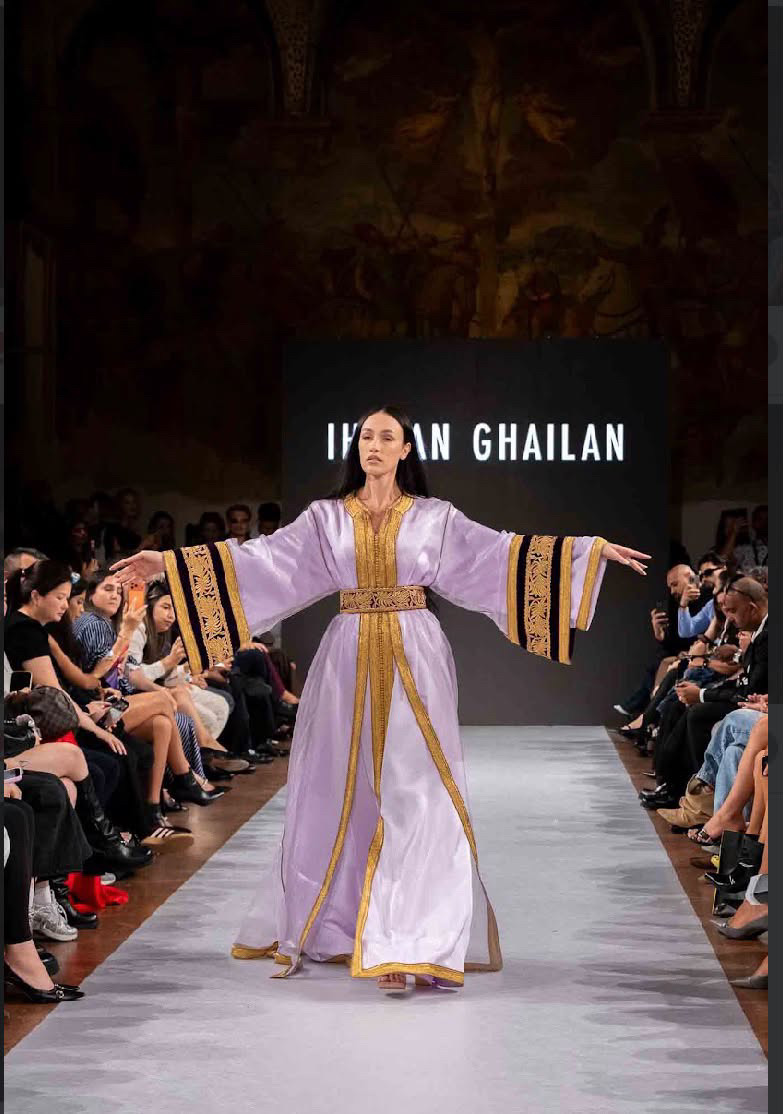
The designs also feature intricate hand embroidery, the skilled work of the maalem, delicate handmade randa, and sfifa braiding made from pure silk.
These elements transform the caftan into an elaborate garment that depends on the work of specialized artisans.
The collection also draws inspiration from Morocco’s natural colors, bringing a spring-inspired palette to traditional materials.
Such techniques represent far more than decorative details.
In 2025, UNESCO inscribed the Moroccan caftan and its associated traditions and craftsmanship on its Representative List of the Intangible Cultural Heritage of Humanity.
The recognition highlights the generations of weavers, tailors, embroiderers, and other artisans whose knowledge keeps the garment’s traditions alive.
For Ghailan, those same skills provide the foundation for experimentation.
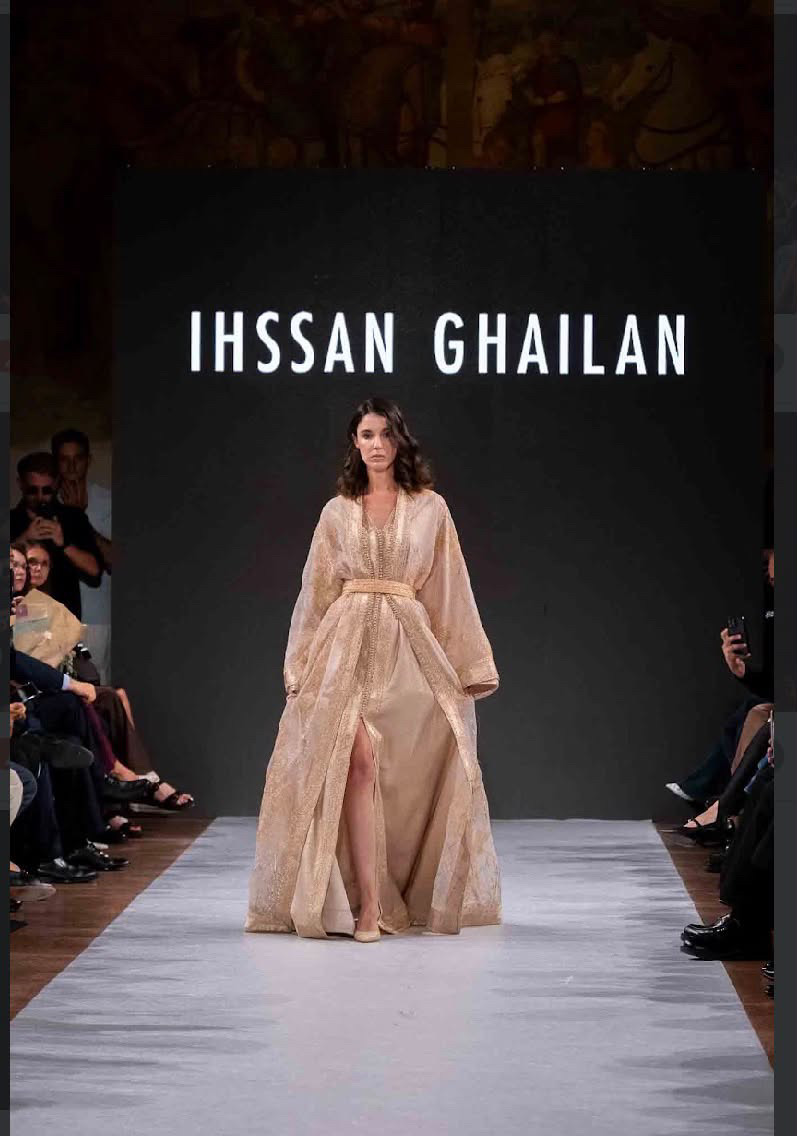
Her work suggests that preserving heritage does not necessarily mean repeating the same designs. Traditional craftsmanship can also offer new possibilities when designers approach it with curiosity.
Nearly 30 years of dressing women differently
Ghailan has been designing caftans since 1997, building a career that has taken her to fashion events in London, Hong Kong, Dubai, Brussels, and other international cities.
Her latest Milan appearance took place during the city’s Spring/Summer 2027 fashion season, which featured more than 200 scheduled shows, presentations, and events between September 22 and 28.
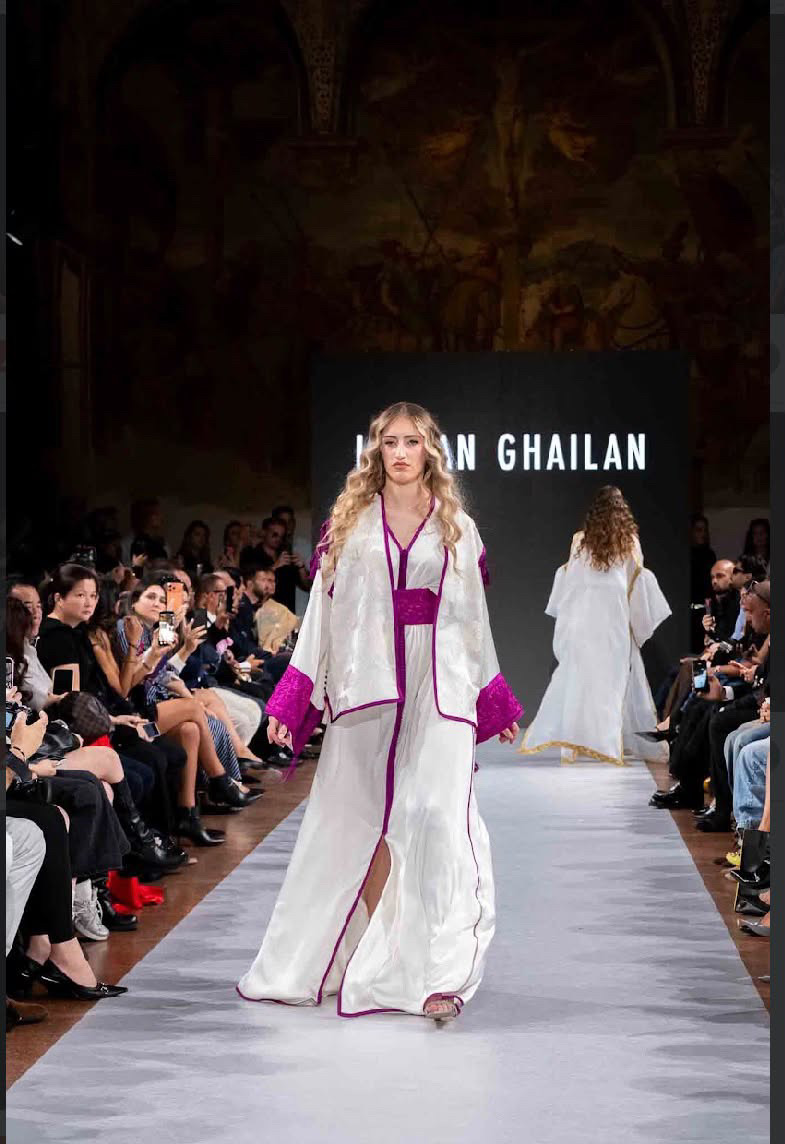
Speaking to the press around her presentation, Ghailan expressed pride in representing Moroccan fashion internationally.
She described the caftan as more than an item of clothing, explaining that it embodies an identity and history that designers can reinterpret for modern women around the world.
That outlook reflects a personal ambition she has pursued throughout her career.
In her 2023 interview, Ghailan expressed her desire to see women beyond Morocco and the Arab world embrace the caftan.
She also revealed an unusually personal relationship with her creations.
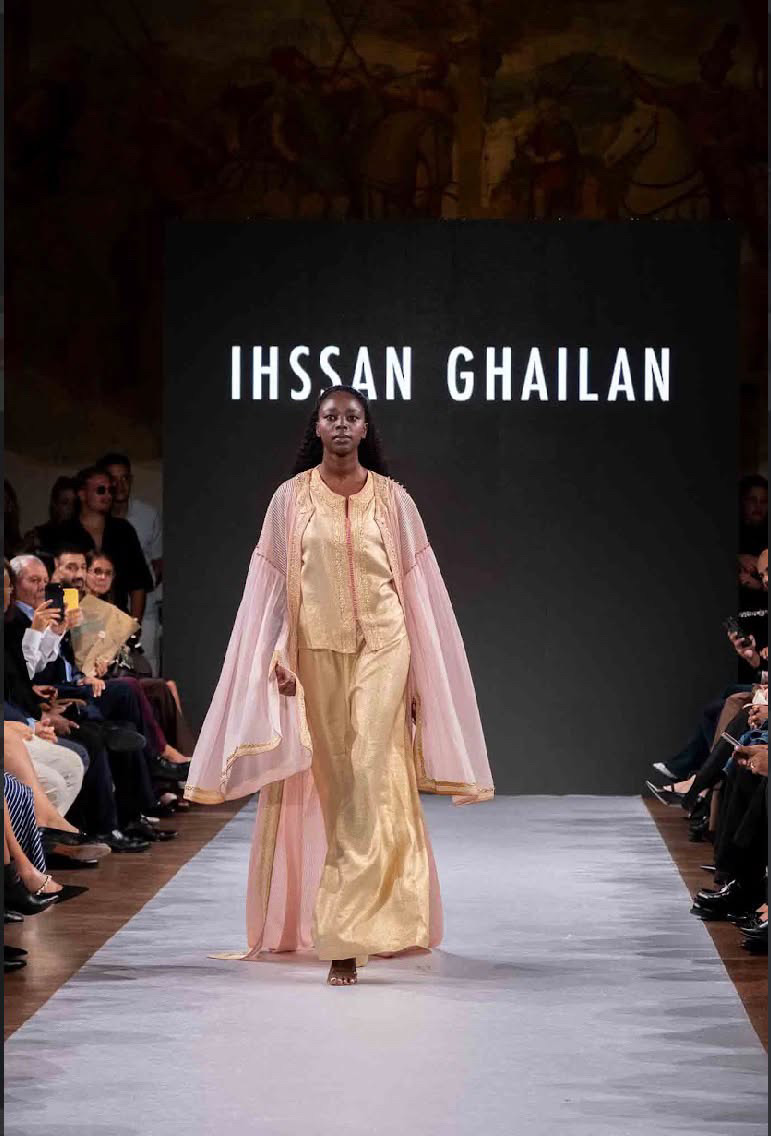
“Each one is a complete story and an inseparable part of my life,” she said of the caftans she had designed over the years.
She explained that she can remember and recognize her creations among thousands of others, and often preserves a piece from each collection as a reminder of the experience.
With “Caftanesque Spring,” Ghailan adds another chapter to that personal archive.
From the fabric scraps of her childhood in Tangier to the gold embroidery of Fez and the fashion scene in Milan, her career reflects a continuing dialogue between inheritance and imagination.
Her latest collection offers a reminder that the Moroccan caftan’s future may depend as much on the courage to experiment as on the determination to preserve its traditions.