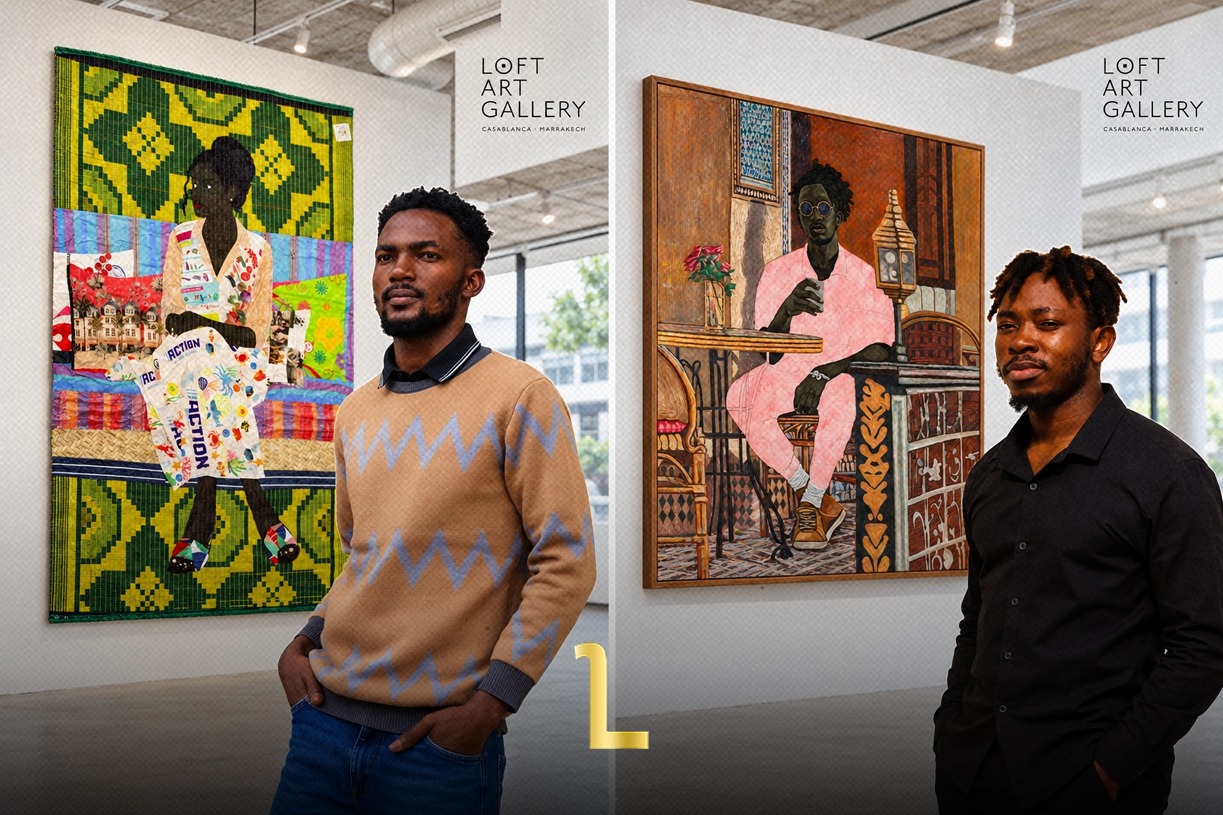
Fez — Two Ghanaian artists arrived in Marrakech with familiar ways of seeing the world. Months later, they are preparing to share works shaped by the city’s people, markets, architecture, and craftsmanship.
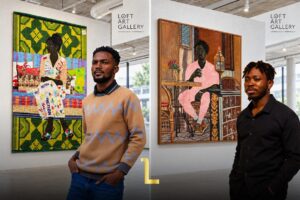
Kwaku Yaro and James Mishio will present “What We Carry,” an exhibition opening on October 28 at Loft Art Gallery Marrakech and running until December 18.
Speaking to Lifestyle Magazine, both artists reflected on how living in Morocco challenged their creative habits and changed their relationships with everyday materials.
“The city stopped being a place my work had visited and became something that shaped it,” Yaro told Lifestyle Magazine.
The exhibition brings together new works incorporating second-hand clothing, woven textiles, and everyday objects. Through these materials, the artists explore how memory and identity travel between communities and generations.
Kwaku Yaro and the stories woven into Moroccan rugs
For Yaro, who grew up in Labadi, Accra, Marrakech offered a personal encounter with craftsmanship and community.
His work had previously appeared in the city during the 2024 exhibition “Material Muses,” although he had never visited Morocco himself.
“In 2024 my work travelled to Marrakech without me. Material Muses was on show here while I was in Ghana, so the city met my paintings before it met me,” he explained.
Living in Marrakech offered something entirely different.
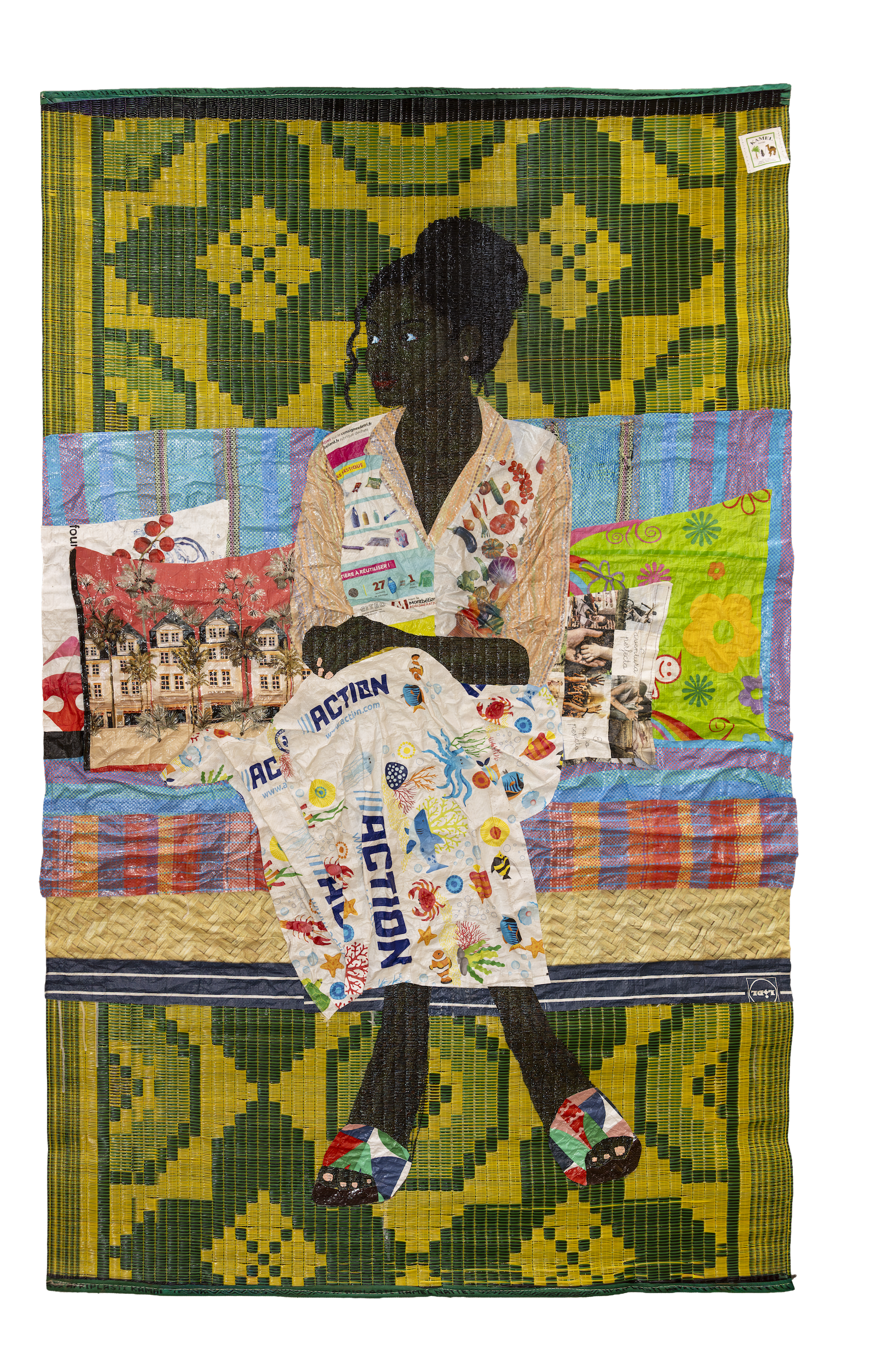
“Coming yourself, painting in the space, meeting people, eating their food and taking part in the life of the community is something else entirely,” he said.
Yaro found his strongest inspiration in the medina, where traditional Moroccan rugs reminded him of Ghana’s own textile heritage.
“The rug, without a doubt,” he answered when asked which object had most influenced his thinking.
“Then I came across a rug, and it stopped me. It reminded me of the materials I work with back home, so I started asking questions.”
The encounter led him to consider the similarities between Moroccan rugs and Ghanaian kente cloth, particularly their connections to family histories and inherited craftsmanship.
“A material doesn’t only carry the hands that made it. It carries everyone who has owned it, used it and passed it on. That’s the humanity I’m trying to bring into my work.”
His practice has long explored materials associated with his childhood, including woven sleeping mats and objects collected from markets.
In Marrakech, those familiar materials entered a conversation with Moroccan traditions, opening new possibilities for his paintings.
“I would definitely call Marrakech a muse now, though the people more than the city itself. They’re in every work I’ve made here.”
James Mishio discovers a different Marrakech
For Mishio, the residency became an opportunity to reconsider how he observes his surroundings and develops his artistic ideas.
Although both artists arrived from Ghana, they often experienced the same places in remarkably different ways.
“Kwaku and I would walk through the same market and come back with completely different things,” Mishio told Lifestyle Magazine.
“He’d notice how certain colors dominate, in the fabrics, in the walls. I’d be stuck on the patterns those colors were building. Same stall, two different artworks in our heads.”
Mishio’s artistic practice incorporates discarded fabrics, including fabric scraps from his older brother’s fashion studio in Accra.
His compositions combine painting and textiles, often letting fabric extend beyond his subjects’ clothing and into other parts of the canvas.
During the residency, he also experimented with oil pastels, expressive textures, and distorted forms inspired by Marrakech’s architecture and atmosphere.
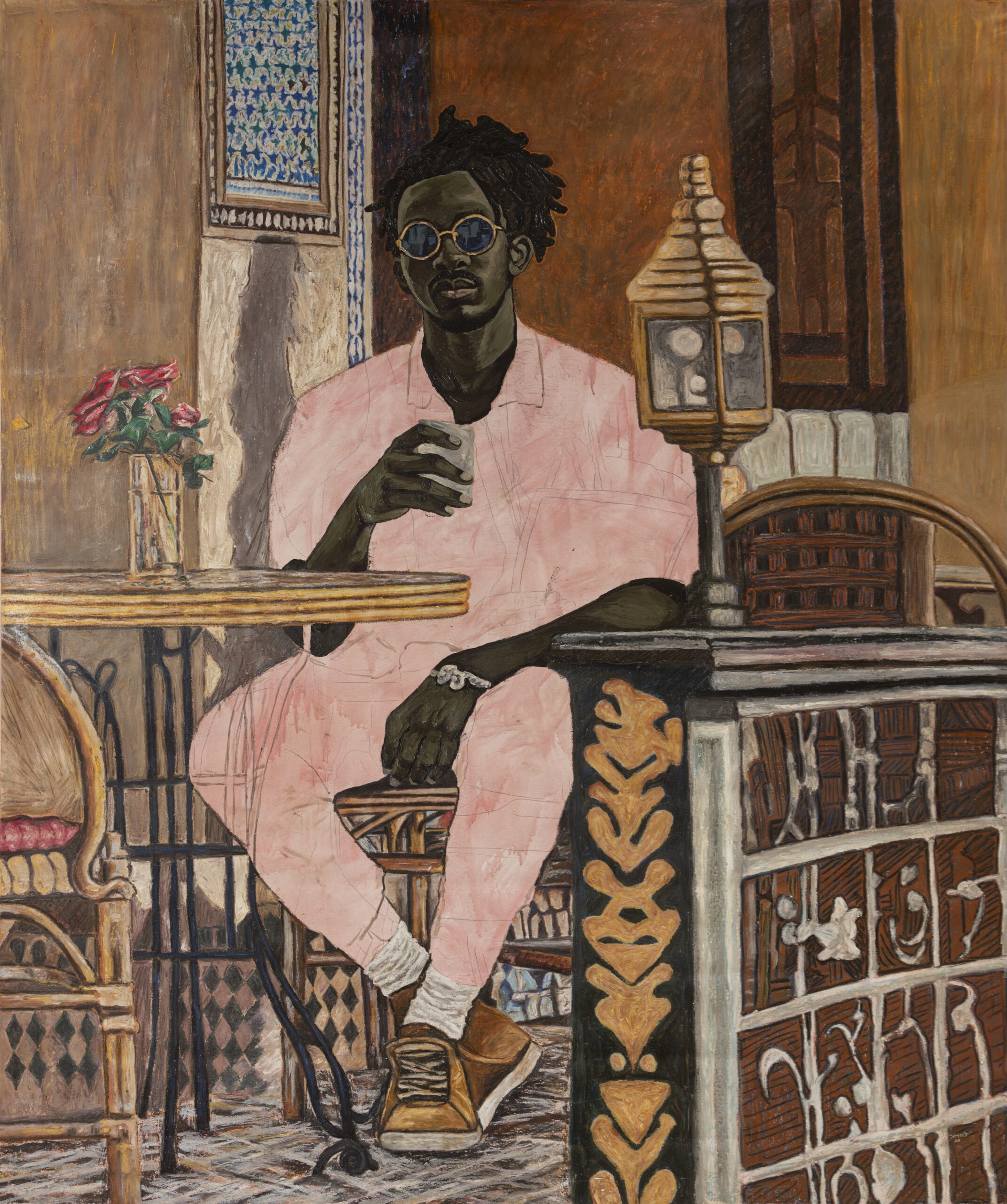
His Marrakech experience also informed works presented alongside Moroccan artist Amina Rezki at London’s “1-54 Contemporary African Art Fair” earlier this month.
However, the greatest transformation came from learning to work outside the familiar environment of Accra.
“In Marrakech, that circle didn’t exist, so I had to go out and find it myself. The medina became my research ground, and it broke a lot of my habits.”
The language barrier and busy market environment forced him to approach research differently.
Rather than spending hours exploring without a plan, he began preparing concise questions for traders and managing his research time more carefully.
“What changed most is that I stopped waiting for things to come to me. Now I go out and meet them, with a plan.”
Mishio also found that Marrakech challenged some of his assumptions about Moroccan culture.
“The architecture isn’t just decoration. It’s identity, culture built into the walls,” he observed.
“Strangers treated us like we belonged, and within weeks the city felt like home.”
An artistic conversation between Morocco and Ghana
The exhibition forms part of Loft Art Gallery’s efforts to encourage artistic exchange between Morocco and other African countries.
Founded in 2009 and led by Yasmine and Mohamed Berrada, the gallery operates spaces in Casablanca and Marrakech, supporting modern and contemporary African art.
“Residencies are an important part of our program because they give artists the opportunity to spend time in Marrakech, to research, experiment and develop new work through their encounters with the city,” said gallery co-founder Yasmine Berrada in the exhibition’s press release.
For both artists, “What We Carry” ultimately reflects more than the physical movement of fabrics and objects.
Their experiences reveal how living in an unfamiliar place can transform an artist’s understanding of home, identity, and the stories preserved in ordinary materials.
As Mishio reflected on his relationship with Marrakech, “We came to make work and ended up unlearning almost as much as we learned.”
“What We Carry” opens at Loft Art Gallery Marrakech on October 28 and continues until December 18.