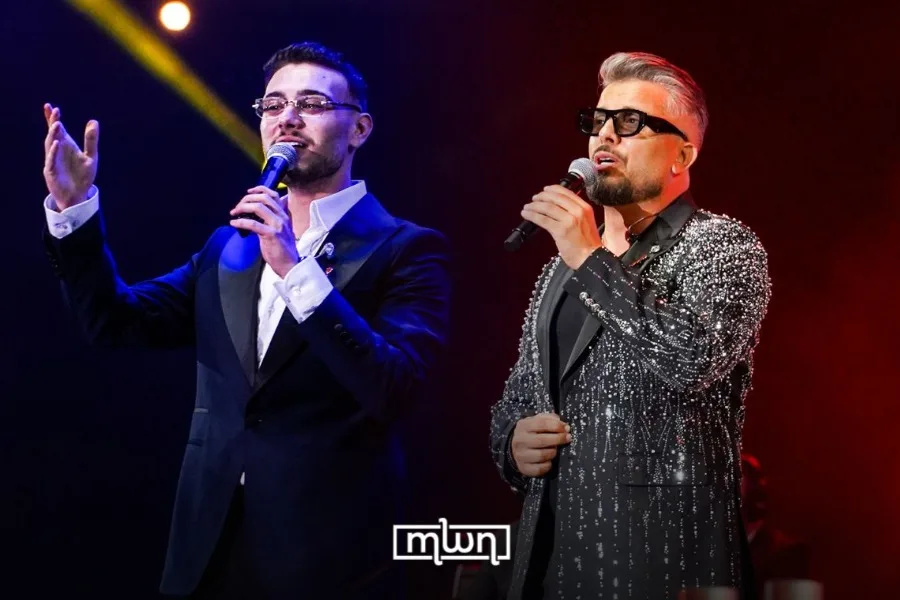
Fez — Moroccan singer Hatim Ammor and Syrian artist Al Shami brought a packed Arabic pop night to “Mawazine Festival” on Wednesday, performing at Rabat’s Nahda Space as part of the festival’s 21st edition.
The double bill placed two different but complementary musical worlds on one stage. Ammor represented Morocco’s modern pop sound, while Al Shami brought the emotional Levantine style that has made him one of the fastest-rising voices in the Arab music scene.
Both artists were programmed at Nahda Space at 9 p.m., a stage that has long served as Mawazine’s main home for Arab and Oriental music. This year’s Nahda lineup also includes artists such as Wael Kfoury, Asmae Lamnawar, Aminux, Karima Ghait, and Tamer Hosny.
A home-stage moment for Hatim Ammor
For Hatim Ammor, the Mawazine performance carried the weight of a home crowd. The Moroccan singer has built a strong popular following through songs that move between romantic pop, dance rhythms, and mainstream Moroccan sounds.
On stage, Ammor leaned into that connection with the audience, performing tracks that fans have carried with him across the years. His catalog includes widely known songs such as “Mchiti Fiha,” “Bahlawan,” “Mgharba L7rar,” “Choufi,” “Casablanca Wala Dubai,” and “Mabrouk.”
Those songs helped turn the performance into a crowd-driven moment, with fans singing along and giving the set the feel of a shared Moroccan celebration rather than a simple festival appearance.
Al Shami’s part of the night added a different energy. The Syrian singer’s music blends contemporary Arabic pop with the emotional pull of Levantine melody, a style that has given him strong youth appeal across the region.
His hit “Ya Leil W Yal Ein” has become one of his signature songs, while tracks such as “Wein,” “Keefo,” “Doctor,” and “Jinak” have helped shape his growing presence among Arabic pop listeners.
Mawazine’s Arab pop bridge
The pairing worked because it spoke to Mawazine’s wider identity. The festival has always mixed Moroccan, Arab, African, and international sounds across Rabat’s stages, giving local audiences access to different music scenes in the same week.
At Nahda, that mix felt especially natural. Ammor’s performance gave the night its Moroccan anchor, while Al Shami opened the stage to a younger pan-Arab sound shaped by streaming platforms, emotional lyrics, and regional fan bases.
The concert also showed how Arabic pop continues to travel across dialects. Moroccan fans responded to Al Shami’s Levantine style with the same energy they gave Ammor’s local hits, reflecting a shared cultural space built around melody, language, and stage emotion.