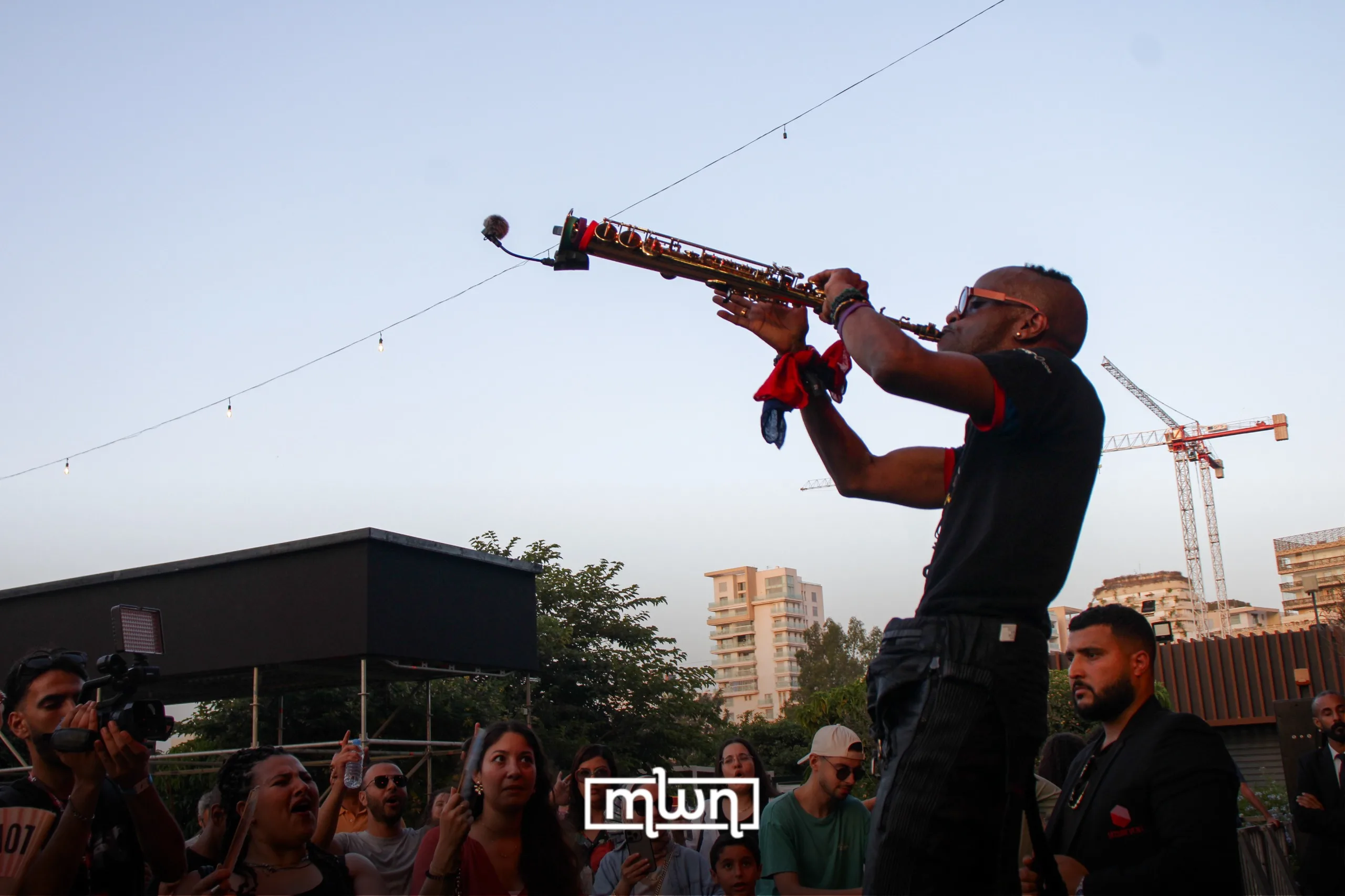
Casablanca — Jowee Omicil turned Scène 21 into one of Jazzablanca’s warmest spaces on Sunday night, delivering a performance that moved between jazz, spirituality, humor, and pure positive energy.
The Haitian-Canadian multi-instrumentalist performed on July 5 as part of Jazzablanca’s 19th edition in Casablanca, taking the stage with the kind of looseness that makes a concert feel less like a show and more like a gathering. Jazzablanca’s program placed him on Scène 21, the festival’s more intimate stage dedicated to deeper listening and musical exploration.
Omicil did not stay distant from the audience. At one point, he stepped down from the stage and joined the crowd, who quickly formed a circle around him. The moment captured the spirit of his set: open, playful, and deeply generous.
A musician guided by spirit
Before the show, Omicil spoke to MWN Lifestyle magazine about the spiritual foundation of his music, linking it to silence, breath, water, and the early experience of playing in church.
“That spirituality is something that you should never lose because spirituality is actually your essence,” he said. “As you are born, you are coming from a spiritual standpoint because you come from silence.”
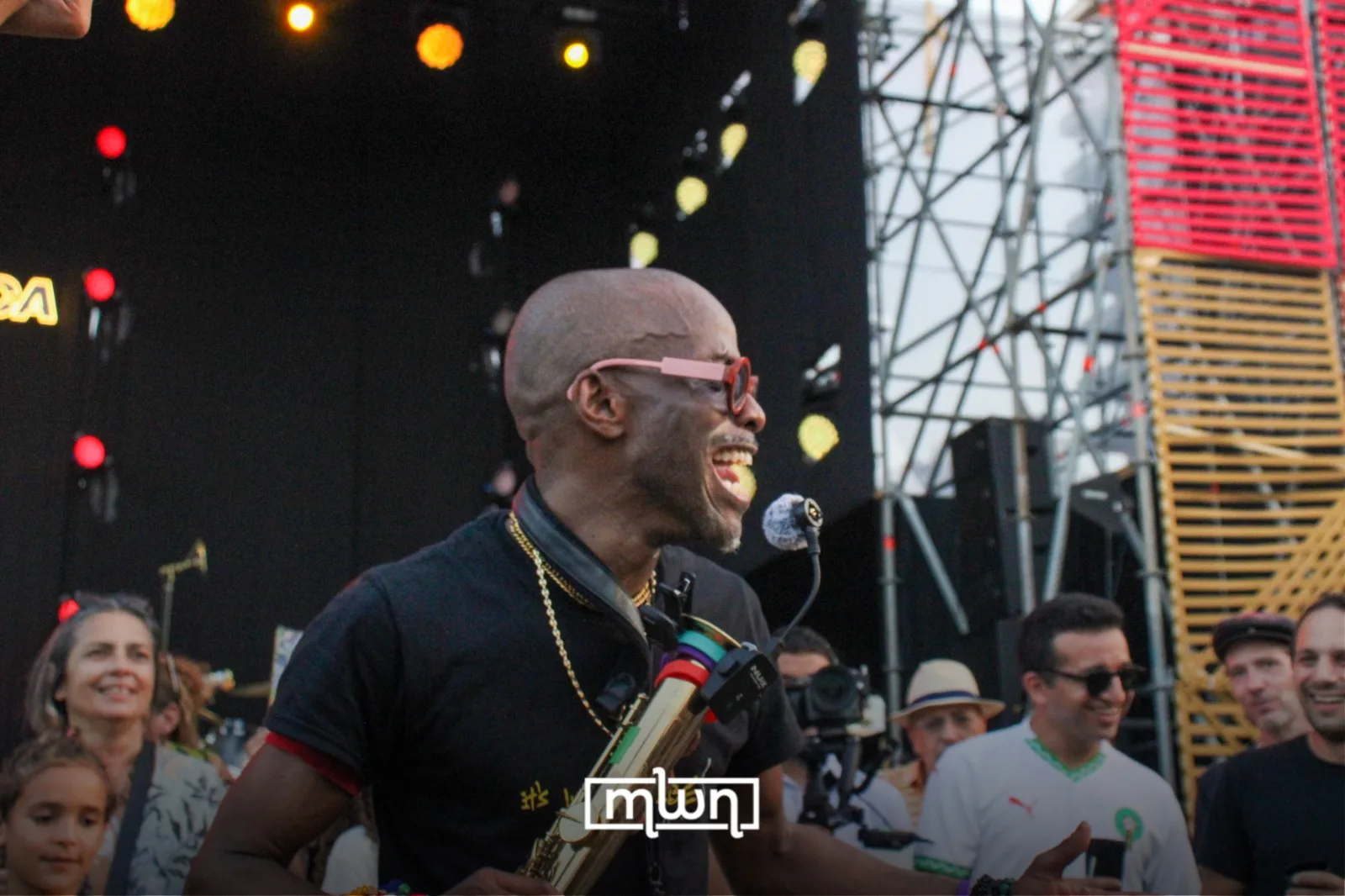
For Omicil, that spiritual feeling is not limited to religion. He described it as a space of freedom, simplicity, meditation, and elevation.
“In the church, which comes from a religious standpoint, if you tap into church the right way, then you can catch the spirituality,” he said. “Because the spirituality is the essence.”
That philosophy carried into his Jazzablanca performance. His playing was technically sharp, but never cold. He used the saxophone as a voice of movement and warmth, pulling the audience into his orbit through melody, rhythm, and a constant sense of invitation.
Morocco, Malika Zarra, and ‘SHorTer Way To MarraKecH’
Omicil also spoke about his Moroccan connection through “SHorTer Way to MarraKecH,” a track from his album “sMiLes” featuring Moroccan singer Malika Zarra. The piece is a collaboration between Omicil and Zarra, and it is a nod to Wayne Shorter’s language and improvisational spirit.
“Shorter Way to Marrakech is a travel for me on the tenor sax,” Omicil told MWN Lifestyle magazine, explaining that the title plays with Wayne Shorter’s name. “I am honoring, I am paying homage to Wayne Shorter’s language, his approach to improvisation.”
He said the track came from a spontaneous session with Zarra, whom he described warmly as “from Morocco” and “one of yours.”
“She played the game,” he said. “She came in on the mic, and we were just straight improvising. No partition, no rehearsal.”
He also framed the collaboration as a tribute to women and to ancestral memory. “We put in the forefront the women,” he said. “Because we can never forget this society is so macho, but without a woman, who would we be?”
That same respect for Morocco appeared in his stage presence. Omicil arrived dressed in a way that nodded to Moroccan style, saying before the performance that clothes reflect character and heart.
“I love Morocco. I love the style of the Moroccan people. I love the Moroccan people. I love the Moroccan tradition,” he said. “I am paying homage right now, a tribute to the Moroccan people.”
A circle of sound and happiness
On Scène 21, those words became action. Omicil’s show was full of musical turns, but its strongest quality was emotional clarity. He wanted people to feel good, and the crowd responded.
When he moved from the stage into the audience, the distance between performer and listeners disappeared. Fans circled him, smiling, clapping, and following the sound at close range. The moment felt improvised, but also completely natural for an artist who treats music as a shared spiritual practice.
Omicil closed his interview with MWN Lifestyle magazine by saying his favorite key is “the key of love,” before improvising a short vocal line ending with “Bismillah” and “Shukran.”
That line could have described the whole night. His Jazzablanca set was not only about saxophone technique or jazz vocabulary. It was about presence, gratitude, and the ability to make a crowd feel lighter than it did before he started playing.