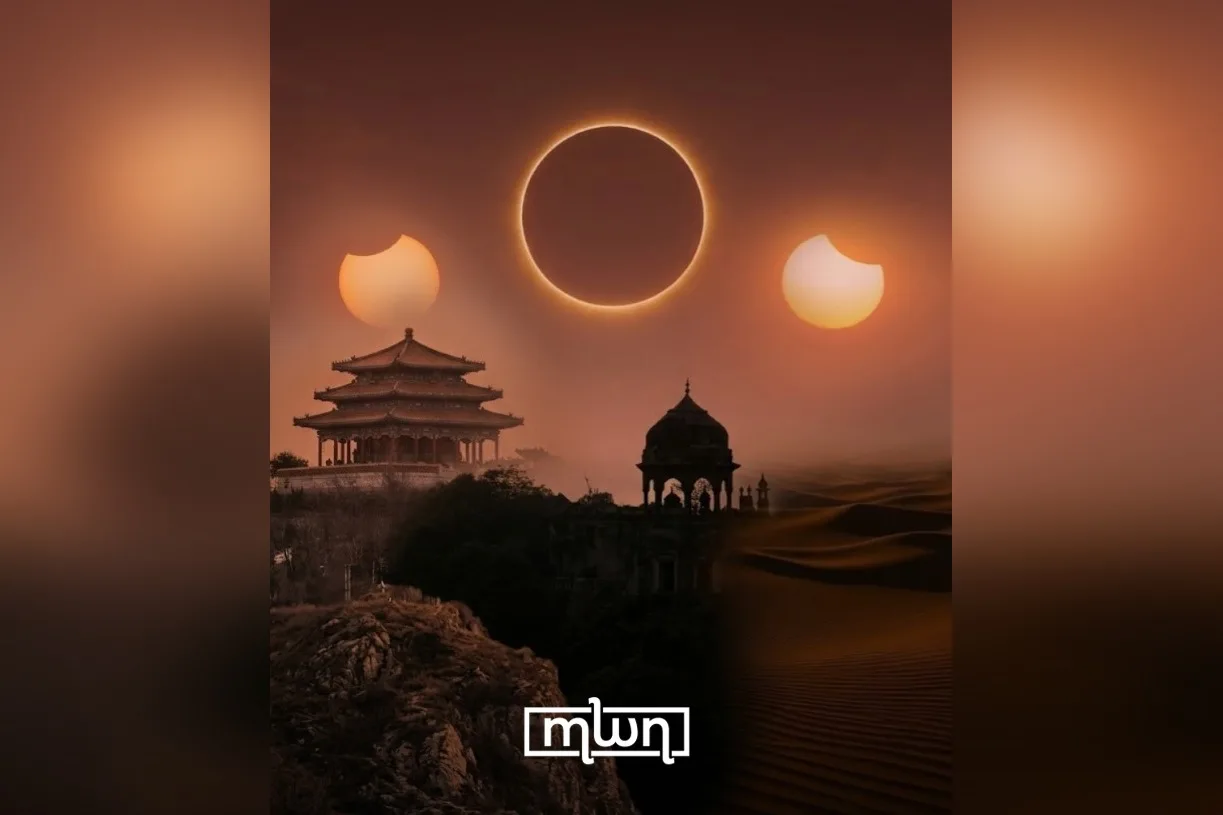
Rabat – For thousands of years, before modern astronomy could explain eclipses, the sudden disappearance of daylight was far more than an astronomical phenomenon.
To ancient observers, it was a supernatural event unfolding directly above them, often interpreted as a warning, a punishment, or a sign of divine anger.
Can human anger actually reach the sky?
Well, if Batammaliba people of Togo and Benin were to answer, human anger definitely reached the highest point of the sky.
An eclipse for them was not simply a disaster waiting to happen. It was a reflection of what was happening on Earth.
According to Batammaliba tradition, human anger and conflict could rise into the sky, causing the sun and moon to fight each other.
During an eclipse, people were encouraged to put aside old arguments, settle disagreements, and repair broken relationships.
The darkness in the sky became a reminder of the darkness created by conflict between people.
While many cultures saw an eclipse as something that had to be feared or stopped, this tradition turned it into a chance for people to look at themselves.
A headless enemy chasing the Sun
In Hindu mythology, the explanation was considerably more dramatic.
The deity Rahu longed for immortality, so he secretly joined the gods and managed to drink some of the divine nectar that could grant eternal life.
The god Vishnu was alerted by the sun and the moon and beheaded Rahu.
Unfortunately for everyone involved, Rahu had already swallowed enough of the nectar to survive. His head remained alive, leaving him as an immortal floating head, and, unsurprisingly, being decapitated did little to improve his mood.
Rahu became an eternal enemy of the sun and moon. From the sky, Rahu continues his revenge by trying to swallow the sun, causing an eclipse. But with no body to hold it down, the Sun simply escapes through his severed neck, ending the darkness.
So, whenever Rahu manages to swallow the Sun, it eventually escapes through the opening where his body should be. The Sun returns, the darkness fades, and the cycle begins all over again.
Ancient China
In ancient China, the threat from above took a different form. A celestial dragon was believed to attack and devour the Sun during an eclipse, plunging the world into sudden darkness.
For observers watching the sky suddenly darken, the explanation was terrifyingly simple: a celestial dragon had eaten the sun.
To drive it away, people would make loud noises, beating drums and creating a commotion until the dragon released its celestial meal.
Drums were beaten and other loud noises were made in an attempt to drive the dragon off and every time the sun eventually returned, the story seemed to prove itself, and yeah, the dragon had been defeated.