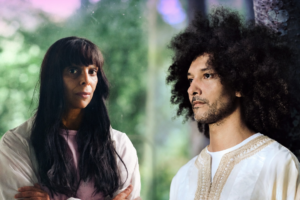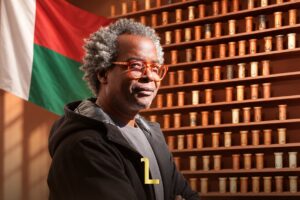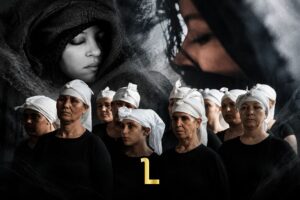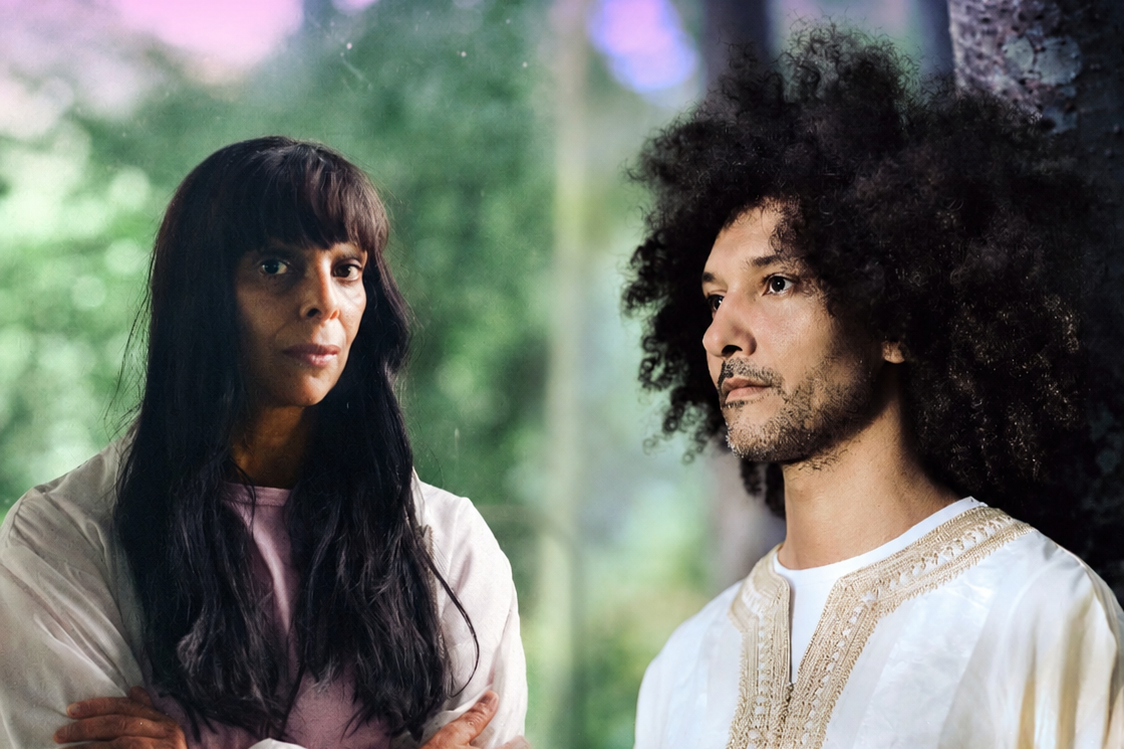
Fez — Moroccan singer and composer Walid Ben Selim will join choreographer Latifa Laâbissi in Paris for “Flaming Creatures,” a new performance exploring Moroccan cultural memory through music and contemporary dance.
The production will take place at Théâtre de la Cité internationale from November 28 to 30 as part of the 2026 Festival d’Automne in Paris, followed by another performance at Théâtre de Châtillon on December 8.
Combining choreography, live vocals, sound, and visual installations, the project draws on Moroccan and Amazigh cultural traditions to examine how personal experiences and inherited memories influence contemporary artistic expression.
Reimagining Moroccan cultural heritage
According to the Festival d’Automne’s official announcement, the production brings together the artists’ shared cultural references, using songs, gestures, and musical traditions from Morocco as the foundation for a new performance.
Laâbissi, whose choreography frequently examines marginalized identities and unconventional forms of expression, explores how memories can persist through movement.
Ben Selim contributes the musical composition, singing, and live performance, allowing the voice to become part of the choreography rather than simply accompanying it.
The production also incorporates an installation created by visual artist Nadia Lauro, with lighting by Yves Godin and sound dramaturgy by Manuel Coursin.
Through these different elements, the performers explore the relationship between individual identity and collective memory.
Their work draws particularly on Amazigh cultural heritage, examining how songs and gestures inherited from earlier generations can acquire new meanings on a contemporary European stage.
The festival describes the project as an encounter between cultural inheritance and artistic experimentation, bringing overlooked voices and histories into public view.
From Moroccan music to international collaborations
Born in Casablanca, Walid Ben Selim has developed a musical career combining Arabic poetry, contemporary composition, and experimental sounds.
He first gained recognition through N3rdistan, a collective that brought together poetry, electronic music, and alternative musical influences.
His subsequent artistic projects have explored the relationship between language, music, and spirituality, frequently drawing inspiration from classical Arabic poetry and Sufi traditions.
His collaboration with Laâbissi extends that interest into contemporary dance, connecting the expressive possibilities of the human voice with choreography and visual art.
Laâbissi, meanwhile, has developed an international career investigating the representation of bodies, cultural identities, and marginalized figures through experimental performance.
For “Flaming Creatures,” the two artists are drawing on their shared connection to Morocco to create a work that moves between different artistic disciplines.
Several European cultural institutions support the production, including the Théâtre National de Bretagne, Charleroi Danse, Montpellier Danse, and the Festival d’Automne.
Luxury jewelry house Van Cleef & Arpels also supports the project through its Dance Reflections initiative.
“Flaming Creatures” will premiere in Paris on November 28, with additional performances on November 29 and 30 before moving to Châtillon on December 8.