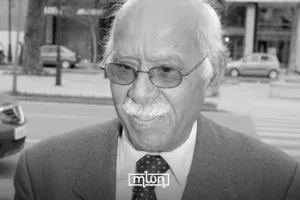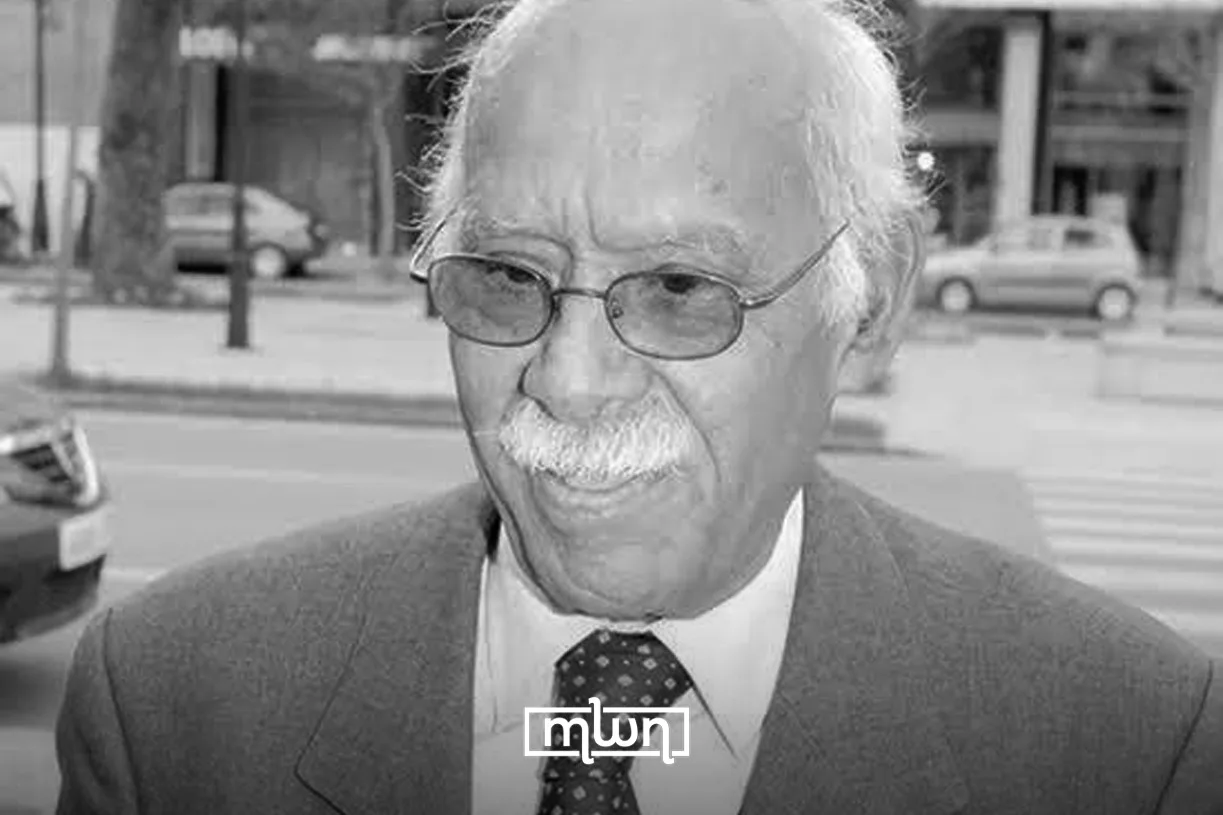
Rabat – Moroccan poet, writer, and literary critic Mohamed Serghini died today at the age of 96 following a long illness, according to his relatives.
Born in Fez in 1930, Serghini was one of Morocco’s prominent literary and intellectual figures, with a career spanning poetry, literary criticism, translation, semiotics, philosophy, fiction and theater.
His poetic work was known for breaking away from conventional forms while bringing together Sufi sensibility and modern literary expression.
His approach earned him recognition in Morocco and across the Arab literary world, where critics and researchers closely studied his work.
Among his best-known poetry collections is Tahta Al-Anqadh, Faouqa Al-Anqadh (Under the Ruins, Above the Ruins), which earned him the Morocco Book Prize in the poetry category.
He also authored “Lectures on Semiotics,” a study and translation of the poetics of Salah Stétié, the novel “I Found You in This Archipelago,” and the play “The Song of the Ghost Train.”
In 2004, Serghini received the international Argana Poetry Prize, becoming one of the early recipients of the distinction awarded by Morocco’s House of Poetry.
Beyond his literary work, Serghini played a significant role in Moroccan higher education.
He began teaching at the Faculty of Letters and Human Sciences in Fez in the early 1960s, where he pursued research and supervised generations of students. He later served as the faculty’s vice dean from 1986 to 1991.
Serghini’s academic path reflected the breadth of his intellectual interests.
After completing his early studies in Fez and attending Al Quaraouiyine University, he traveled to Iraq and earned a degree in literature from the University of Baghdad in 1959.
He returned to Morocco to continue his studies, earning a degree in comparative literature from Mohammed V University in Rabat in 1963, followed by a third-cycle doctorate in 1970 and a Doctorat d’État from the Sorbonne in Paris in 1985.
Through his writing and teaching, Serghini influenced generations of Moroccan students, researchers and academics, contributing to the development of modern Moroccan poetry and literary criticism.
His death marks the loss of a major figure in Morocco’s contemporary intellectual and poetic landscape.