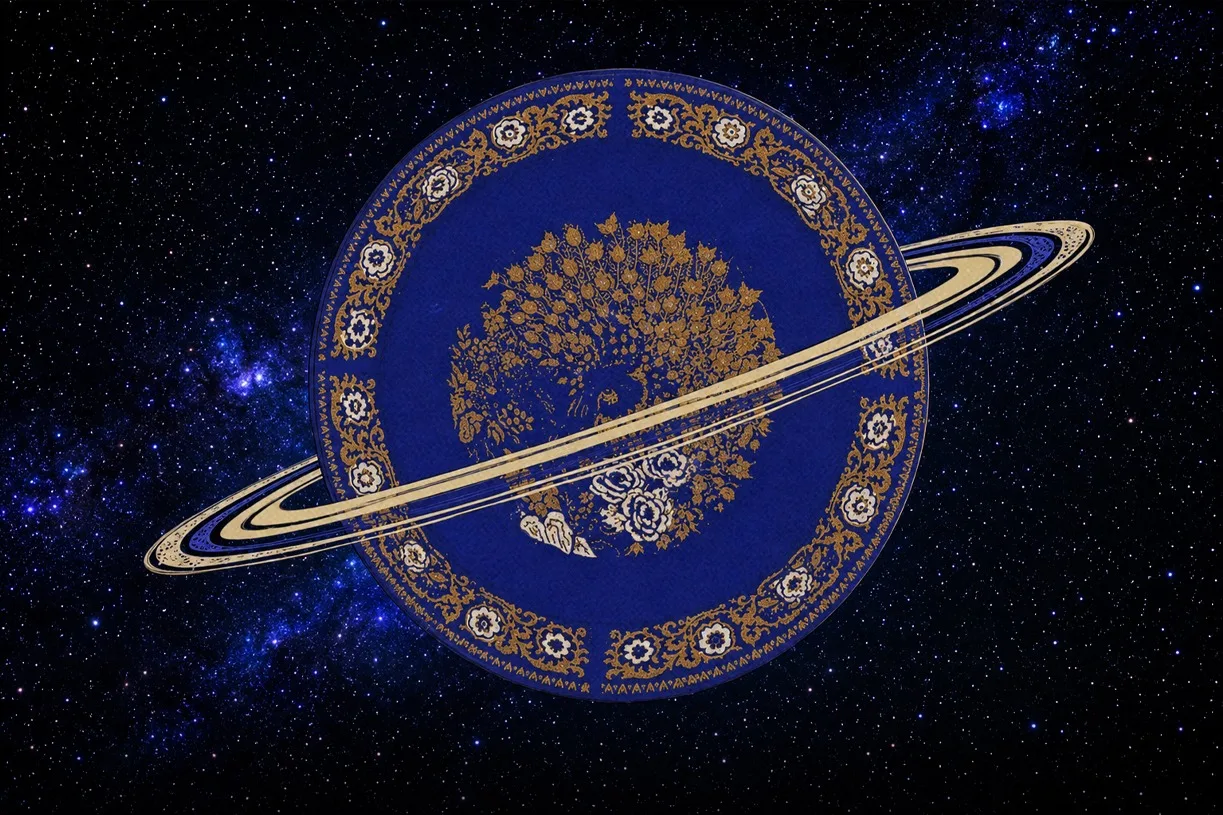
Casablanca – In Morocco, “Taous” dishes are more than just tableware. For many families, they are almost sacred, carefully kept and brought out when the occasion calls for something a little more special.
If you grew up in a Moroccan home, you probably already know how seriously these dishes are treated.
Break a “Taous” plate, and you’re not just dealing with broken porcelain. You’re also about to face your mother’s wrath, especially after all the years she spent carefully protecting it.
Their value, however, is not only in the porcelain. It’s in the memories, family gatherings, and the place these dishes have earned inside Moroccan homes.
From Imari porcelain to Moroccan tables
Before becoming such a familiar sight in Moroccan homes, “Taous” dishes had roots far beyond Morocco.
The style is linked to Japanese Imari porcelain, which was exported from Japan from the 17th century and became part of wider trade routes connecting East Asia with Europe and North Africa.
The porcelain was admired for its striking combination of blue, red, white, and gold, as well as its detailed bird and floral decorations.
Over time, the style was adopted and reinterpreted in Morocco, becoming known locally as “Taous,” meaning peacock in Arabic.
The name itself is tied to how the bird motifs were understood in Morocco. Designs featuring the mythical Chinese bird fenghuang became associated with the peacock, giving the style the name it carries today.
The dishes eventually moved beyond elite households and became part of Moroccan family life, particularly around weddings, Ramadan, Eid, and other gatherings where food and hospitality take center stage.
The dishes have their own rules
Taous dishes are not simply brought out whenever someone feels like using the fancy plates. In many homes, they have their own rules.
They might spend most of the year sitting safely inside a glass cabinet or a carefully arranged vaisselier, waiting for guests, a family celebration, or a particularly important meal.
Then comes the question everyone somehow knows the answer to: which Taous do we use?
Moroccan families often have their own little systems for the dishes they inherited or bought over the years. Some people even associate the different color patterns with particular dishes.
The blue “Taous” is commonly associated with meat, while the red one is often brought out for chicken.
This is a household tradition rather than a universal rule, so the exact system can vary from one family to another.
Either way, the moment a Taous dish appears on the table, you already know the meal is probably not an ordinary Tuesday dinner.
A Moroccan family treasure
There is also something deeply Moroccan about the way these dishes became part of the home.
They are closely tied to family memory. A “Taous” set may have belonged to a mother or grandmother, or simply survived years of family gatherings without losing a single piece.
That’s probably why breaking one feels like more than breaking a plate. And maybe that’s the real treasure of Taous dishes.
Born from centuries of exchanges between the Far East, Europe, and Morocco, they eventually became something distinctly familiar in Moroccan homes, carrying food, celebrations, family stories, and a little bit of that very Moroccan fear of hearing a plate crash in the kitchen.
Read Also: How the Moroccan ‘Mechta’ Brush Became a Worldwide Everyday Classic