Fez — Morocco is heading into the next UNESCO heritage decision cycle with several traditions under consideration, including musical practices, plant-fiber craftsmanship, earthen architecture, and an endangered form of basketry.
UNESCO lists Morocco among the countries participating in four files scheduled for treatment during the 2026 cycle. Most are multinational nominations shared with other Arab and Mediterranean countries.
The files will be examined during the 21st session of the “Intergovernmental Committee for the Safeguarding of the Intangible Cultural Heritage.” UNESCO confirmed that the meeting will take place in Xiamen, China, from November 30 to December 5.
The nominations reveal a broad definition of heritage. Morocco is not only seeking recognition for monuments or famous festivals. The current files concern skills people perform, teach, build with, weave, and pass between generations.
The oud and the culture surrounding it
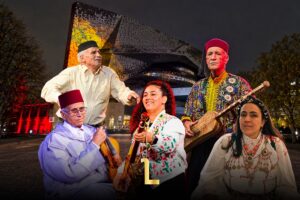
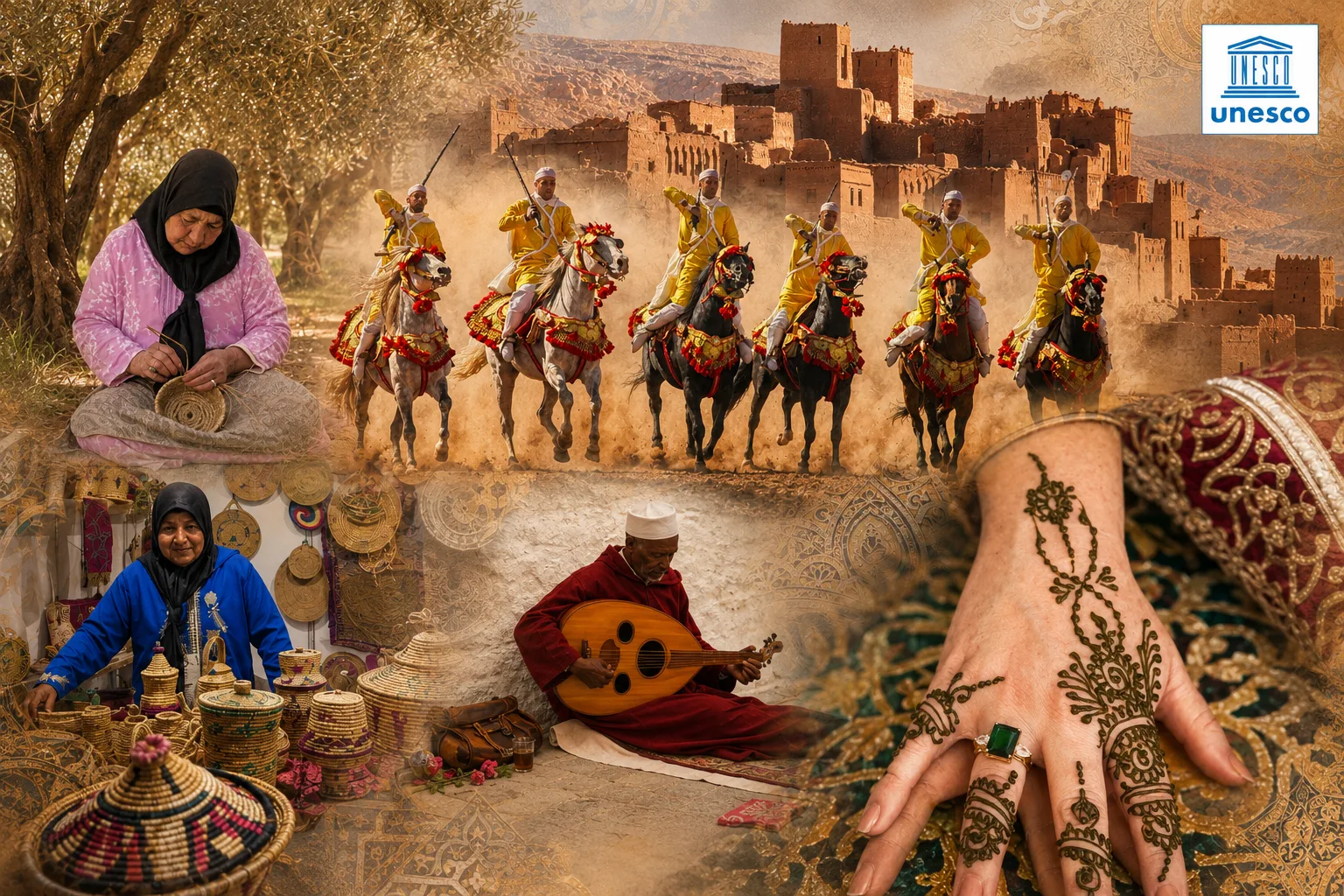
One of the most prominent nominations concerns the oud, the pear-shaped string instrument deeply embedded in musical traditions across the Arab world.
Morocco is participating alongside Algeria, Bahrain, Egypt, Iraq, Jordan, Kuwait, Mauritania, Oman, Palestine, Qatar, Saudi Arabia, Sudan, Tunisia, the United Arab Emirates, and Yemen.
UNESCO describes oud heritage as extending beyond playing the instrument itself. The tradition includes craftsmanship, performance techniques, songs, celebrations, and the transmission of skills through apprenticeships and music institutions.
Crafting an oud can involve weeks of treating, shaping, and drying wood before artisans assemble and decorate the instrument.
The 2026 file seeks a place on UNESCO’s “Representative List of the Intangible Cultural Heritage of Humanity.”
Plant fibers become cultural heritage
Another multinational bid centers on “Al Saafiyat and Plant Fibers,” which covers craft and social traditions involving natural materials.
Morocco joins 15 other Arab countries in the nomination. UNESCO identifies the file as a candidate for its Representative List in 2026.
The practices involve transforming locally available plant fibers into functional and decorative objects through inherited knowledge.
That can include collecting and preparing plants, weaving and braiding fibers, and producing objects used in everyday or social life.
The nomination matters because these crafts sit at the intersection of environmental knowledge and traditional manufacturing. The skills depend on knowing which plants to gather, when to gather them, and how to prepare them before weaving begins.
An endangered craft shared with Spain
Morocco is also participating with Spain in a much more urgent bid.
“Sparterie, Knowledge, Skills and Practices” concerns craftsmanship using esparto and related plant fibers. Unlike the oud and broader plant-fiber nomination, UNESCO places this file on the “List of Intangible Cultural Heritage in Need of Urgent Safeguarding.”
The distinction is important.
The Representative List highlights living cultural practices and their visibility. The Urgent Safeguarding List is intended for traditions whose continued transmission faces serious threats.
UNESCO’s documentation shows artisans turning the fiber into baskets and other woven objects through techniques transmitted within communities in Morocco and Spain.
If accepted, the designation would draw international attention not simply to the objects produced, but to the knowledge required to make them.
Earthen building is also on the table
Morocco is additionally part of a multinational nomination concerning the art and traditions of building with earth.
UNESCO’s 2026 priority list includes Morocco alongside Saudi Arabia, Egypt, Mauritania, Tunisia, Iraq, Oman, Yemen, Palestine, Jordan, the United Arab Emirates, and Sudan.
The file is seeking recognition on the Representative List.
For Morocco, earth construction has particular relevance to historic architectural landscapes where communities developed building methods adapted to locally available materials and climate conditions.
The nomination broadens the idea of architectural heritage beyond finished buildings. What UNESCO is considering is the human knowledge needed to produce, maintain, and transmit those structures.
Henna and horses are also in the pipeline
Morocco’s UNESCO agenda extends beyond the four files being prioritized in the main 2026 cycle.
UNESCO’s Morocco page lists an ongoing extension concerning “Henna, Rituals, Aesthetic and Social Practices.” Morocco is among countries seeking to join or expand the multinational heritage recognition surrounding henna.
However, UNESCO classifies that request outside the annual processing ceiling for the 2026 cycle, meaning it is not in the same position as the priority files scheduled for treatment.
Looking further ahead, Morocco is also participating in a 2027 multinational nomination concerning Arabian horse breeding traditions and associated arts.
Another possible future file is even more distinctly Moroccan. In June, UNESCO approved $10,000 (MAD 92,466) in preparatory assistance for Morocco to develop a nomination around the knowledge and skills associated with khettaras, the underground water-channel systems historically used to bring groundwater to the surface.
Together, the files show Morocco expanding its heritage strategy from famous cultural symbols toward the skills behind everyday objects, music, construction, and environmental adaptation.
What UNESCO decides later this year could give several of those traditions greater international visibility. More importantly, the process puts attention on the people who still know how to play, weave, build, and teach them.