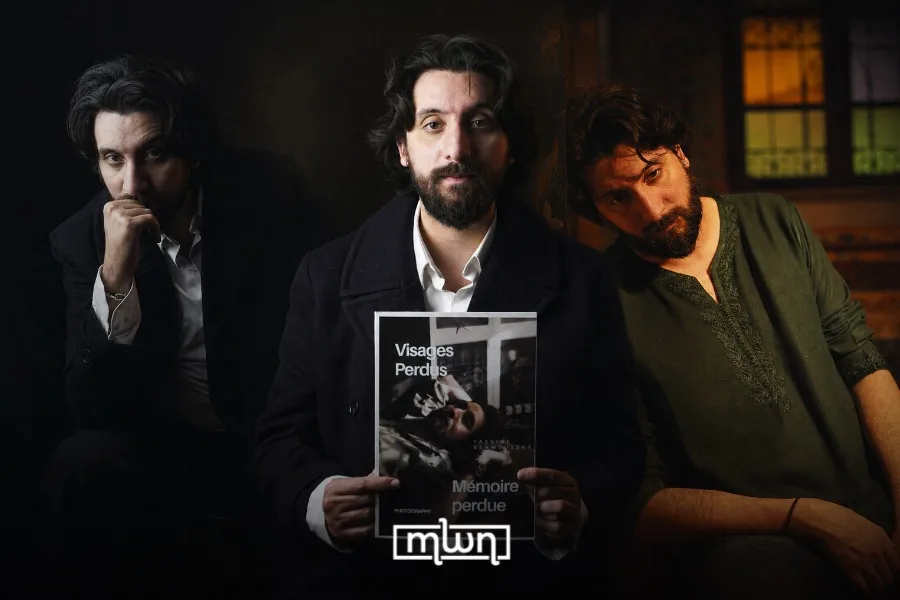
Fez — Yassine Benmoussa’s search for a lost face began in a cafe already heavy with memory.
For decades, Café La Comédie in Fez served as a meeting place for actors, writers, students, theater groups, and other figures from the city’s cultural life. Founded in 1983, the cafe became closely associated with generations of local artists and the theatrical community.
It was there that Benmoussa began looking differently at some of the people sitting before him.
Many had witnessed important chapters of Fez’s artistic history. Their stories interested him, but their faces interested him just as much.
He began wondering what those faces could communicate before anyone spoke.
Time, anxiety, patience, suffering, laughter, resilience, and memory had all left traces. Benmoussa wanted to photograph those traces rather than produce conventional portraits.
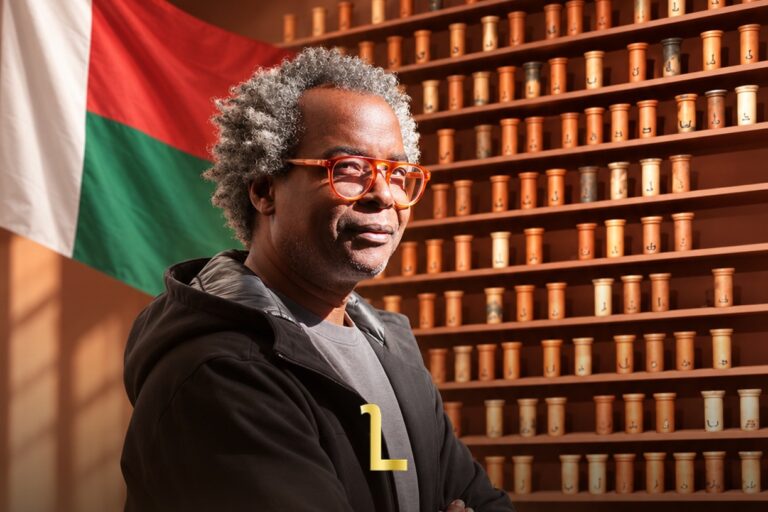
The idea developed into “À la recherche d’un visage perdu” (In Search of a Lost Face), a two-year project through which the Fez-born filmmaker, photographer, and visual artist photographed more than 50 artists connected to the city.
In an interview with MWN Lifestyle magazine, Benmoussa said,“For me, each face became a doorway into a personal and collective memory.”

Photography, in his approach, could preserve more than physical appearance. It could hold fragments of what people had experienced and what an artistic generation had contributed to Fez.
The project eventually moved beyond individual photographs into an exhibition at “Centre Les Étoiles de la Médina” (The Stars of the Medina Center) and a photobook, turning Benmoussa’s portraits into a larger visual archive. The series is an attempt to preserve faces, memory, vulnerability, and the psychological depth behind human expression.
Looking behind the artist
Benmoussa was never especially interested in asking someone to sit still and look impressive.
During his sessions, he sometimes went searching for a very particular emotion. It could be anxiety. Anger. Laughter. Even discomfort.
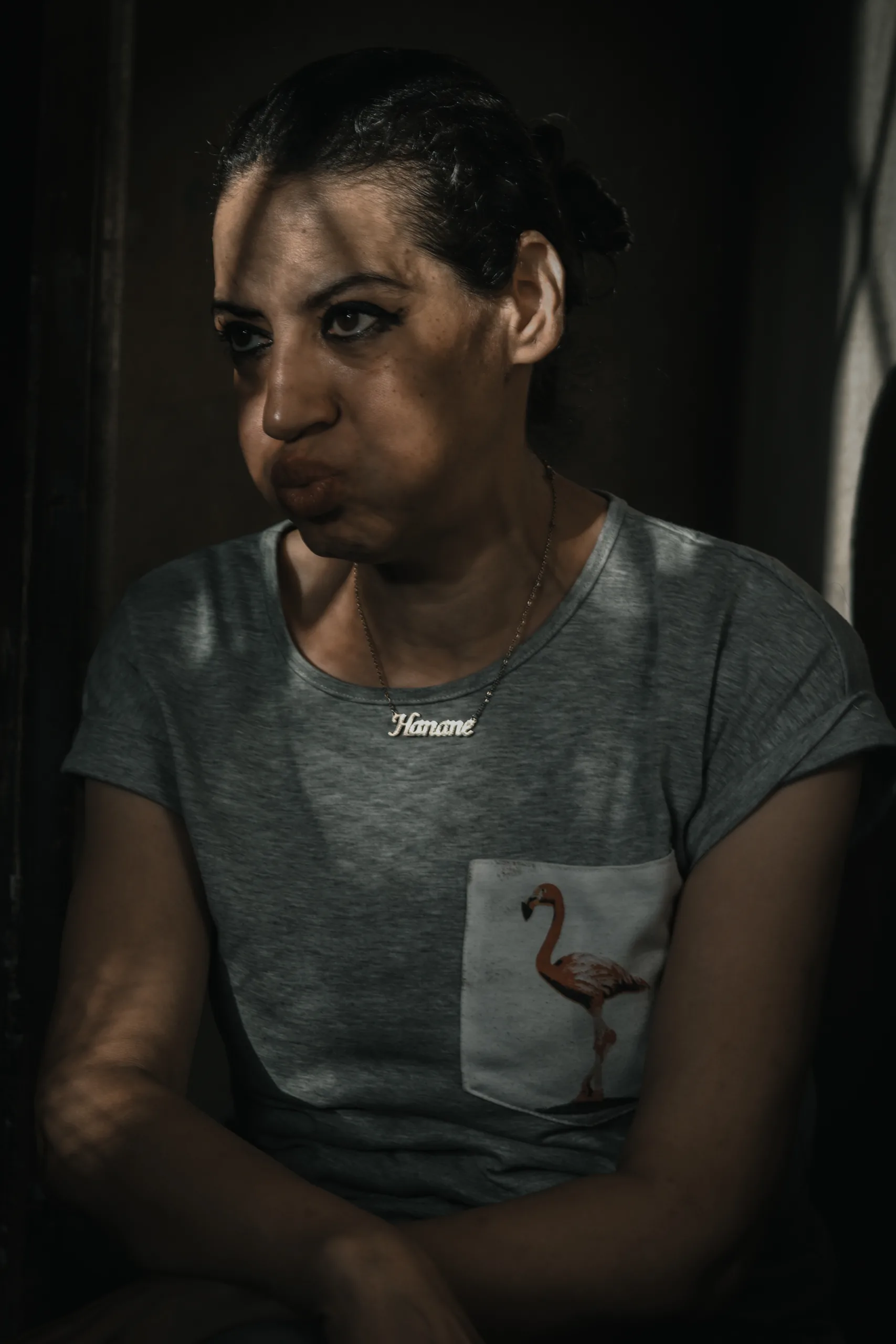
What mattered was reaching something beyond the controlled expression people usually present to a camera.
“I was interested in what happens when the public image of the artist disappears for a moment,” he said.
That could take time. The sessions often developed into long conversations. Subjects spoke, paused, remembered, reacted, or simply sat in silence. Benmoussa described some encounters as almost therapeutic.
The camera came after the human exchange. He watched for changes in expression and for moments when a person seemed to stop performing the idea of being photographed.
“So I wasn’t only photographing their faces; I was trying to photograph what they were carrying inside,” he said.
That distinction gives “À la recherche d’un visage perdu” much of its psychological character.

Its subjects are artists, but Benmoussa does not primarily treat them as cultural personalities to be documented. He wants to encounter the individual beneath the reputation.
A portrait can therefore contain exhaustion as easily as confidence. Silence can matter as much as a smile.
The result is less concerned with presenting artists at their most polished than with asking what remains when polish falls away.
Vulnerability without spectacle
That approach also creates an ethical question. Pain, anxiety, and fragility can produce powerful images. They can also become visual shortcuts, especially when a photographer turns another person’s suffering into drama.
Benmoussa said he actively resists that impulse. “For me, photography is a way to look at these emotions without judging them or trying to make them beautiful,” he explained.

He does not ask subjects to manufacture suffering for the photograph. Instead, he tries to create enough trust for whatever emotion already exists to surface naturally.That trust matters more to him than obtaining the perfect frame.
“The respect and trust between me and the person are more important than the photograph itself,” he said.
If vulnerability appears in the final portrait, Benmoussa wants it to come from an authentic exchange.
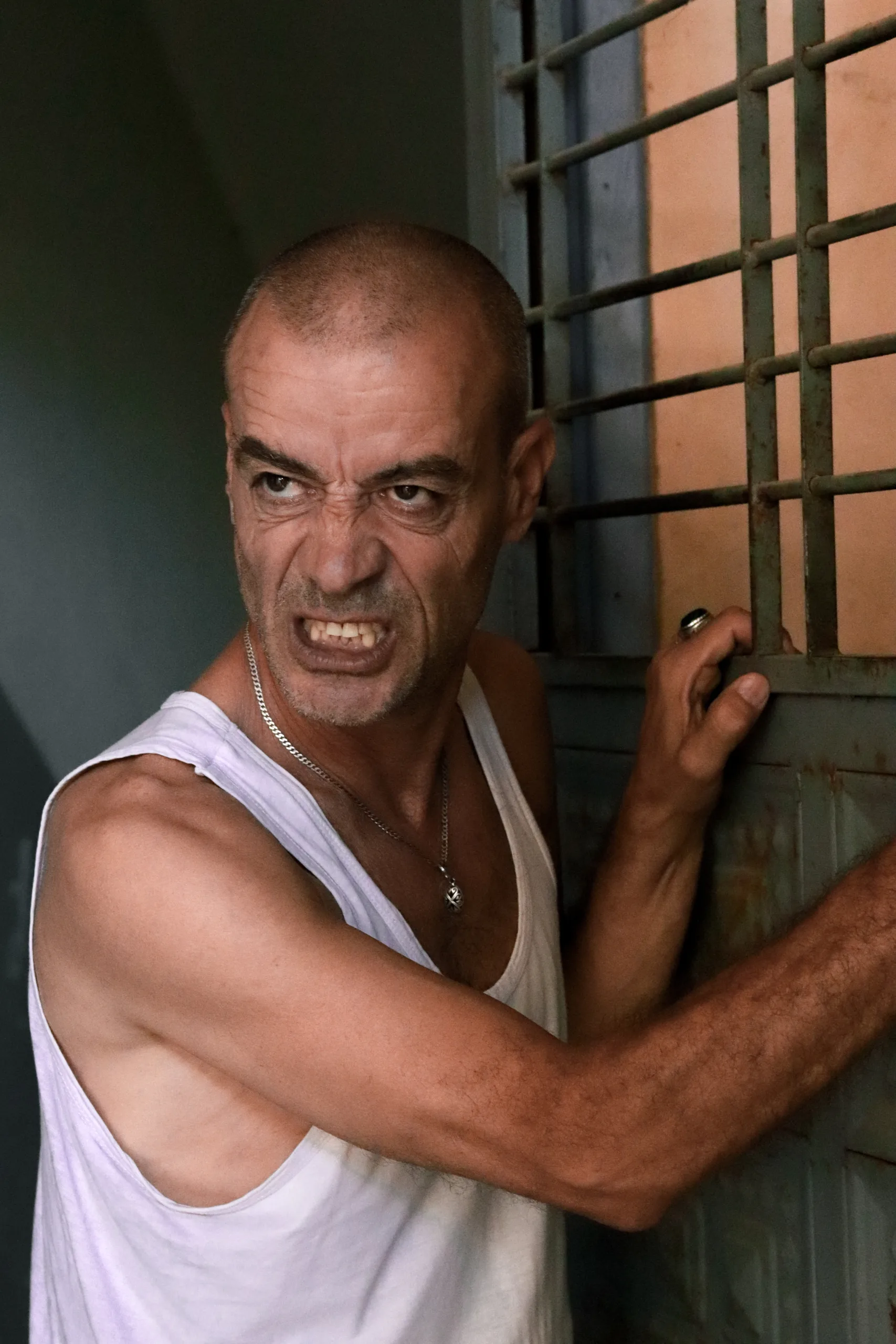
He does not want to impose sadness, darkness, or discomfort because those emotions might produce a more striking image.
“If the image feels vulnerable, it should be because something real was shared, not because I forced an emotion into the frame,” he said.
His interest in difficult emotions is therefore not an attempt to romanticize them. Rather, he sees pain, nostalgia, silence, and anxiety as ordinary parts of human experience that people are frequently taught to conceal.
Photography gives him a reason to remain with those feelings instead of immediately looking away.
When a portrait starts belonging to Fez
The scale of the project changed its meaning.
One portrait could reveal something about one artist. Fifty portraits could begin saying something about an artistic community.

From the beginning, Benmoussa wanted different generations and personalities to coexist within the project.
Individual histories remained important, but placing those people together allowed another narrative to emerge.
Faces began connecting to other faces. Experiences overlapped. Generational differences became visible. The project started moving from biography toward collective memory.
“That’s when the portrait stopped belonging only to one person and started belonging to Fez,” Benmoussa said.
That sentence perhaps best explains what he has been building. His archive approaches history through the people who participated in it.
Among the cultural figures photographed during Benmoussa’s broader work are Taoufiq Laalam, Khammar El Mrini, Farid El Bouzidi, and Fatima Zahra El Maski, among others.
His exhibition at “Centre Les Étoiles de la Médina” similarly placed those individual images within a shared space. The venue itself remains part of Fez’s contemporary cultural infrastructure, hosting exhibitions, cinema events, artistic residencies, and cultural programming.
For Benmoussa, bringing the portraits together meant preserving not only individual faces but evidence of a generation.
Cinema inside the photograph
Benmoussa’s portraits are also shaped by another medium.
Before and alongside photography, he trained in audiovisual production, particularly editing, and developed experience across directing and acting.
He directed the short film “Le Dernier Souffle” (The Last Breath), working in assistant directing with filmmaker Mohamed Ahed Bensouda, and acting in films by Hassan Benjelloun and Rabii El Jawhari.

That background changed how he understands a still frame. “I think you can clearly feel cinema in my photography,” he told MWN Lifestyle magazine. When Benmoussa photographs someone, he is thinking beyond the face.

He often composes portraits almost like film stills. The photograph captures one moment, but he wants viewers to imagine another scene immediately before it and another immediately afterward.
Editing taught him another important lesson; that absence can communicate as much as presence.What a photographer excludes from a frame can become part of its meaning. That makes the relationship between his cinema and photography deeper than simply adopting cinematic lighting or composition.
“Cinema is not something I add to my photography afterwards; it has become part of the way I see,” he said.
The Fez that archives cannot hold
That way of seeing began long before Benmoussa started photographing artists.
He grew up in Fez in an artistic family. His father played violin in the Andalusian musical tradition, surrounding him from an early age with music and artists.
Published profiles of Benmoussa also trace his artistic sensibility to that environment, describing his childhood in a family where Andalusian music formed part of everyday life.
Benmoussa believes that upbringing helped develop his sensitivity to nostalgia, silence, and emotion.
It also shaped what he believes is worth preserving about his hometown.
Fez is among Morocco’s most photographed cities. Its Medina, architecture, craftsmanship, and historic monuments offer an enormous visual archive. But Benmoussa is interested in another archive.

“For me, Fez is not only its architecture or monuments; it is also the people, their voices, their faces and the memories they carry,” he said.
Those human records are considerably more fragile. Buildings can be restored. Objects can enter museums. Dates can be written into books. A gesture, expression, voice, or personal memory can disappear with a person.
That possibility gives “À la recherche d’un visage perdu” its urgency. Benmoussa is trying to document what official archives can easily miss, which is the emotional experience of having lived in a particular city, among a particular community, at a particular moment.
It is a Fez stored in faces rather than stone. “I’m interested in documenting a Fez that you cannot always find in archives — a Fez lived through people and their emotions,” he said.
For Benmoussa, photography cannot stop time. What it can do is leave evidence that somebody was here, experienced something, created something, and became part of the memory of a city.
“Ultimately, I think my work is trying to preserve the soul of the city, not only its image.”