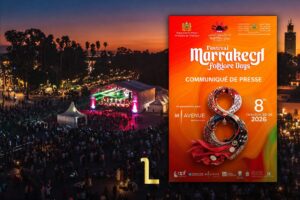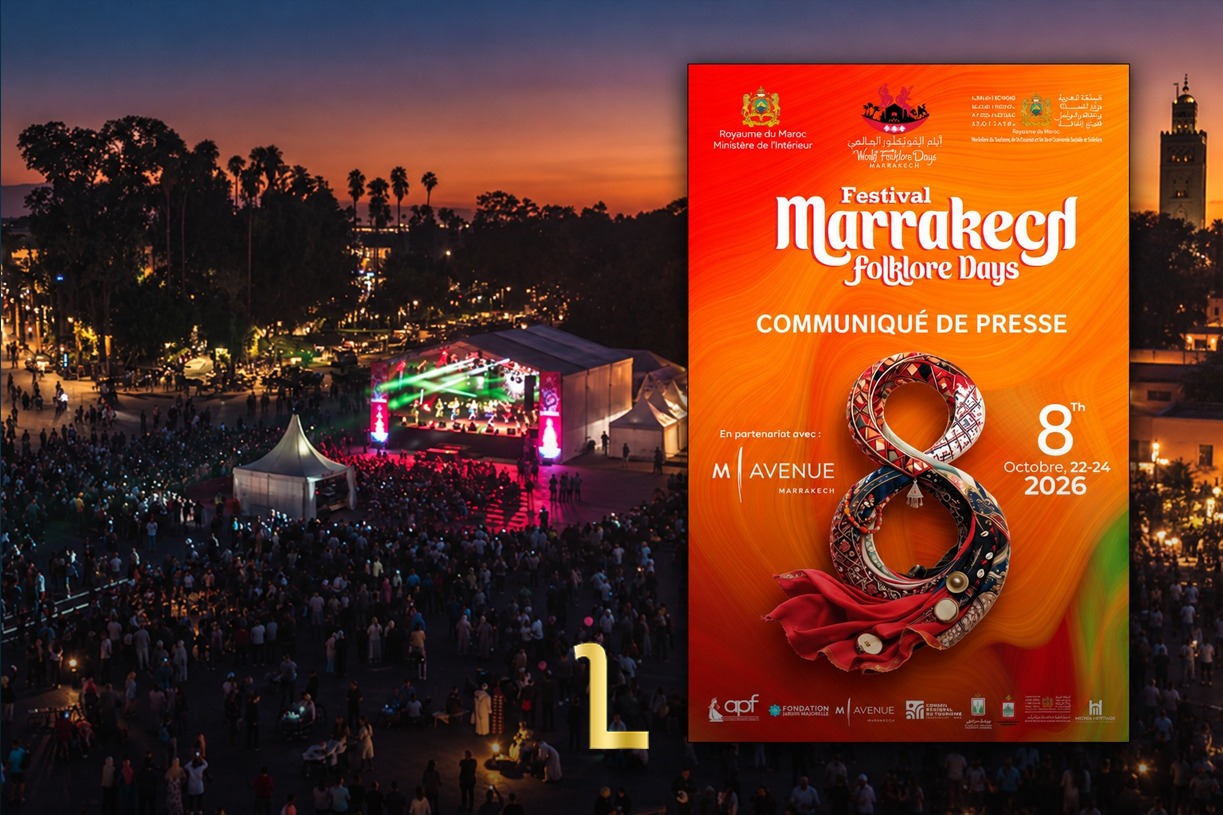
Fez — Marrakech is preparing to welcome more than 640 artists from 24 countries for the eighth edition of Marrakech Folklore Days, an international festival celebrating traditional music, dance, costumes, and cultural heritage.
Running from October 22 to 24, the festival will bring together artistic groups from Africa, Europe, the Middle East, and South America under the theme “Land of Peace and Unity.”
The Association du Patrimoine et du Folklore (Heritage and Folklore Association) will organize the event in partnership with the Ministry of Youth, Culture and Communication, M Avenue, and other institutional partners.
The festival coincides with celebrations of Morocco’s Unity Day and seeks to strengthen cultural dialogue while highlighting the country’s diverse artistic traditions.
Three days of music, dance, and international traditions
This year’s participating countries include Morocco, France, Spain, Italy, Germany, Austria, Greece, Poland, Portugal, Ireland, Estonia, Lithuania, Hungary, Bulgaria, Lebanon, Ecuador, Congo, Mali, Senegal, and Côte d’Ivoire, among others.
International ensembles will introduce audiences to their traditional dances, musical instruments, and costumes through performances across several Marrakech venues.
The opening day on October 22 will feature Morocco’s Aïssaoua musicians from Meknes, alongside Alendoy Flamenco from Andorra, Greece’s Kallisti cultural ensemble, Bulgaria’s Ensemble Zora, and traditional dance groups from Portugal, Spain, Italy, and Hungary.
Irish and other European performers will also participate, introducing Celtic and regional folk traditions to Moroccan audiences.
On October 23, M Avenue will host the festival’s main international parade from 4 p.m. to 5:30 p.m., bringing hundreds of performers together in traditional attire.
The procession will highlight the diversity of the participating cultures through music, movement, and elaborate costumes.
A second parade will take place on October 24, moving through Jemaa el-Fna, the souks, and the historic streets of Marrakech’s Medina from 3 p.m. to 4:30 p.m.
By bringing these performances into public spaces, the organizers aim to connect intangible cultural traditions with the city’s architectural and historical heritage.
Moroccan heritage meets cultures from around the world
Moroccan artistic traditions will feature prominently throughout the festival, with performances showcasing Aïssaoua music, Ahwash dance, and other forms of popular heritage.
On October 23, the University Mohammed VI Polytechnic Choir will join the program alongside groups from Poland, Estonia, Lithuania, Italy, Congo, and Lebanon.
The evening will also feature Afrika Tambours, bringing together percussion traditions from Mali, Senegal, and Côte d’Ivoire.
The October 24 program will continue with performances by Ahwash Imin Tanout and an Amazigh women’s Ahwash ensemble, placing Moroccan cultural expressions alongside international folk traditions.
The festival will conclude its principal program that evening with a Gnaoua fusion concert by Marrakech artist Othmane Hmiti, scheduled for 9 p.m.
The performance will combine Gnaoua influences with contemporary artistic elements, closing the celebrations with a musical exchange between tradition and innovation.
Cultural encounters beyond the performances
Alongside its concerts and parades, Marrakech Folklore Days will host academic discussions, masterclasses, and cultural exchanges.
On October 22, the Maroc Heritage Cultural Center will welcome a conference titled “From the Roots of History to the Bridges of the Future: Moroccan Jewish Culture, a Living Heritage and a Shared Memory.”
The discussion will examine Moroccan Jewish heritage and its place within the country’s broader cultural identity.
The following day, a Lithuanian delegation will lead a cultural encounter and masterclass introducing audiences to the country’s traditions.
On October 24, Polish performers will host another session exploring their folklore and opportunities for artistic exchanges with Moroccan and Amazigh traditions.
The program also includes guided visits to Marrakech’s historical landmarks, including Bahia Palace, El Badi Palace, Ben Youssef Madrasa, and several art galleries.
Founded in 2017, the Heritage and Folklore Association works to preserve Moroccan intangible cultural heritage and encourage exchanges between communities through artistic initiatives.
Marrakech Folklore Days forms part of these efforts, bringing traditional artistic practices into contemporary public spaces and introducing them to new audiences.
Visitors can explore the full program, with performances scheduled primarily at M Avenue and the stage opposite Marrakech City Hall, alongside cultural activities at the Maroc Heritage Cultural Center.
Through its eighth edition, Marrakech Folklore Days continues to position the Red City as a meeting point for international traditions, creating opportunities for artists and audiences to celebrate their differences through a shared appreciation of cultural heritage.