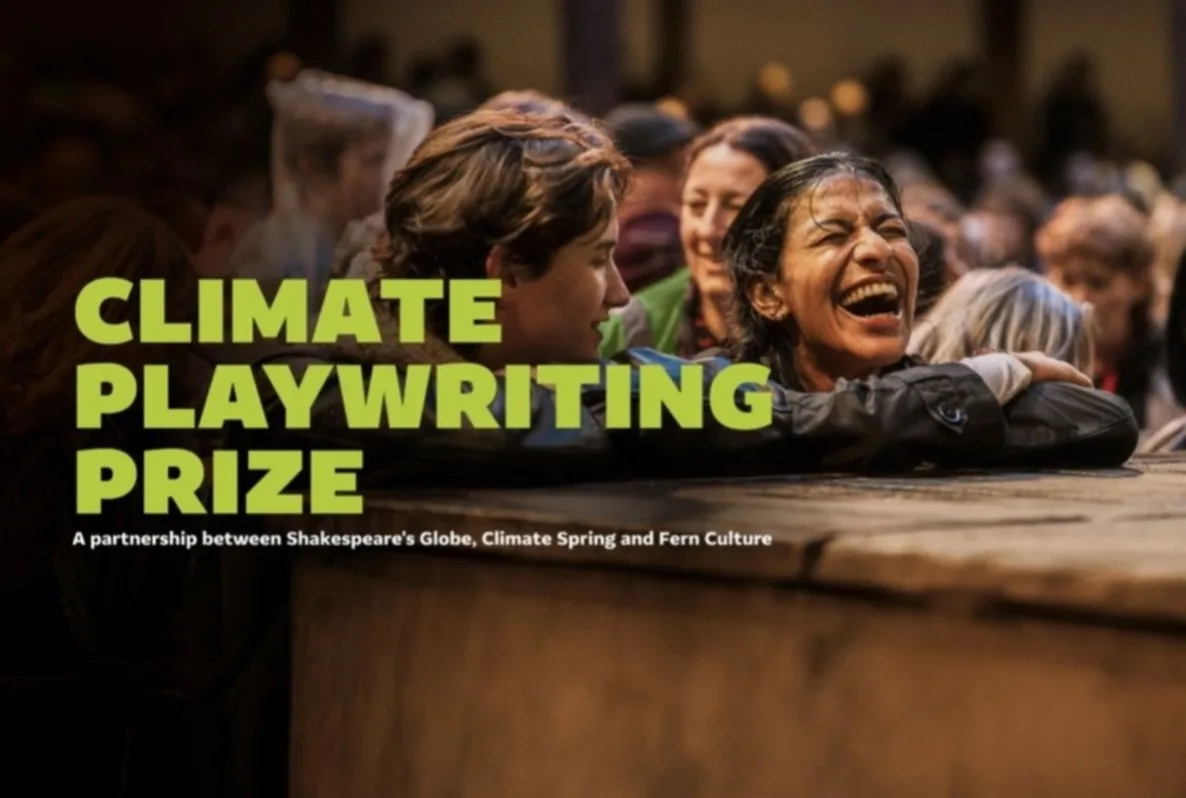
Rabat – Shakespeare’s Globe has announced a major new initiative for 2026 with the launch of its first-ever Climate Playwriting Prize.
The new award aims to harness the power of theatre and storytelling to inspire fresh thinking around the global climate and nature crisis.
The Globe says it wants to inspire a “restorative relationship with nature.” In simple words, it wants people to rebuild a healthier and more caring connection with the planet.
The prize will award the winning playwright £15,000 (225,000 MAD) and provide professional support to develop the play.
This includes guidance on rehearsal drafts with specialists at Shakespeare’s Globe, as well as support from partner organizations Climate Spring and Fern Culture.
The winner will also gain exposure to key figures in the theatre industry, offering opportunities to advance their career.
To enter the competition, writers must submit a full-length stage play in English that has never been produced before.
While the focus must be on the climate and nature crisis, the theme is deliberately broad.
Submissions can address environmental changes directly, or explore social, political, and cultural responses to the crisis, giving playwrights freedom to approach the topic in creative and diverse ways.
Entries for the Climate Playwriting Prize will open in June and close on September 1. The winner is set to be announced in the autumn, giving playwrights several months to prepare and submit their work.
Many see this initiative as deeply connected to the legacy of William Shakespeare.
Throughout his work, Shakespeare often reflected on nature, the environment, and humanity’s place within it.
Many of his most famous lines show how deeply he understood the relationship between humans and the environment.
From “Shall I compare thee to a summer’s day?” to “One touch of nature makes the whole world kin,” his writing often celebrated the natural world.
In “As You Like It,” he wrote about finding “tongues in trees, books in the running brooks.” These lines remind us that nature was always central in his imagination.
Shakespeare helped build a theatre made from 1,000 oak trees, and it stood open to the sun, wind and rain beside the River Thames.
His theatre brought strangers together in a shared space connected to nature. Today, Shakespeare’s Globe wants to bring back this same spirit to face the climate crisis.
Michelle Terry, the Artistic Director of Shakespeare’s Globe, believes that now is the time to remember the positive role humans can play on Earth.
This project is not only happening in London. The prize is also partnering with theatres across the country, including Chichester Festival Theatre and Leeds Playhouse.
These theatres will host climate storytelling workshops to encourage more writers to take part.
Guy Jones, New Work Associate at Shakespeare’s Globe, said he hopes the prize will attract a wide range of writers, from those who already focus on climate topics to writers who may not have considered themselves climate playwrights before.