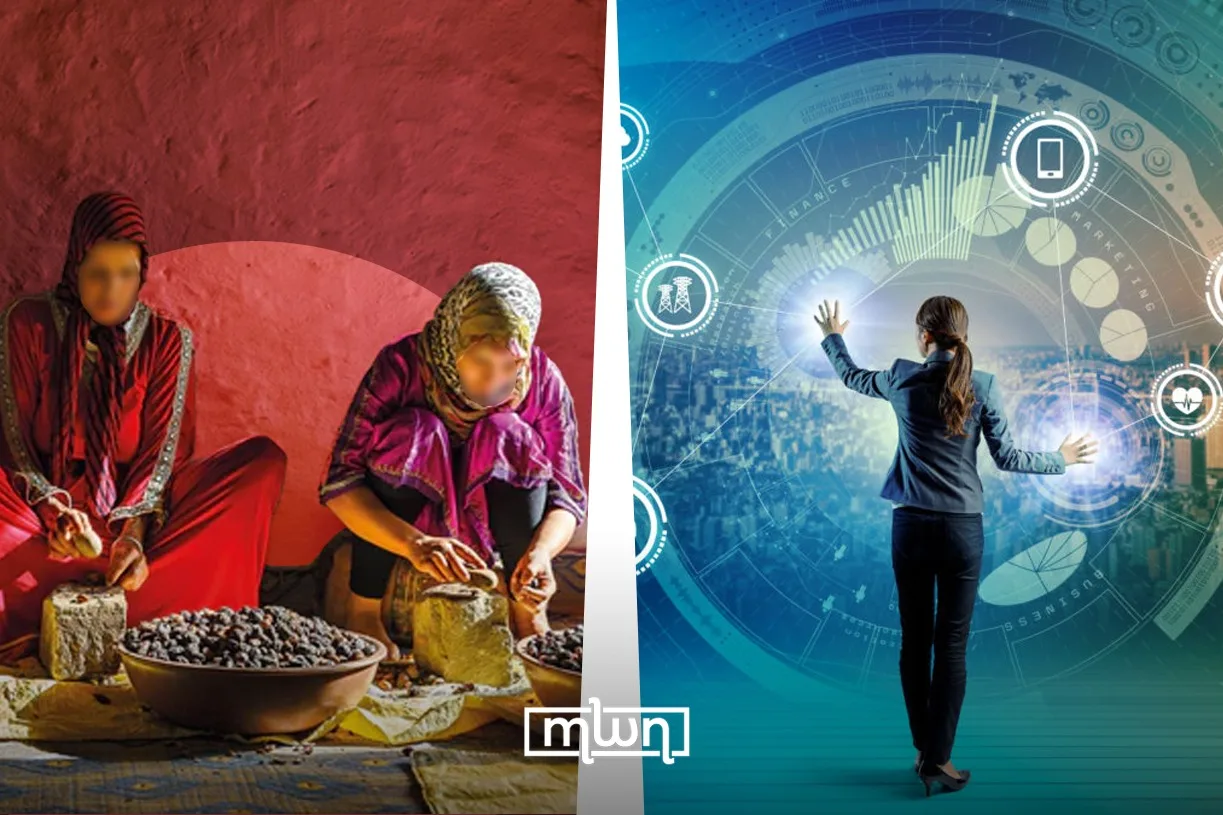
Rabat – On a morning in a village in Morocco, the sound of argan nuts being cracked by hand fills a simple workshop.
In a bright office in Rabat, young women gather around laptops, discussing code and new ideas.
Despite their differences, both scenes reflect a shift in how Moroccan women work and live today.
From rural communities to expanding cities, more women are starting businesses, joining cooperatives, or entering other new professions.
Women’s cooperatives in daily
Across Morocco, women cooperatives have become an important part of the local market.
Especially in rural areas, the cooperative model offers a practical way for women to organize work, share resources, and access wider markets.
In the argan oil industry, this model has gained particular visibility.
“It was very difficult for rural women to enter the labor market, but cooperatives broke that barrier and gave women the chance to work and contribute to local development.” According to Amina Aït Taleb, president of Taitmatine.
What once took place inside individual homes is now organized into structured groups with certifications, branded products, and booths at national trade fairs, under the support of women.
For many women, joining a cooperative is not only about earning income. It also brings confidence, public visibility, and skills that help them strengthen their role in society.
Women shine in rural areas
One representative is the Marjana Cooperative, founded in 2005 in Essaouira.
The initiative began as a simple solution to a local challenge: families were struggling to afford school-related fees. A group of mothers came together to produce and sell argan oil, turning a short-term need into a long-term activity.
Starting with 25 members, the cooperative gradually expanded its reach. Early obstacles included limited market access and lack of business experience.
Over time, the group improved product quality and gradually gained wider recognition.
Further south, in Taroudant Province, the Taitmatine Cooperative has also grown from small group beginnings into a recognized producer of argan oil and related products.
Founded in 2002, it expanded its activities through participation in events such as the International Argan Fair, where cooperatives present their goods. They also connect with international partners such as L’Oréal, promoting higher quality standards and open access to global markets.
The cooperative also offers professional training, literacy classes, health coverage, medical caravans, and school support.
“It was created not only to support women, but also to strengthen families and the community as a whole.” Taleb said.
Another cooperative, Arij Cooperative, highlights the opportunities that expanded their professional and social status.
“Their social status has notably enhanced over time. Initially, they faced challenges interacting with clients or participating in exhibitions, but they have since overcome these obstacles,” stated the president of Arij cooperative.
Beyond agriculture
Argan cooperatives are a strong symbol of rural women’s entrepreneurship. At the same time, new networks are appearing beyond agriculture.
Launched in 2024, “Women In Tech Morocco” focuses on supporting women in technology and STEM fields.
Through mentorship programs, training sessions, and partnerships with universities and companies, the network encourages more women to enter digital careers and technology-related industries.
Unlike agricultural cooperatives, this initiative operates mainly in urban and professional environments.
From argan oil to technology, no matter what fields women are, the underlying approaches are similar: creating chances where women can connect, build skills, and support one another’s progress.
As Morocco continues to develop its global presence, these initiatives suggest a broader future.
Women are not only participating in this society change; they are actively shaping it.