Rabat – When shoppers turn to ChatGPT, Gemini, or Claude for beauty advice, the brands that appear in responses aren’t random.
According to a new study by Quilt.AI, a handful of labels have secured an outsized presence in the AI recommendation landscape, with implications that could reshape how beauty brands think about their digital strategy.
The study was published in partnership with Business of Fashion. LLMs tested included ChatGPT, Gemini, and Claude, with prompts localized to the United States.
The research tested three leading large language models across 12,000 relevant prompts, measuring how frequently each brand appeared in responses.
The results paint a clear picture of which names have effectively embedded themselves in AI systems’ understanding of the beauty world.
Skincare
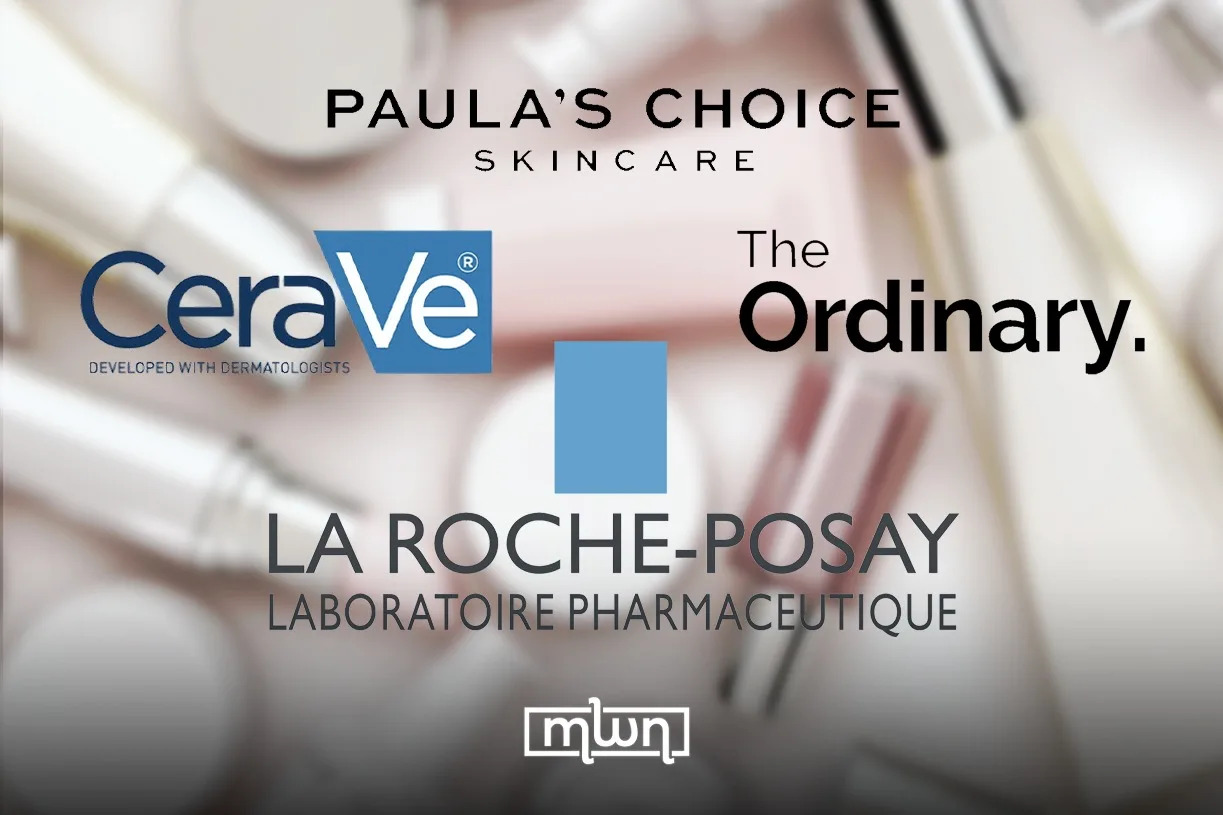
In skincare, Paula’s Choice leads the pack by a significant margin, appearing in 88.9% of relevant AI responses, nearly nine out of every ten prompts.
CeraVe follows closely at 87.2%, with La Roche-Posay at 83.3% and The Ordinary at 82.5% rounding out a dominant top four.
What’s striking about these leaders is that they share a common identity: all four are brands built on clinical credibility, ingredient transparency, and a strong presence in dermatologist-recommended content, exactly the kind of authoritative, text-rich material that LLMs are trained on.
Drunk Elephant (72.7%) and Kiehl’s (67.1%) occupy a strong middle tier, while Olay (57.3%), Tatcha (52.7%), and SkinCeuticals (51.2%) also clear the 50% threshold.
Neutrogena, despite being one of the most recognized mass-market names in the world, trails the field at 37.4%, a notable finding that suggests brand fame alone doesn’t translate to AI visibility.
Makeup
The makeup rankings tell a more fragmented story. NARS tops the chart at 55.7%, followed by Maybelline New York at 52.8%, an unusual pairing that places a high-end department store brand alongside a drugstore staple at nearly equal footing.
Urban Decay (47.8%), Rare Beauty (47.3%), and L’Oréal (47.1%) are clustered tightly in the middle, separated by less than a single percentage point.
The presence of Rare Beauty, Selena Gomez’s brand, founded in 2020, at fourth place is perhaps the most eyebrow-raising data point in the entire study.
It suggests that culturally resonant, heavily discussed brands can punch well above their weight in AI outputs, even against legacy players with decades of market history.
e.l.f. (45.6%), Too Faced (39.2%), Tarte (37.3%), NYX (36.6%), and Anastasia Beverly Hills (35.2%) round out the top ten, all showing meaningful but lower rates of AI recommendation frequency.
What this means for the industry
The gap between the top skincare brands (nearly 90% recommendation frequency) and the top makeup brands (just under 56%) is significant.
Skincare, by nature, generates more clinical discussion, ingredient analysis, and dermatological content, all of which feeds into the training data that shapes AI responses.
Makeup, being more trend-driven and subjective, may be harder for AI models to recommend with the same consistency.
For brands not appearing on these lists, or appearing lower than expected, the study raises a new kind of question for marketing teams: it’s no longer enough to dominate social media or shelf space.
As consumers increasingly use AI as a first stop for product discovery, a brand’s presence in the digital discourse that trains these models may become a competitive battleground in its own right.