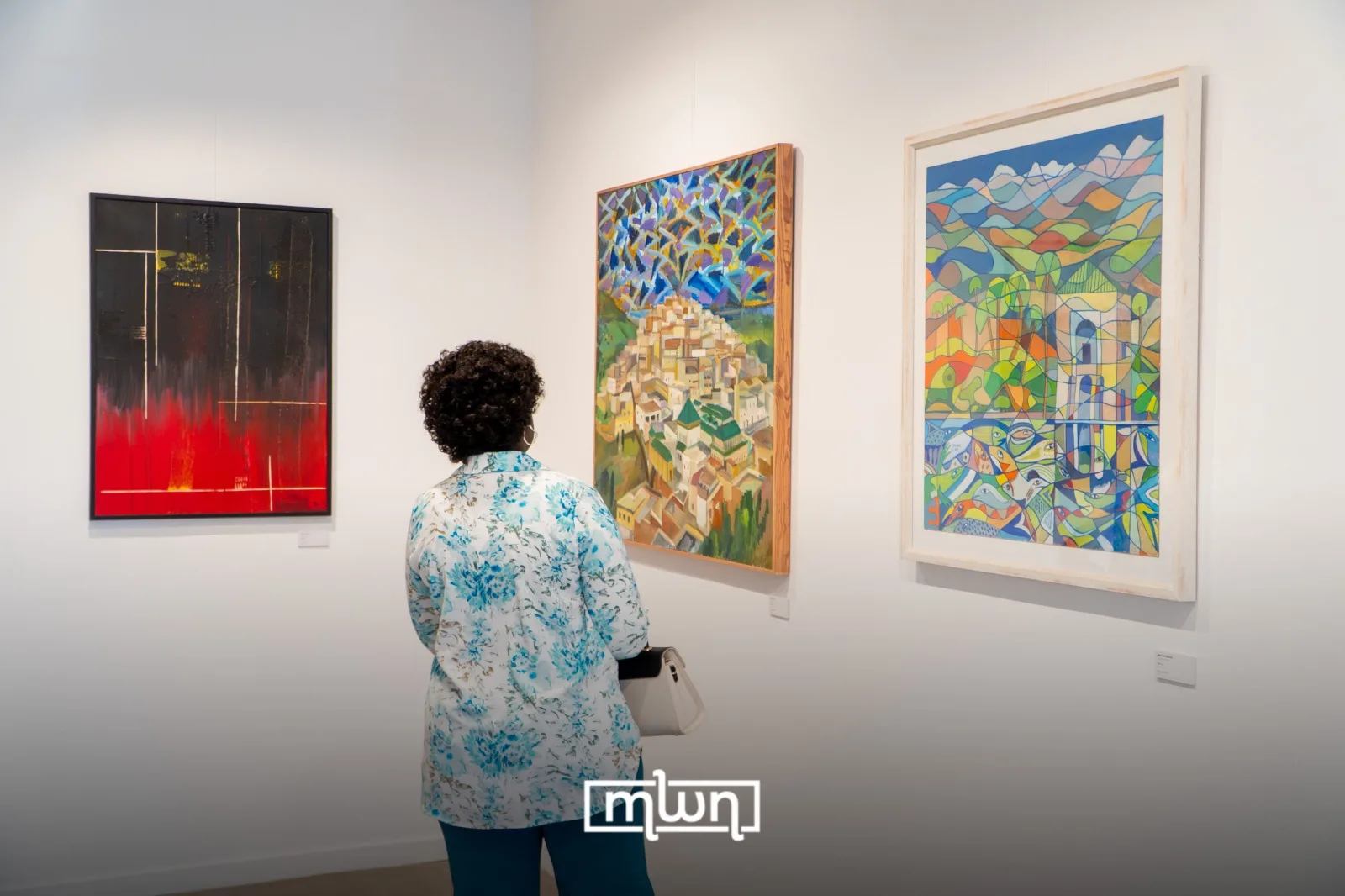
Fez — The opening of “Traces sur Rivages” in Rabat yesterday was more than another exhibition launch.
Staged by the Hassan II Foundation for Moroccans Living Abroad, the show was a commemorative moment for the 10th anniversary of Espace Rivages, cultural center while also turning attention to a wider Moroccan artistic scene shaped far beyond the country’s borders.
The exhibition runs through April 25 and brings together 60 Moroccan artists living abroad, with participants based across Europe, the United States, Canada, and several Arab countries.
Rather than presenting a single curatorial line, the exhibition draws from the Foundation’s collection and from artists who have exhibited at “Espace Rivages” over the past decade.
The result is a show rooted in memory, return, and artistic continuity, one that reflects how Moroccan creators abroad remain connected to home even as their careers unfold internationally.
A space for artists across borders
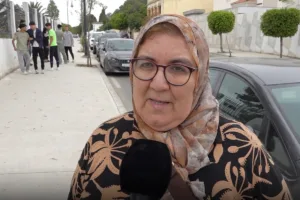
Fatiha Amellouk, who is the director of culture and communication at the Foundation, told Morocco World News (MWN) that the exhibition was important because it helps “show and highlight the diversity, the plurality and the vitality of the Moroccan artistic scene abroad.” She said it also gives Moroccan audiences a chance to discover artists who are often little known in Morocco despite being well established overseas.
That idea of reconnection also shaped how the Foundation framed the event. Amellouk said the wider goal is to help maintain the ties these artists continue to have with their country of origin, giving the anniversary exhibition a meaning that goes beyond celebration alone.
Artists returning to the Rabat spotlight
For some participants, the exhibition also carried a personal dimension. Belgium-based visual artist Hafida Lamarti, who is exhibiting at “Espace Rivages” for the second time, told MWN: “It was an honor for me to exhibit again.” Lamarti had previously held a solo exhibition at the venue in 2024 and said she was proud to be included this year among artists featured by the Foundation over the past decade.
Photographer Noureddine ElWarari, who is based in Hollywood, California, also described the invitation as a meaningful one. Speaking to MWN, he said: “I’m just glad and honored to be here and to be able to be with these amazing Moroccan artists who live abroad.” ElWarari added that the support surrounding the exhibition helped place artists “on a limelight,” giving them room to express themselves and present their work to a broader public.

ElWarari, who specializes in black-and-white photography and teaches cinema in Los Angeles, said the images he presented were shaped by years of work in Taroudant and by a desire to tell intimate family stories through a timeless visual language. For him, black-and-white photography carries a depth that color does not always reach, speaking “to the soul” and giving ordinary lives a lasting presence.
More than an anniversary show
What “Traces sur Rivages” seems to capture most clearly is the long arc of a relationship between Moroccan artists abroad and the institutions trying to keep that relationship visible at home. In Rabat, the anniversary of “Espace Rivages” became a way of looking back at ten years of artistic exchange while also reaffirming a broader cultural mission.
In that sense, the exhibition does not simply celebrate the past of a venue. It suggests that for many artists of the diaspora, visibility in Morocco still matters deeply, not only as recognition, but as a way of preserving belonging across distance.