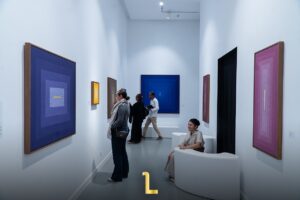
Fez — Marrakech’s Comptoir des Mines Galerie is preparing to reopen the mystical universe of Moroccan artist Abbès Saladi with “L’Odyssée Mystique” (The Mystical Odyssey), an exhibition running from May 23 to June 25.
The gallery’s official program lists the exhibition among its current shows, placing Saladi back in the city where his visual imagination first took shape.
The exhibition brings together a rare body of works from major private collections, including pieces linked to Pauline De Mazières, founder of “L’Atelier,” as well as other important collectors.
The show includes around 52 works, some of them rarely seen, and one of Saladi’s earliest pieces, believed to date from around 1977.
A visionary rooted in Marrakech
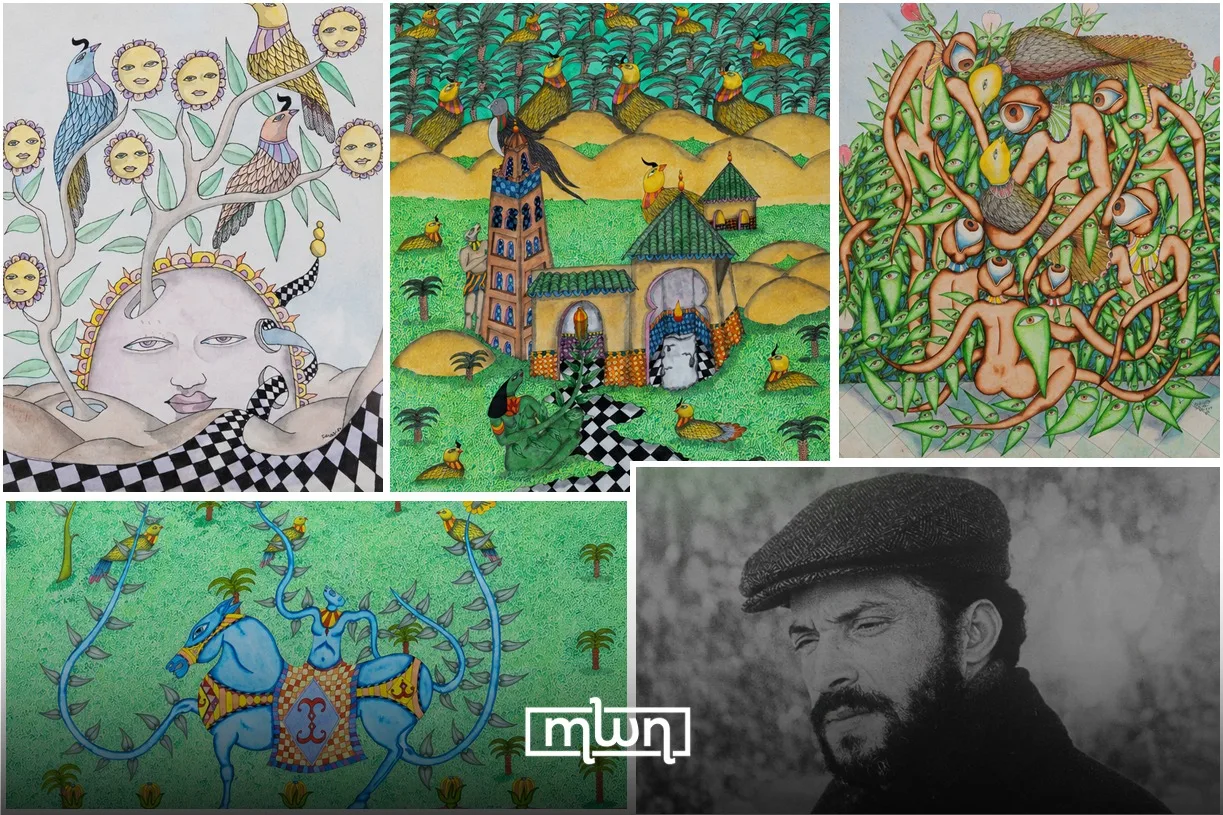
Born in Marrakech in 1950, Abbès Saladi remains one of the most distinctive figures in Moroccan contemporary art. His work is often described through its dreamlike figures, symbolic architecture, birds, hybrid beings, and dense spiritual atmosphere.
A biographical note from Villa des Arts says Saladi lost his father at a young age, later studied philosophy, and developed an artistic world shaped by solitude, inner fragility, and imagination.
This background gives “L’Odyssée Mystique” a strong emotional charge. Saladi’s art does not simply represent Marrakech as a place. It transforms the city’s memory, popular symbols, and spiritual textures into a private mythology.
His drawings and watercolors often feel suspended between folklore and vision. Faces emerge like apparitions. Buildings become mental landscapes. Animals and human figures merge into forms that resist easy explanation.
A rare return to the city of origin
The exhibition’s return to Marrakech carries special symbolic weight. Saladi’s early recognition was closely tied to the city, and several accounts note that some of his first works circulated through local encounters before attracting the attention of collectors and gallerists.
“L’Odyssée Mystique” also arrives at a moment when Moroccan audiences are increasingly revisiting artists who worked outside conventional categories. Saladi’s universe was neither academic nor decorative. It was intensely personal, marked by symbolism, anxiety, wonder, and spiritual searching.
A legacy that still unsettles and fascinates
Saladi died in 1992, but his work continues to draw attention because it feels both Moroccan and universal. It speaks through local signs, yet its deeper concerns are broader: solitude, memory, transformation, fear, beauty, and the invisible forces that shape human life.
That is why this exhibition matters beyond the art market or the gallery calendar. It offers viewers a chance to encounter a Moroccan artist who turned vulnerability into form and mysticism into visual language.