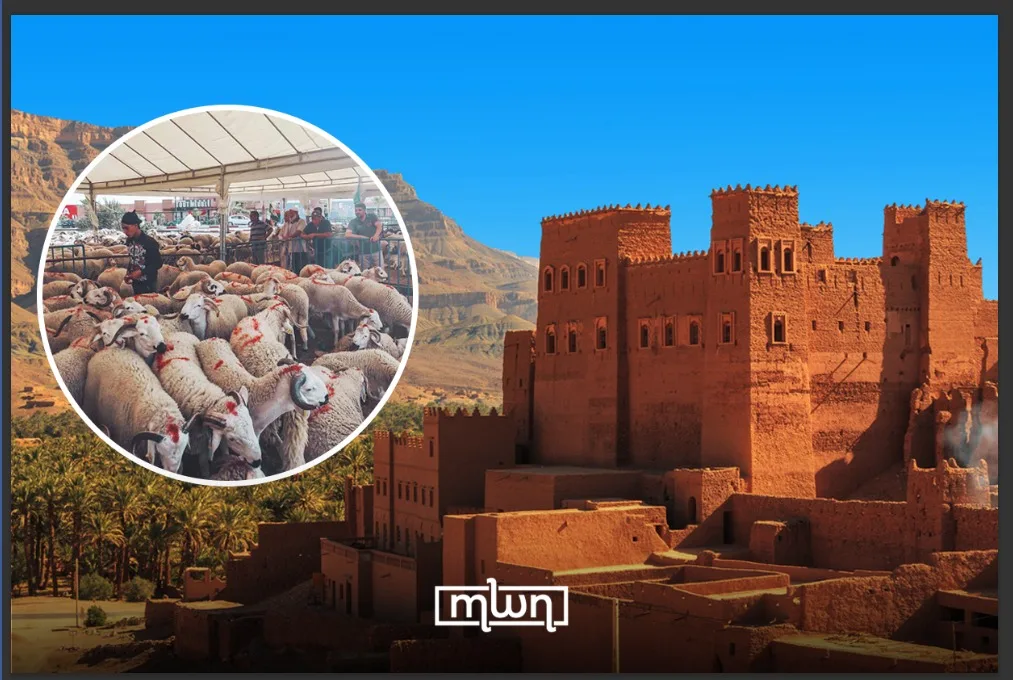
Casablanca – Eid Al Adha is just a few days away, making this the perfect moment to talk about how such a special day is experienced in Morocco, with a closer look at Zagora.
What makes Morocco so fascinating is not only its cultural unity, but also its beautiful regional diversity. Each region carries its own atmosphere, its own rhythm, and its own little details that make it stand out, whether through landscapes, customs, or everyday traditions.
And yet, one thing ties it all together: the centrality of family in how Moroccans celebrate this important, unique occasion. Eid Al Adha is one of those moments that simply feels incomplete without family warmth.
So, guess what happens every year? In Casablanca and other big cities, people begin planning their return home days in advance, often traveling long distances just to be with loved ones.
In the days leading up to Eid, highways fill up as Casablanca slowly empties, as if the city itself is quietly exhaling while people return to their roots.
A true gathering point
One of these regions is southeastern Morocco, with Zagora standing out as a key example, where many residents have moved to cities like Casablanca for work but remain deeply tied to where they come from.
Eid in Zagora carries a rhythm of its own. While the core traditions remain shared across the region, the experience is not identical from one household to another.
Larger families often turn Eid into a true gathering point across generations, where grandparents, parents, children, and grandchildren come together under one roof.
In these homes, rituals may slightly differ from one household to another, while smaller families experience the day in a more intimate way, but with the same shared spirit.
And of course, the sheep naturally remain at the center of Eid Al Adha, often purchased days, sometimes even weeks, in advance.
Now, let’s step into how Eid morning unfolds.
A morning like no other
You wake up early, around 6 a.m., and guess what? The house already feels alive, as if the day is already in motion. Men are already dressed in their finest traditional Moroccan attire, the jellaba or jabador, preparing for the Eid prayer.
Meanwhile, women are putting the final elegant touches on their Eid outfits and setting the second breakfast table, because yes, in Zagora, breakfast comes in two rounds.
The first is simple and comforting, usually coffee, dates, and soup. Then comes the prayer at the msalla, an open-air space designated for Eid prayers near the mosque.
After the prayer, the atmosphere shifts completely. Men return and the home fills with greetings, laughter, and blessings of Eid.
Then comes the second breakfast, the final calm before the day’s main ritual begins.
The morning is also full of life beyond the home. Children go from door to door wishing neighbors a blessed Eid, often receiving sweets or small treats in return. A simple tradition, yet one that fills the air with joy.
From the sacrifice to shared meals and family visits
Here comes the moment children have been waiting for all night. The sheep is prepared for sacrifice, marking the heart of Eid Al Adha. What follows is a day, and often several days, centered around sharing and preparing meat in all its traditional forms.
One of the elements that quietly defines the culinary tradition in the region is cured meat, a practice deeply rooted in local habits.
In preparation for this, rituals begin days before the celebration itself. Around ten days before Eid Al Adha, families start preparing a special vinegar made with local herbs.
Once Eid arrives and the sheep is sacrificed, this vinegar becomes an essential part of preserving the meat intended for curing. It’s first carefully treated with the homemade mixture and left for some time before being hung and dried under the sun for several days until it’s fully dry.
Beyond this long-standing tradition of curing, other parts of the meat are enjoyed immediately. Grilled skewers of heart and kidney also find their place at the table, always accompanied by a glass of Atay (Moroccan mint tea.)
And when Eid in Zagora falls during the summer, it means one thing: scorching days become part of the scene. But if you think that could stand in the way of Zagora’s love for tea, think again.
Tea is almost sacred here, and that tradition remains unchanged. So tea is always present here, no matter how hot the weather gets.
Later, the day naturally extends into family visits, as the celebration continues from one home to another, carrying the spirit of Eid across generations and neighborhoods.
A perfect time for weddings
But if there’s one thing that also defines the season in the region, it’s weddings. And this is far from a coincidence.
Eid creates a rare moment when extended families reunite in the same place, something that is not always possible during the rest of the year, with relatives often scattered across different cities.
So, the days following Eid naturally become the perfect occasion to organize weddings, allowing families to celebrate two joyful moments at once.
Because beyond all the rituals, Eid is really about finding your way back to family, no matter the distance.
Read also: Eid Al Adha in Switzerland Celebrates Faith, Family and Community