Fez — Moroccan men have long shaped the rhythm of Eid Al-Adha, known locally as Eid Al-Kbir, through a mix of prayer, grooming, labor, cooking, and quiet acts of solidarity that keep the holiday moving from dawn to nightfall.
This year, Morocco is celebrating Eid Al-Adha this week on Wednesday, May 27, after the Ministry of Islamic Affairs confirmed the Dhu al-Hijjah moon sighting.
The holiday begins on the 10th day of Dhu al-Hijjah and is marked across the Muslim world by communal prayer, sacrifice, family visits, and the sharing of fresh meat with relatives and people in need.
The morning begins before the sheep
Before the courtyards fill with smoke and the streets grow loud with greetings, the day often starts with mirrors, razors, perfume, and clean clothes. Many Moroccan men treat Eid morning as a moment to appear composed and renewed.
Haircuts are handled in the days before Eid. Beards are trimmed. White djellabas, gandouras, or pressed shirts come out of closets. Some men add a small touch of musk or cologne before heading to the mosque or open prayer space.
The grooming is not only cosmetic. It signals respect for the day, the family, and the public act of prayer. In many homes, boys learn the ritual by watching fathers, uncles, and older brothers prepare with unusual seriousness.
After the Eid prayer, the mood shifts quickly. Men return home, exchange greetings, check on relatives, enjoy a light breakfast, and step into the practical side of Eid.
The neighborhood’s unofficial workforce
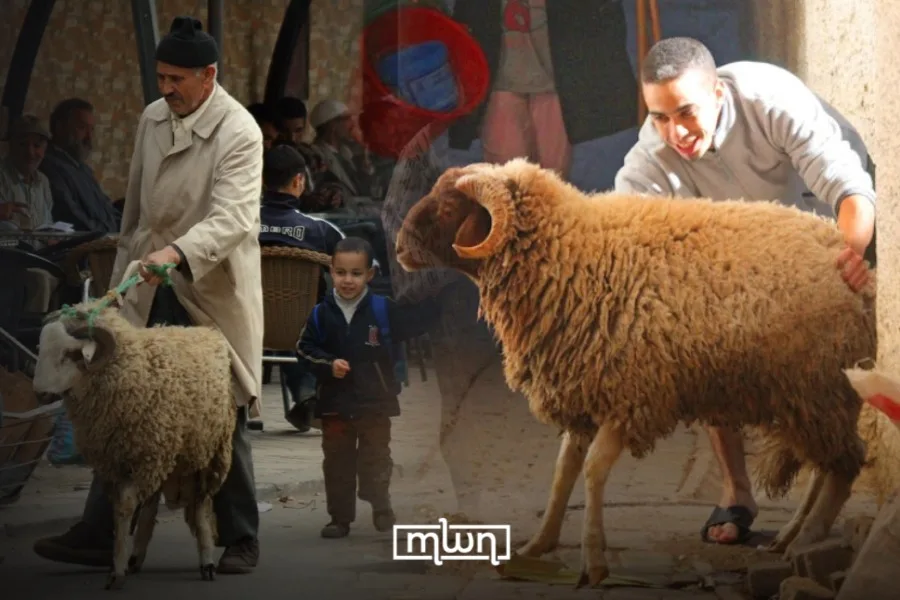
The animal at the center of the day is usually a sheep, though in Morocco it is more commonly called lhawli or l’kebch.
For many Moroccan men, Eid is when domestic space becomes public labor. Courtyards, rooftops, garages, and narrow alleys turn into temporary workstations. Knives are sharpened in advance, tools are laid out, and younger men move between homes carrying buckets, rope, grills, or charcoal.
In many neighborhoods, the most respected man on Eid is not the loudest one, but the one who knows what to do quietly and with surgical precision. He may be the uncle who can handle the sacrifice calmly, the neighbor who brings proper tools, or the butcher who spends the morning moving from one house to another.
That labor often becomes a form of service. Men help widows, elderly neighbors, single mothers, and families without someone able to perform or manage the sacrifice. Some do the heavy lifting. Others clean, divide, transport, or help prepare the meat for storage.
The gesture is usually informal. No announcement is needed. Someone knocks, someone asks, someone helps, and Eid continues.
Fire, smoke, and the first taste of Eid
By midday, the smell of Eid begins to take over Moroccan streets. Smoke rises from rooftops and doorways as families prepare the first grilled bites of the holiday.
For many, the first iconic dish is boulfaf, pieces of liver wrapped in caul fat and grilled over charcoal. Morocco World News (MWN) has previously described Eid Al-Adha as a day when the aroma of grilled meat fills courtyards and rooftops, with families gathering around food after the morning rituals.
Men often take charge of the fire. They fan charcoal with cardboard, argue over the right heat, test skewers, and pass the first pieces to elders or children waiting nearby.
Later comes another unmistakable Eid scene: the sheep’s head and trotters being singed, scraped, washed, and prepared for cooking. In some homes, the head becomes part of a later meal with chickpeas, spices, or couscous. In others, it is a delicacy reserved for those who appreciate the older, stronger flavors of Eid.
This is where Moroccan masculinity on Eid becomes culinary rather than ceremonial. The same men who dressed carefully for prayer may spend the afternoon covered in smoke, ash, and grease, proudly managing a grill like a family station.
A day of skill, not spectacle
Eid Al-Adha is often described through sacrifice, but in Moroccan homes, it is also a day of competence. Men are expected to know the technicalities of how to prepare, carry, clean, cut, lift, repair, and organize.
They check gas bottles, set up grills, rinse courtyards, sharpen tools, carry/hang heavy meat, and answer calls from relatives who need help. Younger men learn by being assigned small tasks first, then bigger ones as they gain experience and confidence.
Not every man performs every role, and not every family organizes Eid the same way. Urban households may rely more on professional butchers. Rural families may preserve older methods. Some families buy collectively. Others avoid the sacrifice when money, health, or personal circumstances make it difficult.
That flexibility became especially visible in 2025, when King Mohammed VI asked Moroccans to abstain from slaughtering sheep because drought and falling livestock numbers had pushed prices and pressure higher.
The softer side of Eid duty
Behind the smoke and knives is a quieter emotional role. Moroccan men often spend Eid moving between houses, kissing the heads of parents, checking on married sisters, visiting in-laws, and calling relatives abroad.
Some carry plates of meat to neighbors. Others drive portions across town. In apartment buildings, a man may go floor to floor asking if anyone needs help, while boys trail behind him with plastic bags or trays.
The work can be exhausting, but it gives Eid its social structure. Men become connectors between households. They turn individual family rituals into neighborhood cooperation.
Women still carry a huge share of Eid’s labor, especially in seasoning, cooking, cleaning, hosting, and preserving meat. But men’s visible tasks often define the holiday’s public atmosphere: the prayer line, the butcher’s visit, the charcoal smoke, the street greetings, and the afternoon rounds of help.
By sunset, the polished Eid morning has usually disappeared. The white clothes are changed, the perfume has faded, and the men who left for prayer clean and composed are now tired, smoky, and full.
That transformation is part of the point. Eid Al-Adha in Morocco is not a passive celebration. It asks men to show up with faith, skill, generosity, and stamina; not only for their own families, but for the people nearby who need an extra pair of hands.