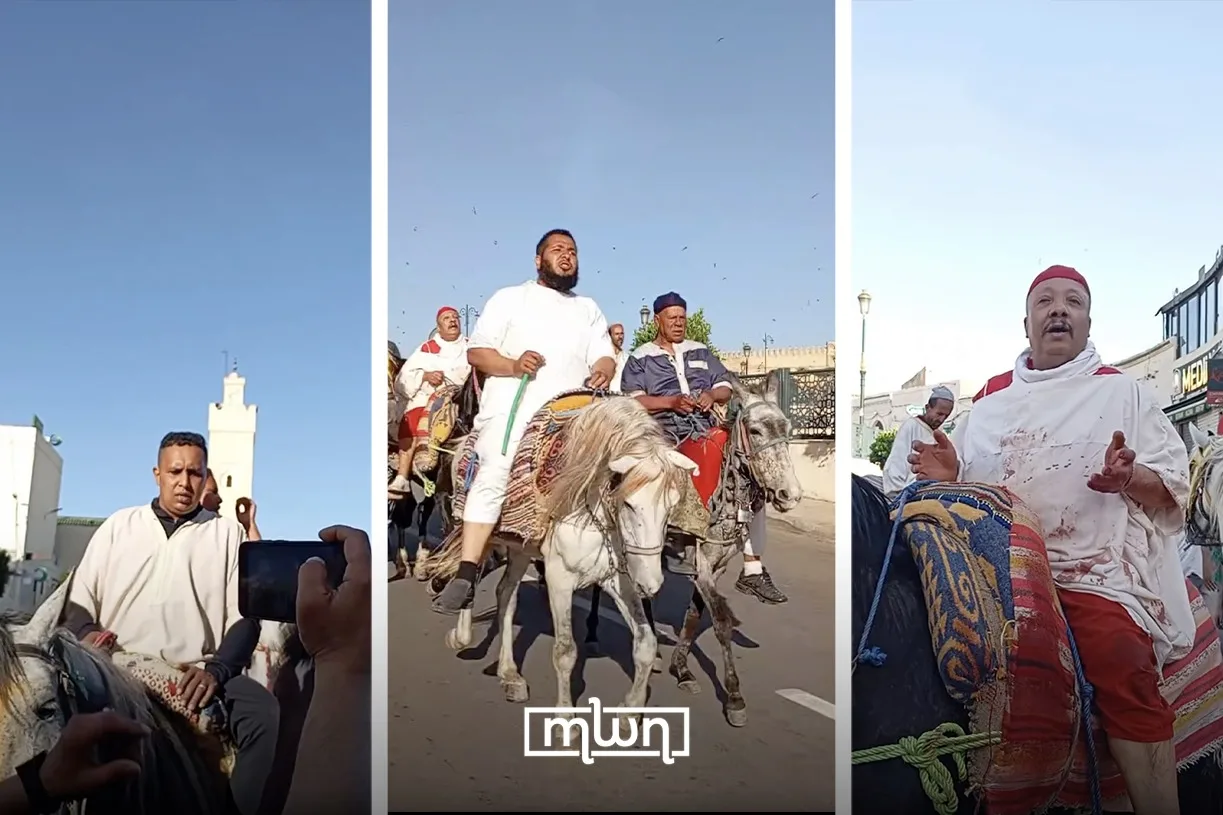
Rabat – In Fez today, the city’s ceremonial horsemen once again brought one of its most distinctive Eid Al Adha traditions back to life, riding through the ancient Medina in a ritual closely tied to the Udhiya, or Eid sacrifice.
Dressed in traditional attire and mounted on decorated horses, the riders moved through the streets carrying the festive spirit of Eid across the old city.
The procession unfolded as part of a long-standing Fassi custom connected to the symbolic delivery and announcement of the sacrifice, a moment deeply woven into the cultural memory of Fez.
For many residents, the ride is more than a spectacle. It is a living ritual that transforms Eid morning into a shared public celebration, where spirituality, heritage, and collective joy meet in the streets of Medina.
Crowds gathered along narrow alleyways and historic squares to watch the horsemen pass, reviving scenes that generations of Fassis have grown up with.
Horsemen historically played an important role in escorting the sacrificial offerings linked to royal and communal ceremonies, particularly those connected to the old royal rituals of the city.
Over time, the procession evolved into a symbolic public display marking the beginning of Eid festivities.
Part of the ritual is also tied to the historic Marinid prayer grounds, where royal Eid traditions in Fez were once centered.
The procession reflects the city’s long relationship with ceremonial pageantry: horses, music, traditional garments, and collective celebration all becoming part of how Eid is experienced beyond the private family home.
While many Eid traditions across the region have changed with time, Fez continues to preserve this uniquely local expression of the holiday.
The return of the horsemen today served as a reminder of how the city keeps its intangible heritage alive, not in museums, but in movement, sound, and ritual carried through its centuries-old streets.