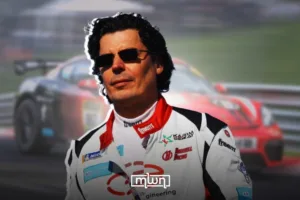
Fez — Dizzy Dros has entered Morocco’s pre-election season with a teaser that feels less like a music-video preview and more like a campaign ad turned inside out.
The Moroccan rapper, whose real name is Omar Souhaili, has released the teaser for “HRRSS,” a new track built around a direct critique of political stagnation, broken promises, and the repetitive theater of electoral life.
The timing is hard to miss. Morocco is scheduled to hold legislative elections on September 23 to renew the 395 seats of the House of Representatives.
The teaser’s central joke is also its central accusation: politics has become a marketplace, and the citizen’s voice is treated like an item for sale.
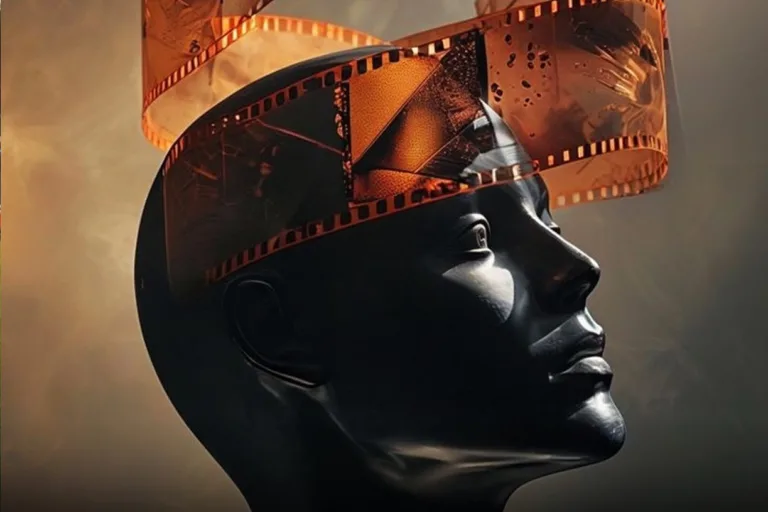
The teaser also appears to sit within the same narrative universe as “M3A L3ECHRANE,” with a flashback suggesting that “HRRSS” is not just a standalone clip but a continuation of Dizzy Dros’ broader political and cinematic language.
A company selling votes
The video opens with a fake company called “Sotiby,” where a poster announces: “Sell your voice and free yourself from responsibility,” priced at MAD 199.99 ($20).
The line is simple, ugly, and effective. It turns the vote into a retail product. It suggests that electoral participation, instead of being a civic act, can become a cheap transaction wrapped in bureaucratic language.
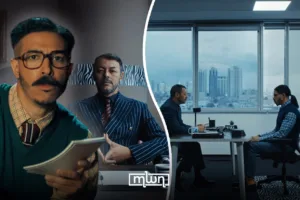
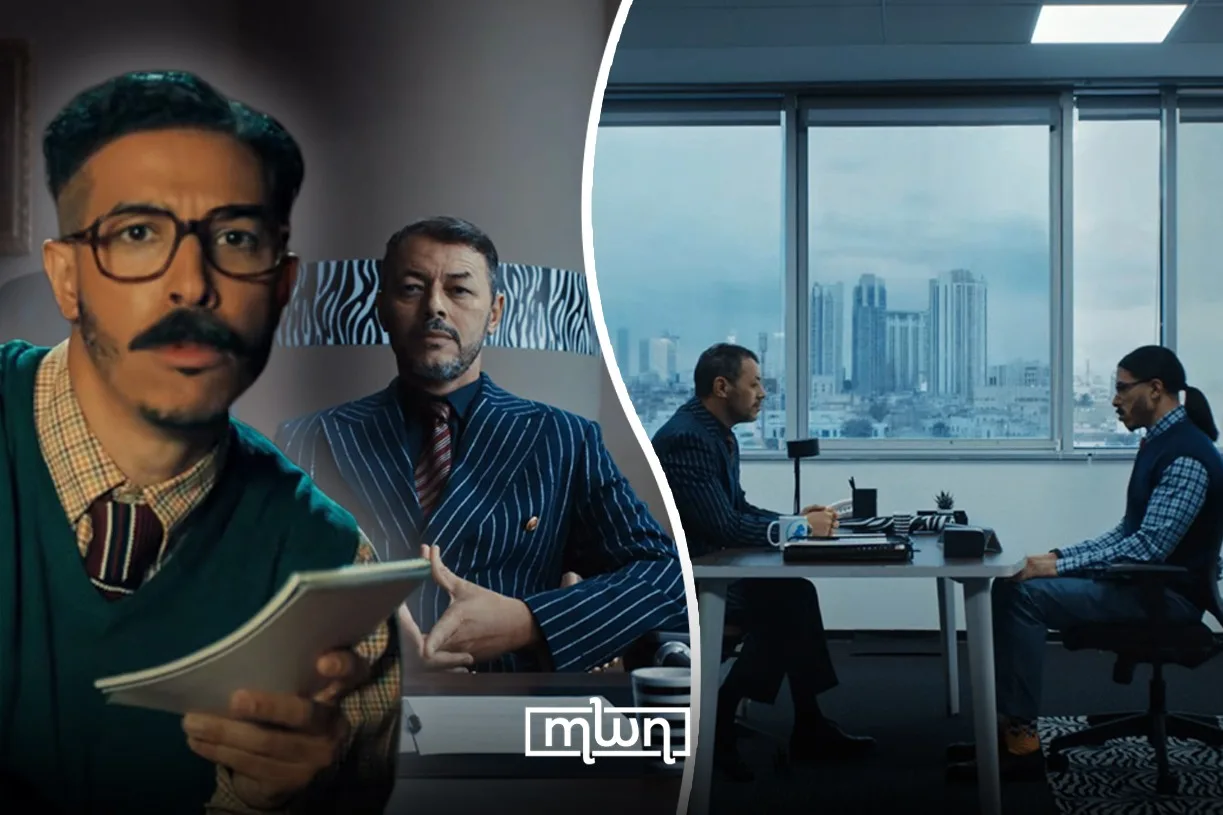
Dizzy Dros then enters the company dressed like a candidate or office functionary: neat shirt, vest, leather shoes, hair pulled back. Everything about him fits the system, except the bright yellow socks. That small visual rebellion breaks the grayness around him.
He climbs to the 395th floor, an explicit reference to the 395 parliamentary seats voters will choose in September. The number turns the building into a political metaphor: an endless vertical machine where every floor looks the same, and everyone inside seems interchangeable.
Bureaucracy as satire
The teaser works because it does not shout its message. It stages it.
Inside “Sotiby,” the colors are dull, gray, and desaturated. The workers resemble each other. The office feels lifeless, as if political ambition has been stripped of personality and reduced to procedure.
Then comes the interview scene. The interviewer begins, “Is it not you who…” and Dizzy Dros immediately shakes his head before hearing the full question, thinking he remembers him as the rascal from “M3A L3ECHRANE.” When the interviewer asks, “Is it not you we called last week?” he changes and nods yes.
The shift is small, but it says plenty. The character does not answer from conviction. He adapts. He reads the room. He changes depending on what the system wants from him.
That is the teaser’s sharpest political idea: opportunism is not presented as a scandal, but as routine behavior.
The zebra question
The strangest moment comes when the interviewer asks him to name the best animal in the world.
Dizzy Dros looks around the office, notices zebra patterns in the décor, and answers: the zebra. When asked what sound a zebra makes, he begins humming what appears to be a fragment of the coming track.
The scene is absurd, but not random. It shows a candidate learning the correct answer from the room rather than saying anything real. The zebra becomes a symbol of artificial conformity: say what matches the wallpaper, then pretend it was your idea.
The moment also turns the teaser away from speeches and toward sound. Instead of ending with a manifesto, “HRRSS” ends by promising music.
Rap as political pressure
Dizzy Dros has long occupied a major place in Moroccan rap, with platforms such as Spotify describing him as a central figure in North African hip-hop culture known for hard-hitting lyrics and strong visual identity.
That matters here because “HRRSS” is not arriving as isolated commentary. It appears as part of a wider artistic return. Spotify lists “HRRSS” among the tracks on “AFLAM,” Dizzy Dros’ 2026 album project.
The title itself carries weight. In Darija, “HRRSS” can suggest vigilance, cracking, breaking, or rupture depending on context and pronunciation. That ambiguity fits the teaser. The clip asks viewers to stay alert, but it also hints that something has already broken between voters and the political class.