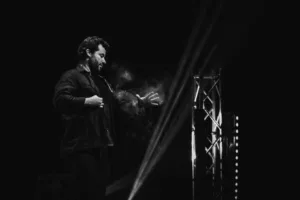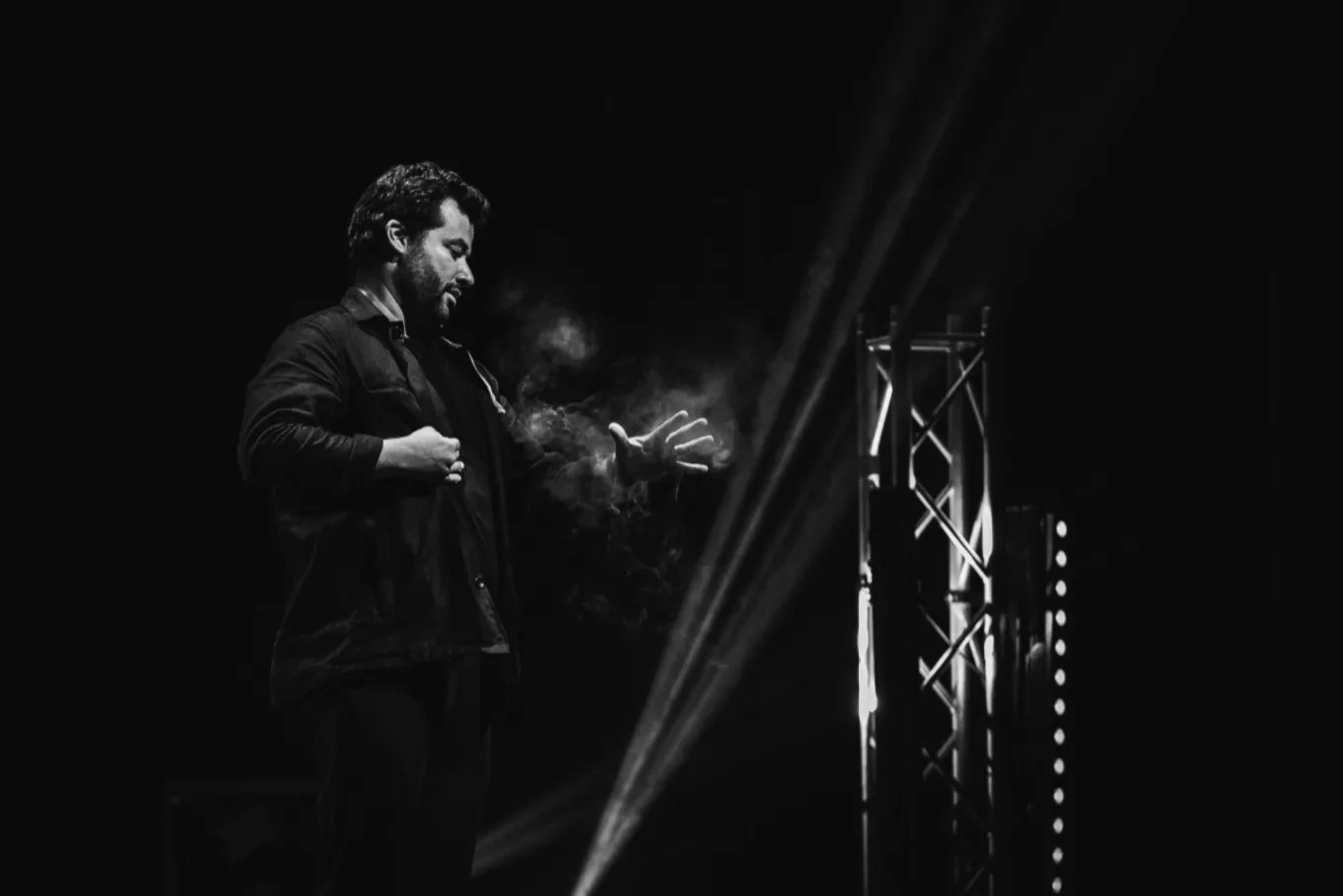
Casablanca – Moroccan magician and mentalist Hicham Benkiran brought the world of illusion to Rabat’s Mohammed V Theater on June 17 with his latest show, “IM-POSSIBLE.”
Presented as a first of its kind in Morocco and across Africa, the show combines magic, mentalism, audience participation, and large-scale stage illusions in an immersive experience designed to challenge perceptions and blur the line between reality and imagination.
From logic to illusion
But behind the magician known as Hicham Illusions is a story that does not follow the traditional path into the world of performance.
Originally trained as a computer engineer, Benkiran chose to leave behind the logic of algorithms for the unpredictability of illusion.
The transition may seem unlikely, yet it has led him to become one of the leading figures of magic in Morocco and the founder of the country’s first magic school.
An immersive experience beyond traditional magic
Throughout the evening, Benkiran transformed a packed theatre of more than 900 spectators into active participants rather than passive observers.
Spectators regularly became part of the show itself, as Benkiran incorporated selected audience members into a series of illusions, mentalism acts, and interactive sequences.
More than a succession of tricks, “IM-POSSIBLE” sought to make magic accessible to audiences of all ages.
Children and adults alike found themselves drawn into the performance, whether through close-up illusions, moments of hypnosis, or interactive sequences that blurred the boundary between stage and audience.
Visually, “IM-POSSIBLE” relied heavily on staging, lighting, and scenography to sustain its sense of wonder. Large-scale illusions appeared alongside more intimate moments of mentalism, creating a rhythm that constantly shifted between spectacle and proximity.
The production also reflected Benkiran’s cosmopolitan influences. While shaped in part by his experience in France, the show remained rooted in Moroccan culture through music, dance, and moments of exchange that brought local artistic references into the spectacle.
As its title suggests, “IM-POSSIBLE” was built around the suspension of disbelief. For nearly two hours, audiences were invited to question what they saw, embrace the unexpected, and accept that, at least for one evening, the impossible might not be impossible after all.
Read also: Museum of Photography and Visual Arts Opens its Doors in Casablanca