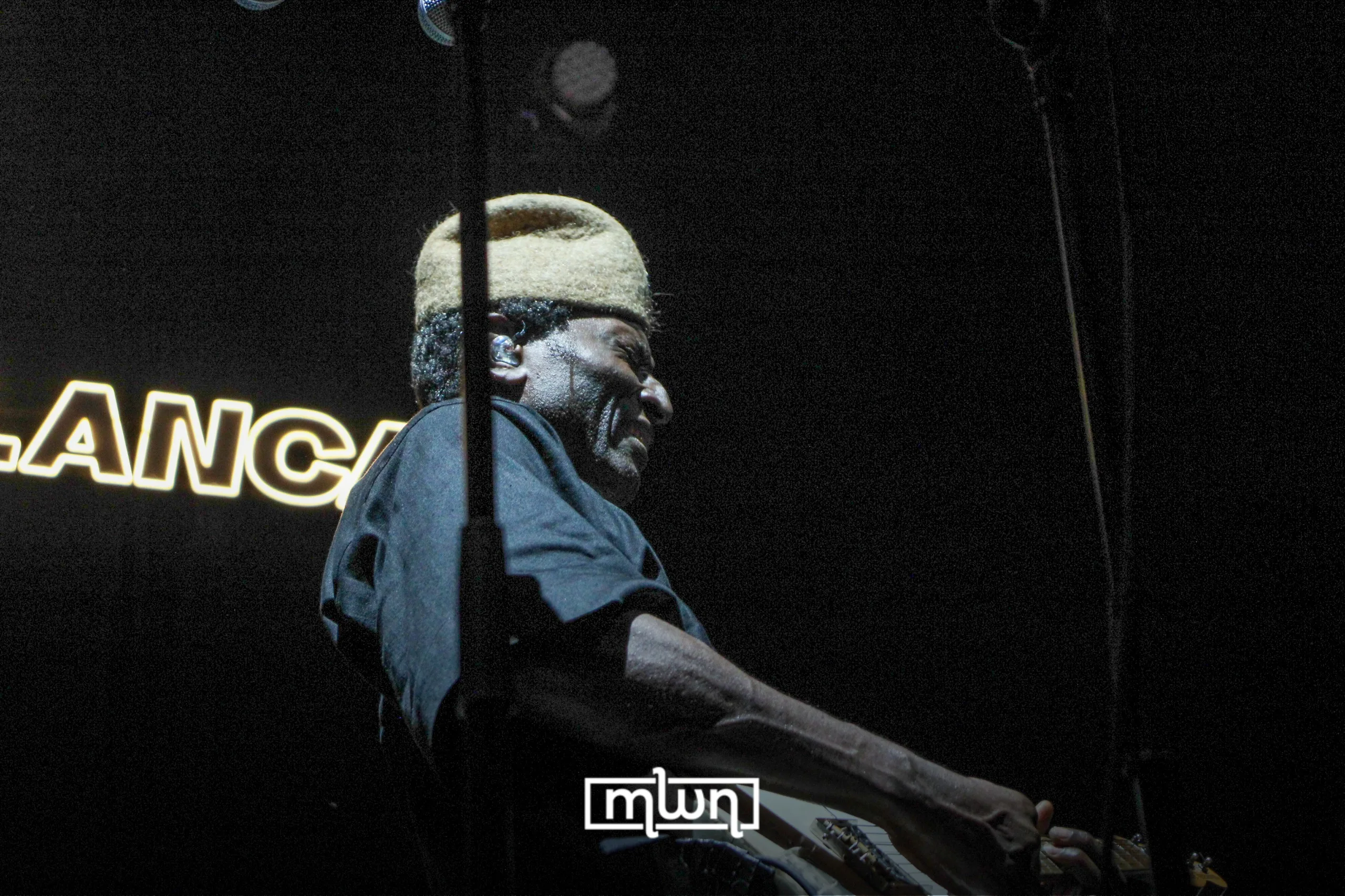
Casablanca — Keziah Jones brought his unmistakable “blufunk” energy to Jazzablanca on Sunday night, giving Scène 21 a performance built around rhythm, sweat, and the raw electricity of his guitar.
The Nigerian singer-songwriter and guitarist performed in Casablanca as part of Jazzablanca’s July 5 program, sharing the night’s Scène 21 spirit with Jowee Omicil while the festival continued its 19th edition across the city.
Jones did not need a crowded stage to create movement. His presence was enough to pull the audience into his world: a sharp guitar attack, a restless body, and a voice that carried both street-level urgency and blues-soaked confidence.
Blufunk as a live language
Jones has long described his sound as “blufunk,” a fusion of raw blues feeling and hard-edged funk rhythm, with Yoruba music and soul also shaping his musical identity.
At Jazzablanca, that definition became physical. His guitar work did not simply decorate the songs. It drove them. His percussive right-hand technique, often compared to the slap approach of bass playing, gave the set its pulse and made every riff feel like part of the rhythm section.
That is what made the performance feel so alive. Jones played as if rhythm came first and everything else had to follow. The guitar became drum, bassline, voice, and spark at the same time.
A set shaped by groove and memory
For many listeners, Keziah Jones remains tied to songs such as “Rhythm Is Love,” the track that helped introduce his 1992 debut album “Blufunk Is a Fact!” to international audiences.
On Sunday night, that history was present without turning the show into nostalgia. Jones carried the confidence of an artist who knows his signature sound, but he performed it with the hunger of someone still testing its limits.
The result was one of Jazzablanca’s most kinetic Scène 21 moments so far. The stage felt intimate, but the sound carried force. Jones kept the energy lean, direct, and deeply rhythmic, giving Casablanca a show that moved between blues grit, funk precision, and African-rooted fire.
His performance also fit the broader personality of Jazzablanca’s second weekend, where major crowd moments have sat beside more searching, musician-driven sets. Jones belonged firmly to that second lane, but his groove made the concert feel immediately open to the crowd.
Keziah Jones did not only perform at Scène 21. He reminded the audience why a guitar, in the right hands, can still feel like a whole band.
For Casablanca, his set was a reminder that Jazzablanca’s strongest moments are not always about scale. Sometimes, they come from one artist turning rhythm into motion and making a festival stage feel electric from the first strike of the strings.
Keziah Jones Brings Blufunk Fire to Jazzablanca’s Scène 21
Keziah Jones gave Casablanca a sharp, percussive, and deeply physical performance, turning Scène 21 into a space where blues, funk, and African rhythm moved as one.
Fez — Keziah Jones brought his unmistakable “blufunk” energy to Jazzablanca on Sunday night, giving Scène 21 a performance built around rhythm, sweat, and the raw electricity of his guitar.
The Nigerian singer-songwriter and guitarist performed in Casablanca as part of Jazzablanca’s July 5 program, sharing the night’s Scène 21 spirit with Jowee Omicil while the festival continued its 19th edition across the city.
Jones did not need a crowded stage to create movement. His presence was enough to pull the audience into his world: a sharp guitar attack, a restless body, and a voice that carried both street-level urgency and blues-soaked confidence.
Blufunk as a live language
Jones has long described his sound as “blufunk,” a fusion of raw blues feeling and hard-edged funk rhythm, with Yoruba music and soul also shaping his musical identity.
At Jazzablanca, that definition became physical. His guitar work did not simply decorate the songs. It drove them. His percussive right-hand technique, often compared to the slap approach of bass playing, gave the set its pulse and made every riff feel like part of the rhythm section.
That is what made the performance feel so alive. Jones played as if rhythm came first and everything else had to follow. The guitar became drum, bassline, voice, and spark at the same time.
A set shaped by groove and memory
For many listeners, Keziah Jones remains tied to songs such as “Rhythm Is Love,” the track that helped introduce his 1992 debut album “Blufunk Is a Fact!” to international audiences.
On Sunday night, that history was present without turning the show into nostalgia. Jones carried the confidence of an artist who knows his signature sound, but he performed it with the hunger of someone still testing its limits.
The result was one of Jazzablanca’s most kinetic Scène 21 moments so far. The stage felt intimate, but the sound carried force. Jones kept the energy lean, direct, and deeply rhythmic, giving Casablanca a show that moved between blues grit, funk precision, and African-rooted fire.
His performance also fit the broader personality of Jazzablanca’s second weekend, where major crowd moments have sat beside more searching, musician-driven sets. Jones belonged firmly to that second lane, but his groove made the concert feel immediately open to the crowd.
Keziah Jones did not only perform at Scène 21. He reminded the audience why a guitar, in the right hands, can still feel like a whole band.
For Casablanca, his set was a reminder that Jazzablanca’s strongest moments are not always about scale. Sometimes, they come from one artist turning rhythm into motion and making a festival stage feel electric from the first strike of the strings.