Rabat – Morocco has introduced a new legal framework governing stray animals, with Law No. 19.25 setting out rules for their protection, care and management, as well as penalties for violations.
The legislation was approved by Parliament after being adopted by the House of Representatives in June and the House of Councillors in July.
Here is what the new rules mean in practice:
What is considered a stray animal?
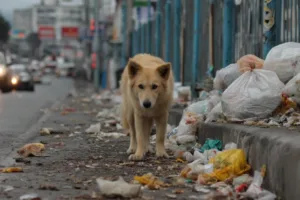
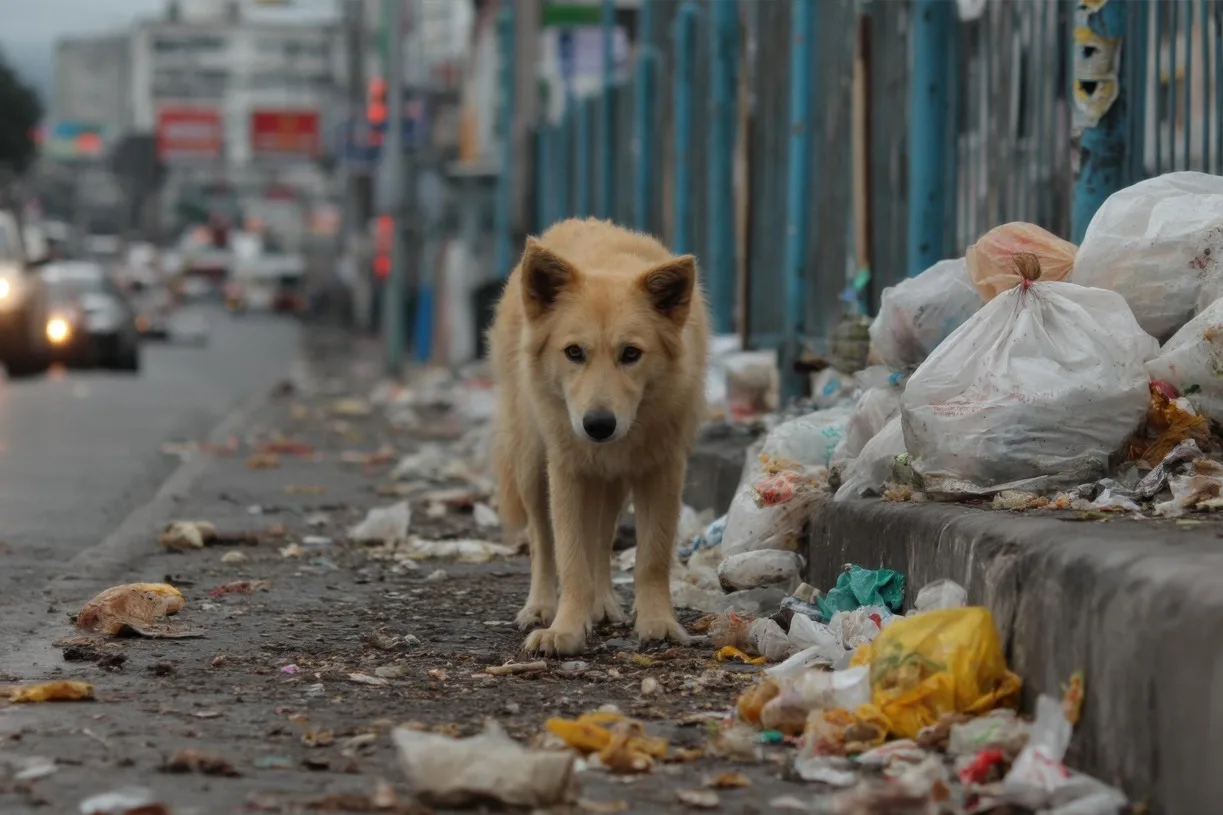
An animal is considered stray when it is temporarily or permanently found in a public space without the control or supervision of its owner or keeper.
This includes animals found on streets, in residential buildings and in places open to the public.
Can people feed or treat stray animals?
Under the law, individuals are prohibited from housing, feeding, or treating stray animals in public spaces. Their care is instead assigned to authorized centers.
Violating this provision can result in a fine ranging from MAD 500 to MAD 2,000.
The measure has already drawn criticism from animal-protection groups, which have raised concerns about its impact on citizens and volunteers who regularly care for stray animals.
What will the animal-care centers do?
Authorized centers will be responsible for a range of services, including:
- Capturing and collecting stray animals
- Transporting and receiving them
- Identifying them
- Assessing their health and behaviour
- Providing food and veterinary care
- Vaccinating and sterilizing them
- Reducing their suffering when they cannot be cured
Depending on the circumstances, animals may later be returned to their environment, relocated to a suitable place, or made available for adoption.
Can stray animals be euthanized?
Yes, but under specific circumstances.
Euthanasia may be carried out when an animal has an incurable disease or disability causing suffering.
It may also be considered when an animal poses a danger to the health of another animal.
The procedure must be carried out under veterinary supervision.
Can animals be adopted?
Yes. Centers can hand animals over to people who wish to take responsibility for them, provided they meet the required conditions and are capable of caring for the animal.
The transfer may be free of charge or subject to payment.
Can animal-protection associations operate under the law?
Yes, but their involvement must be organized through agreements with municipalities.
Associations must be legally established, have animal care among their objectives, and possess the necessary human and financial resources, as well as relevant experience and expertise.
Will Morocco create a database for stray animals?
Yes. The law provides for a digital database designed to track stray animals and their care.
The system will record identification numbers, measures taken for each animal and the centers responsible for their care. The information will be maintained and updated by the centres.
The creation of a national database is also among the main institutional measures included in the legislation.
What happens if a stray animal poses a danger?
Animals considered a threat to their own health or to citizens’ health and safety can be reported through an electronic platform established for this purpose.
In exceptional circumstances, local authorities can also intervene when a stray animal poses a threat to public order or safety.
What are the new obligations for pet owners?
The law also places new responsibilities on people who own animals.
Owners must:
- Declare their animals through an electronic platform
- Have a health record for each animal
- Ensure the animal carries its identification number permanently
- Update information when ownership changes
- Report the loss of an animal within three days
- Update the animal’s information when it is found, dies, or develops a serious illness
A change of ownership must be reported within 24 hours.
What happens if a lost pet is taken to a center?
If a lost animal is brought to a center and identified as a registered pet, the center must immediately notify its owner.
The owner then has 10 days to retrieve the animal and must cover the costs of its care during its stay.
If the animal is not collected within that period, it is considered abandoned.
What if an owner can no longer keep their animal?
Owners cannot simply leave their animal in a public space.
Instead, they must take it to an authorized care center and obtain a receipt confirming the handover. The centre then updates the animal’s information in the database.
What are the penalties for animal abuse?
The law provides criminal penalties for intentionally killing, torturing, or injuring a stray animal.
Such acts can result in two to six months in prison and a fine of MAD 5,000 to MAD 20,000, or either penalty separately.
The provision does not apply to euthanasia carried out in accordance with the law.
What is the fine for abandoning an animal?
Anyone who deliberately abandons an animal in a public space can face a fine of MAD 10,000 to MAD 20,000.
What happens if an owner does not report a lost animal?
Failing to report the loss of an animal, or failing to update the relevant information, can result in a fine of MAD 5,000 to MAD 10,000.
Are there penalties for failing to update an animal’s information?
Yes.
An owner who fails to update required information, does not take the animal to a centre when seeking to surrender it, or fails to ensure that the animal permanently carries its identification number can face a fine of MAD 1,000 to MAD 10,000.
Can care centers also be fined?
Yes.
An authorized center that fails to notify the owner when a registered animal is found can face a fine of MAD 10,000 to MAD 25,000.
A center that fails to update information concerning an abandoned animal can be fined MAD 5,000 to MAD 15,000.
What happens in case of repeat offenses?
For repeat offenses, the penalties provided under the law are doubled.
Why has the law sparked debate?
While the government presents Law No. 19.25 as a framework intended to improve animal management, protect public health, and strengthen animal welfare, animal-protection groups have raised concerns about several of its provisions.
SPA Maroc (Moroccan Society for the Protection of Animals), for example, has criticized the restrictions on feeding and caring for community animals in public spaces and called for a stronger nationwide approach based on identification, sterilization, vaccination, prevention, and responsible ownership.
The law therefore marks a significant change in how Morocco legally approaches stray animals, placing greater responsibility on authorities, care centers, and pet owners while introducing financial and, in some cases, criminal penalties for violations.