Fez — Four grandmothers from Molenbeek walk into a theater and decide to perform Shakespeare’s “Hamlet.” Families panic, politicians intervene, and a quiet domestic rebellion becomes something much bigger.
That is the premise behind “Les Baronnes,” the comedy co-directed by Belgian-Moroccan filmmaker Nabil Ben Yadir and his mother, Mokhtaria Badaoui.
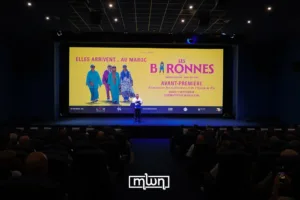
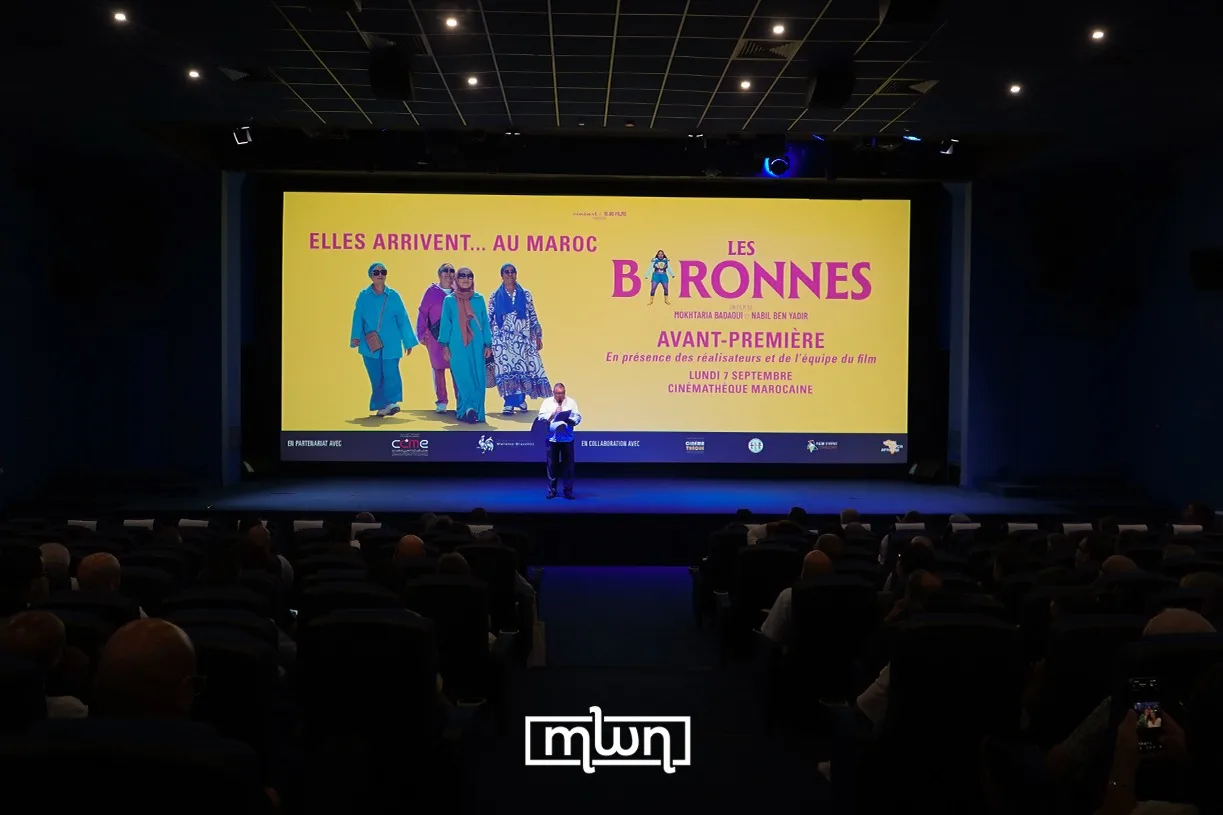
The film held its Moroccan avant-première on September 7 at the Cinémathèque Marocaine in Rabat. It will open in Moroccan cinemas on September 9.
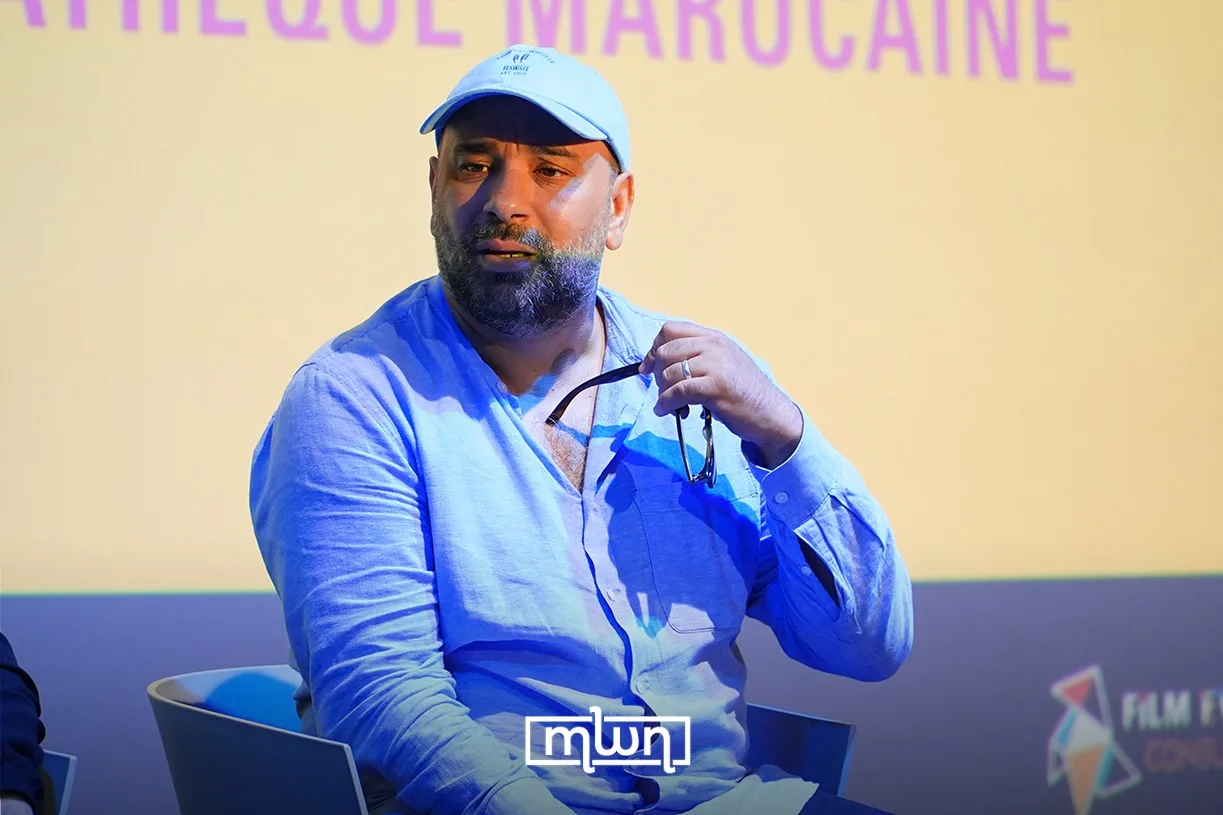
MWN Lifestyle magazine attended the avant-première, where members of the film’s team addressed the audience and press. Ben Yadir and Chiraz El Fassi, General Delegate of Wallonia-Brussels in Morocco, also spoke with MWN Lifestyle about the film and its arrival in Morocco.
For Ben Yadir, “Les Baronnes” begins with women who have spent decades looking after everyone except themselves.
“‘Les Baronnes’ is the story of four mothers and grandmothers from Molenbeek, of Moroccan origin, who decide at a certain point to take control of their lives and focus on themselves,” he told MWN Lifestyle magazine.
Their decision is to stage William Shakespeare’s “Hamlet.”
“And that is going to destabilize their family, their city, the whole country,” Ben Yadir said.
Humor as a way of surviving serious things
During the discussion surrounding the screening, Ben Yadir explained that humor was not simply decoration around the story. It was part of how he understood the women themselves.
The film, he said, needed to remain funny because humor functions almost as a form of protection. Serious subjects could be expressed without allowing those subjects to completely overwhelm the characters.
That balance is also central to how Chiraz El Fassi described the film.
“It is a film that knows how to address everyday themes, including subjects that can sometimes be painful, but with a lot of humor and lightness,” she told MWN Lifestyle magazine.

El Fassi currently serves as General Delegate of Wallonia-Brussels in Morocco.
The Rabat event was organized with the involvement of the Council of the Moroccan Community Abroad, the Cercle des Lauréats de Belgique, the Moroccan Cinematographic Center, and the Cinémathèque Marocaine, alongside the Wallonia-Brussels delegation.
That Moroccan screening also carried a personal dimension for some members of the cast.
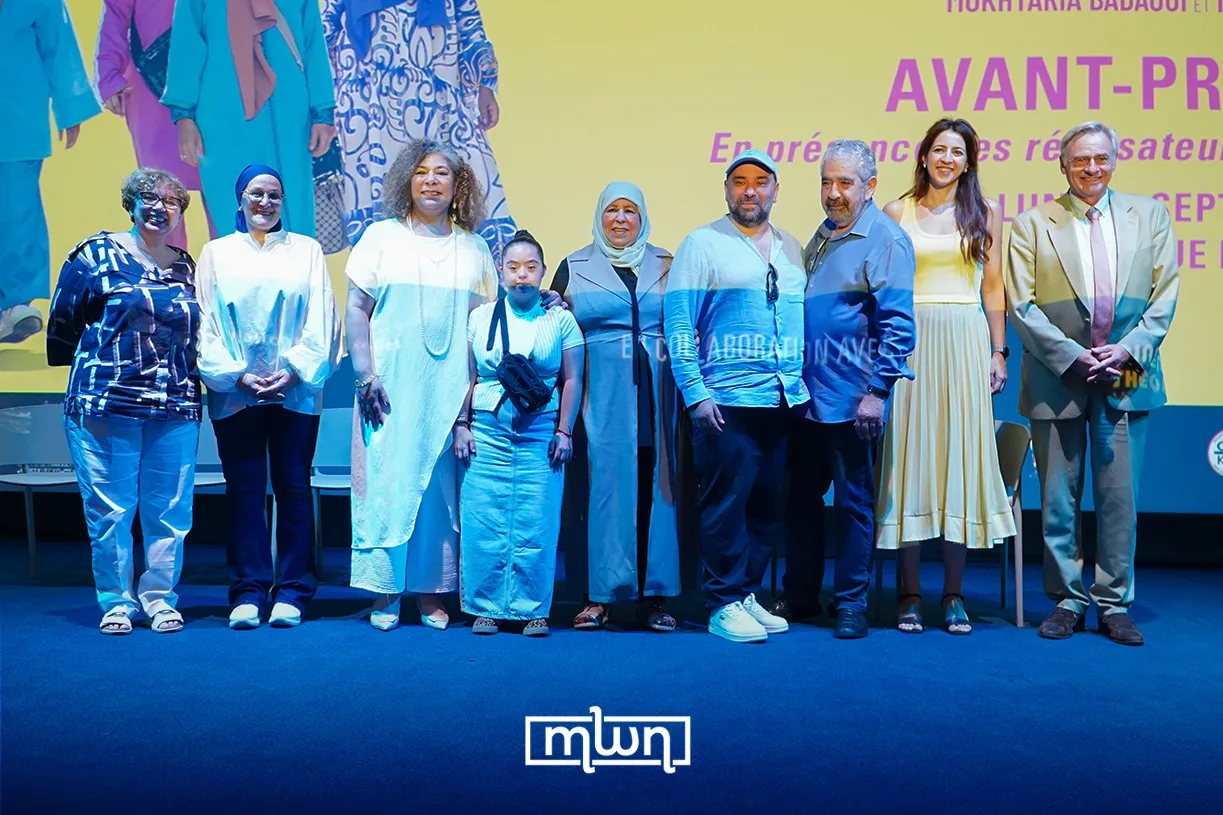
Rachida Riahi, who plays Inès, told the audience that she was born in Morocco and later grew up in Belgium. Presenting the film before a diverse audience in Morocco therefore carried particular emotional weight for her.
She also described acting in the film as both an individual and collective process. Riahi said she found parts of herself in Inès, describing the character as playful but deeply affectionate toward her friends.
At the same time, she stressed that the women had to build their roles together because, as she put it, “we are Les Baronnes.”
Women who stop asking for permission
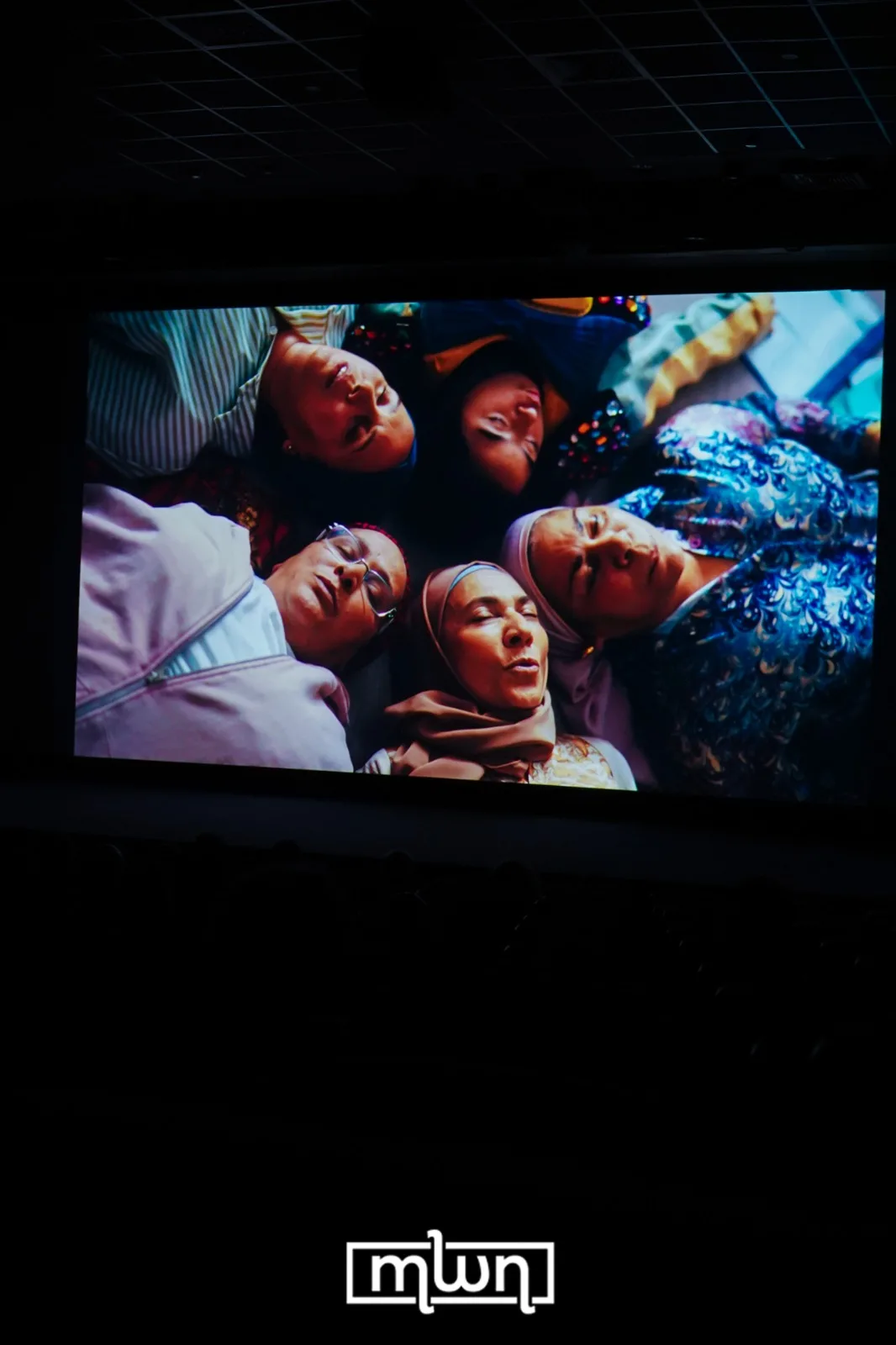
The solidarity between the four women sits at the center of the story.
Ben Yadir explained that Fatima is the one who actually wants to perform theater. Her friends do not share the same dream. They support the project because they refuse to abandon her.
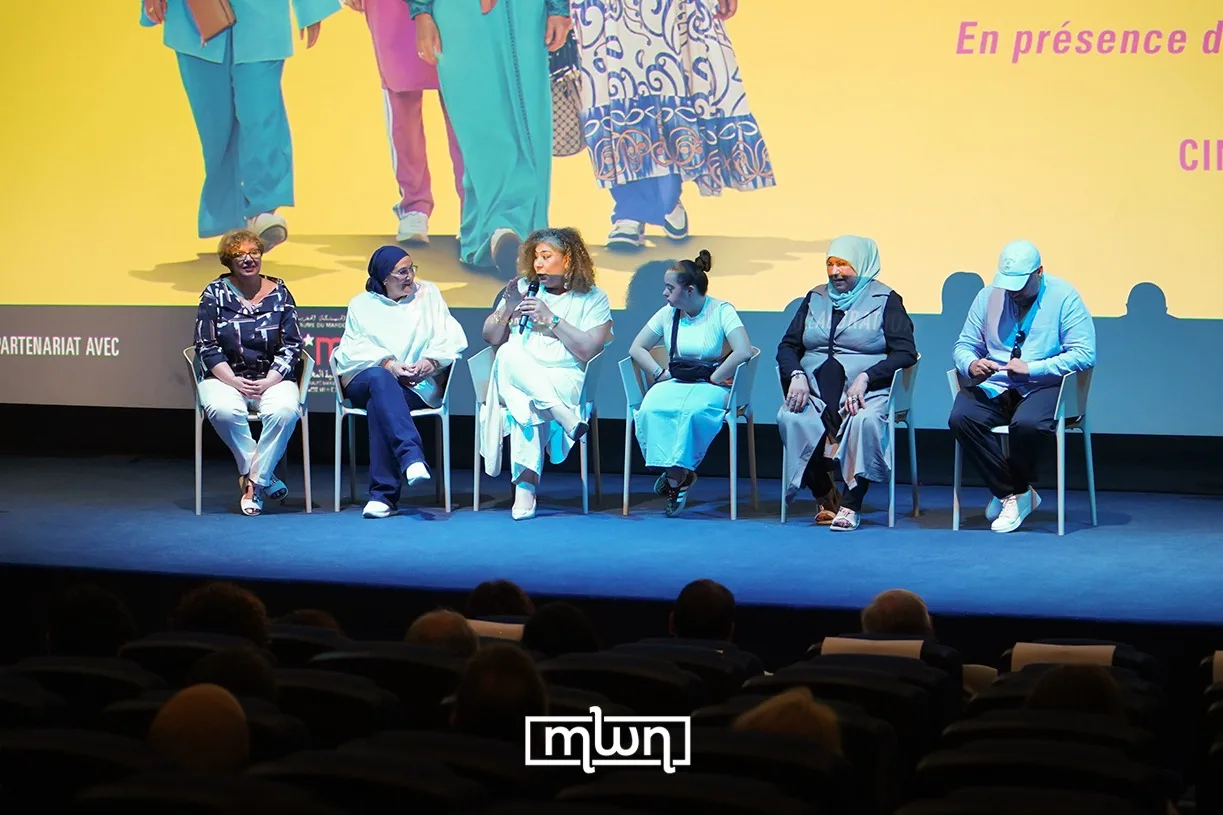
The film is not simply about four women suddenly discovering Shakespeare. It is about friendship becoming strong enough to carry one woman toward something she has wanted for decades.
Ben Yadir said the writing process with his mother kept returning to the same reality: these women had spent their lives caring for husbands, then children, and later grandchildren.
What happens, he asked, when women who have looked after everyone else finally stop and decide to do something entirely for themselves?
For “Les Baronnes,” the answer is that “the whole society trembles.”
That perspective also resonated with Rachida Bouganhem, who spoke during the Rabat presentation about what drew her to the project.
She highlighted the film’s treatment of resilience and sisterhood and said its relevance was not confined to Maghrebi women or even to one neighborhood.
For Bouganhem, each actress reflects one possible facet of a much wider experience shared by women. She described the project’s social and anthropological dimension as part of what made it compelling.
Shakespeare, flying women, and a meteorite
For all its social themes, “Les Baronnes” refuses to stay within conventional realism.
Ben Yadir told the Rabat audience that he wanted the women to have access to fantasy, poetry, special effects, and visual absurdity too.
That means women flying through the air, characters entering strange spaces, and even someone being swallowed by a sofa.
At one point, his mother suggested shooting in space.
Ben Yadir joked that the production could not afford both Morocco and outer space and that they would have to “calm down.”
Yet the cosmic element survived.
The film begins with Earth seen from space and a meteorite heading toward Molenbeek. Ben Yadir connected that image to “mektoub,” or destiny, explaining that the celestial object becomes closely tied to Najoua and her dream.
The approach gives older North African women something they are often denied on screen: not simply representation, but imaginative freedom.
They are allowed to be funny, contradictory, theatrical, romantic, angry, ridiculous, magical, and central.
First-time actresses and an unusual ensemble
Some of that looseness also came from the casting process.
Ben Yadir recalled organizing a large casting call, with numerous women auditioning. His mother, however, reportedly wanted to cast almost everyone.
Eventually, the filmmakers settled on a group whose chemistry could carry the film.
Several performers were appearing in their first movie, while experienced theater actress Saadia Bentaieb brought a very different performance background.
Rather than forcing the newcomers to conform to classical acting habits, Ben Yadir said Bentaieb sometimes had to adapt to their improvisational approach. He encouraged her to remain natural and let go of some theatrical reflexes.
The official cast includes Bentaieb, Rachida Boughanem, Halima Amrani, Rachida Riahi, Sanya Sridi, Chris Lomme, and Jan Decleir.
Ben Yadir also credited his mother with shaping some of the film’s most exuberant requirements.
She wanted dancing. She wanted music. She wanted the women escorted by police while riding scooters. She also wanted Morocco, although her son joked that this particular ambition might have to wait for another film.
Even the ending changed because Badaoui felt the movie had become too sad.
According to Ben Yadir, a musical sequence was moved to the end after his mother worried that audiences would leave the cinema crying when they had agreed to make a comedy.
It is a small production anecdote, but one that captures the larger logic of “Les Baronnes.”
Sadness is allowed, but it does not get the final word.
For a film about women who have spent much of their lives serving others, putting them at the center of comedy, fantasy, Shakespeare, and spectacle becomes its own statement.
And bringing that story from Molenbeek to Rabat adds another layer. The women on screen belong to Belgium and Morocco, to migration and family memory, but the questions surrounding them travel further: who gets to dream, who is expected to sacrifice, and how late is too late to decide that your own life belongs to you?