Fez — Oued Beht has already forced archaeologists to rethink what later prehistory looked like in northwest Africa.
Now, a new peer-reviewed study from the “Oued Beht Archaeological Project” reveals the first evidence of activity at the Moroccan site during the second millennium BC.
The findings come from the project’s 2023 excavation and survey season and expand Oued Beht’s known history beyond the Final Neolithic period that first brought the site international attention.
That matters because Oued Beht was already no ordinary archaeological site.
Research published in “Antiquity” in 2024 identified a previously little-known farming society there dating to approximately 3400 to 2900 BC.
Researchers described Oued Beht as the earliest and largest agricultural complex currently known in Africa outside the Nile corridor. Pottery, stone tools, storage pits, and evidence of domesticated crops and animals pointed to a substantial farming community.
A much longer story is emerging
The latest research suggests Oued Beht cannot be understood only as a Final Neolithic settlement.
The 2023 investigations examined linear walls in the site’s southern sector, possible cemeteries, differences between areas of occupation, and evidence of activity across the surrounding landscape.
Researchers also studied local stone and mineral resources, geological formation, and pottery production.
Most importantly, the new evidence pushes human activity at Oued Beht into the second millennium BC, creating a longer timeline than researchers had previously established.
Earlier fieldwork had already revealed the site’s remarkable scale.
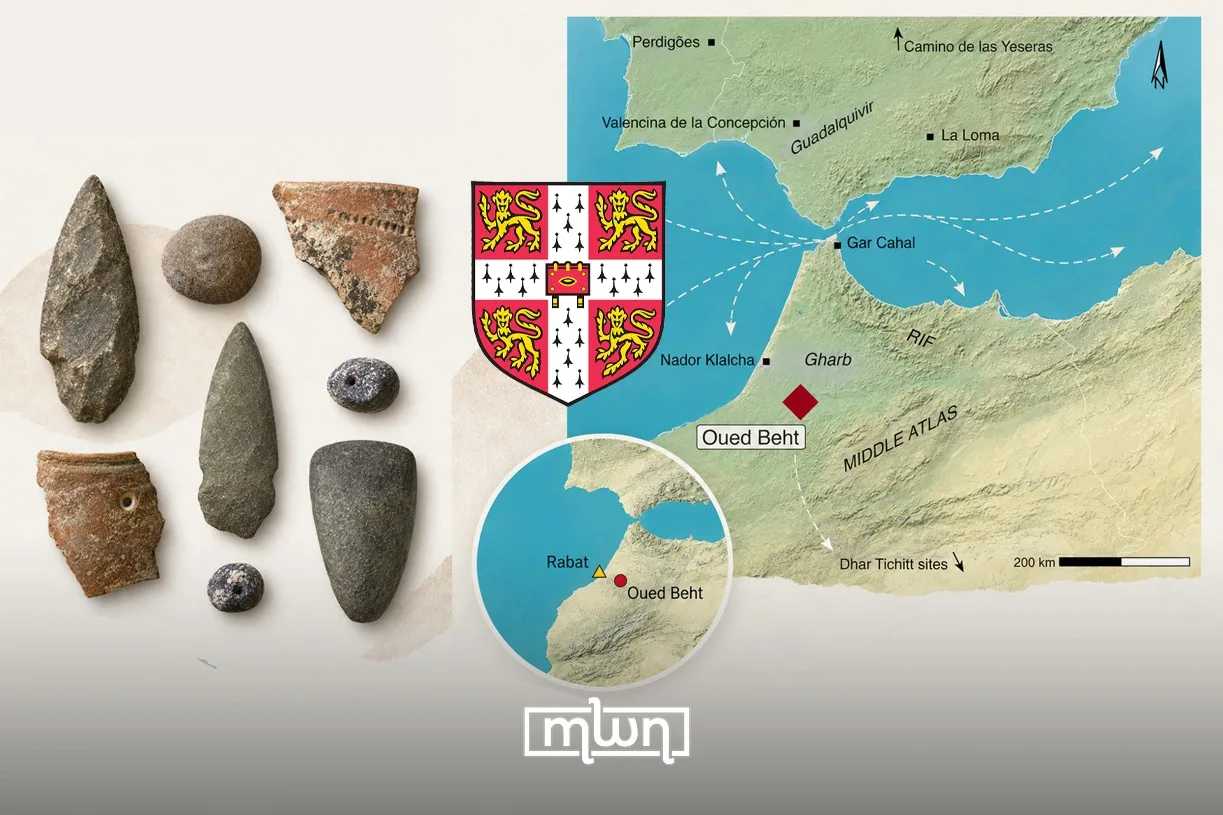
A 2022 surface survey documented archaeological material across 19.5 hectares. Researchers collected nearly 20,000 finds, including more than 16,000 pottery fragments, almost 3,000 pieces of chipped stone, axes, and other tools.
The densest Final Neolithic activity covered an area of around nine to 10 hectares.
Why Oued Beht changes the picture
The importance of Oued Beht goes beyond the objects being pulled from the ground.
Later prehistory in the Maghreb, particularly between 4000 and 1000 BC, remains far less understood than many neighboring Mediterranean regions.
The earlier “Antiquity” research argued that Oued Beht places northwest Africa more firmly within wider prehistoric developments across the western Mediterranean.
The new findings deepen that picture by showing that the location continued to matter long after its major farming phase.
Oued Beht is therefore becoming evidence of a Morocco that was neither isolated nor waiting for complex society to arrive from elsewhere.
Thousands of years ago, communities there were already farming, producing pottery, managing resources, and participating in networks stretching across the western Mediterranean.
Each excavation is making that forgotten chapter of Moroccan history harder to overlook.