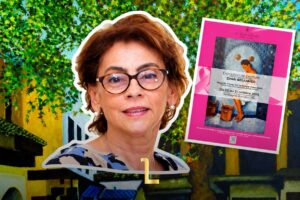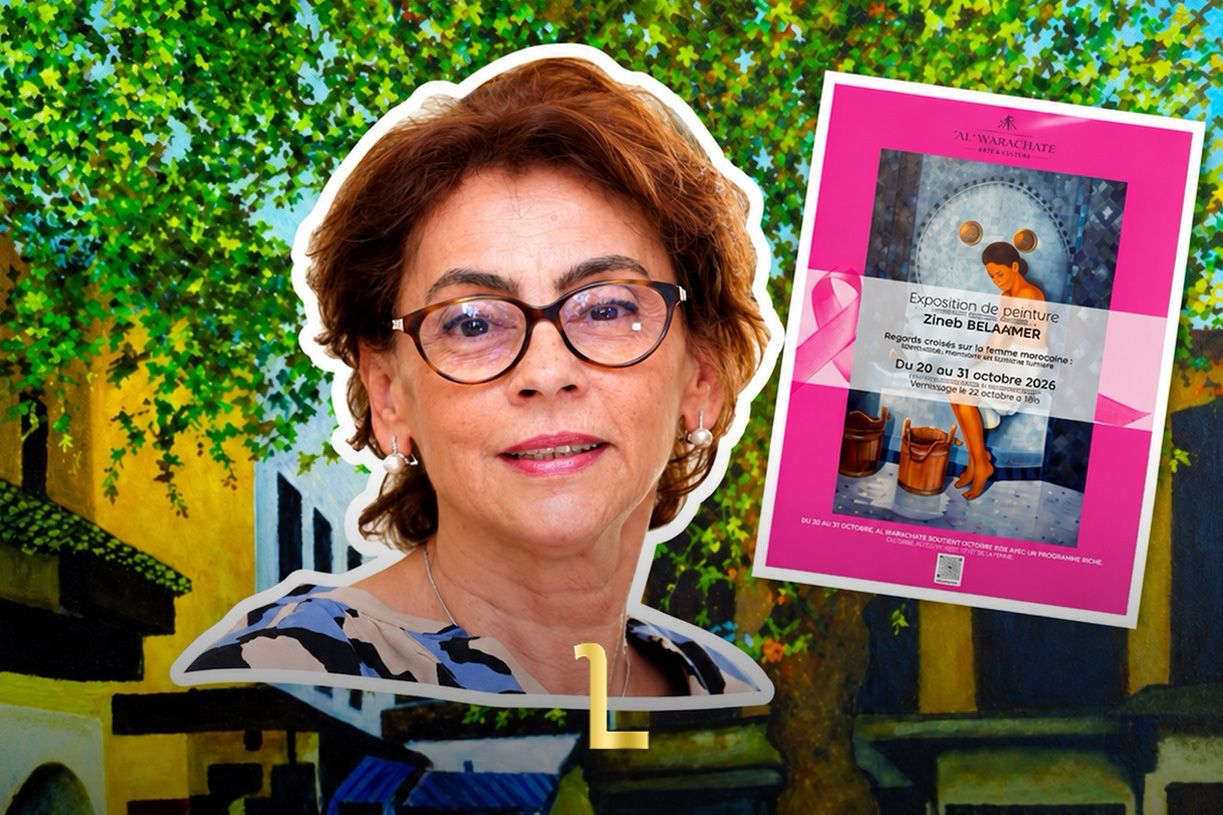
Fez — From Amazigh women adorned in traditional jewelry to weavers at work and intimate portraits of the female body, Moroccan artist Zineb Belahmer explores the many dimensions of womanhood in her upcoming exhibition at Casablanca’s Al Warachate Arts and Culture Center.
Titled “Regards Croisés sur les Femmes Marocaines: Corps, Culture et Représentations Sociales” (Intersecting Perspectives on Moroccan Women: Body, Culture and Social Representations), the exhibition will run from October 20 to 31.
Bringing together painting and sociological reflection, the exhibition examines how women’s identities take shape through cultural traditions, social expectations, personal experiences, and changing attitudes toward the body.
Where painting meets sociology
Originally from Fez, Belahmer has an academic background that distinguishes her artistic approach. She holds a doctorate in physics and has pursued extensive studies in sociology and anthropology, including research on family and gender.
A former university professor and researcher, she draws on these disciplines to explore the relationship between individual experiences and the societies in which they unfold.
“The body carries the traces of education, lived experiences, and social relationships. It is also a place of expression and self-affirmation,” Belahmer explains in the exhibition catalogue.
Her paintings question how Moroccan society understands femininity, particularly through the relationship between modesty, nudity, cultural expectations, and personal freedom.
For Belahmer, the female body becomes a visual language through which questions of identity, belonging, and social transformation emerge.
Celebrating Morocco’s cultural diversity
The exhibition includes paintings depicting women from different Moroccan communities, highlighting traditional clothing, jewelry, craftsmanship, and everyday activities.
Works such as “Mariée Soussi” (Soussi Bride), “Femme d’Aït Hdidou” (Woman of Aït Hdidou), and “Jeunes filles sahraouies” (Sahrawi Girls) explore the distinctive cultural expressions associated with different regions.
Others, including “Tisseuses” (Weavers) and “La joie de la danse” (The Joy of Dance), celebrate women’s relationships with craftsmanship, collective traditions, and artistic expression.
The latter depicts women gathered around traditional percussion instruments, their colorful garments and animated gestures conveying the communal atmosphere of music and dance.
Another painting, “Voilée, Dévoilée” (Veiled, Unveiled), explores the relationship between the female body and social perceptions of modesty.
Through contrasts in clothing, posture, and exposure, Belahmer examines how cultural environments shape the meanings attached to the body.
“Through my paintings, I pay tribute to Moroccan women who work, create, pass on knowledge, and face life’s hardships,” the artist writes.
Her compositions celebrate women’s strength and sensitivity while acknowledging vulnerability and the expectations imposed upon them.
An artistic dialogue that continues
The exhibition builds on Belahmer’s earlier project, “Regards Croisés,” presented at the Mohamed El Fassi Gallery in Rabat in July 2023.
Her artistic career also includes a solo exhibition celebrating Moroccan artisans during the Fez Festival of Sacred Music in 2006, alongside numerous collective exhibitions and painting workshops.
Although largely self-taught as a painter, Belahmer has spent more than two decades exploring figurative art and developing her approach to portraying human experiences.
The Casablanca exhibition also forms part of Al Warachate’s Pink October cultural programming, which highlights women’s experiences through artistic activities.
Beyond the aesthetic qualities of her work, Belahmer invites visitors to reconsider how society perceives women and the roles it assigns to them.
As she explains in the catalogue, her paintings encourage audiences to see women in their full humanity, beyond appearances and social expectations.
“Regards Croisés” will be presented at Al Warachate Arts and Culture Center, located at 12 Rue de Guercif, Boulevard Moulay Youssef, Casablanca, from October 20 through October 31, 2026.