Casablanca – At Salon du Cheval d’El Jadida, horses do more than command attention in the arena. They also inspire photographs, sculptures, and paintings that capture their beauty from different angles.
Tbourida and equestrian performances may be the first things that come to mind when thinking about the annual event. But walk through the exhibition halls, and you will discover another side of the horse that artists express through their own styles, techniques, and creative visions.
From a photographer freezing a horse mid-gallop to a sculptor shaping its features by hand, each work offers a different way to appreciate an animal deeply rooted in Moroccan culture and heritage.
Photography through the lens of Arab artists
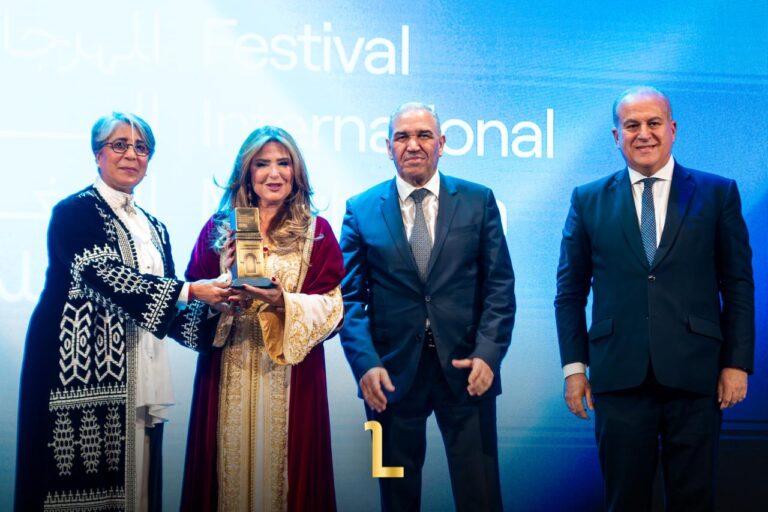
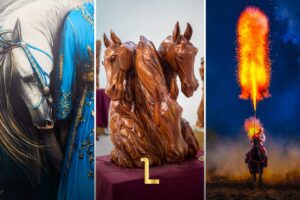
One of the highlights of the Salon’s artistic program is the Sheikh Mansour bin Zayed Al Nahyan Prize for Arab Equestrian Photography.
The prize invites visitors to discover horses beyond the arena, through images that capture their movement, strength, elegance, and distinctive features.
The photographs explore a range of equestrian disciplines, from Tbourida and tent pegging to racing and the beauty of horses themselves.
Speaking to Lifestyle Magazine on the sidelines of the event, Adeeb Shaaban Saeed, president of the Union of Arab Photographers and supervisor of the prize, expressed his pride in participating in the Salon for the 12th time.
“The Arab photographer is paying attention to the industry of horse photography across all its fields, whether in beauty, races, speed races, show jumping, and everything,” he said.
Saeed also pointed to a 15% increase in participation compared with last year, noting the quality and distinctiveness of this year’s submissions.
“Works that were more upscale, more beautiful, and more distinctive,” he added.
Horses take shape in sculpture
From photographs that capture a fleeting moment, the Salon moves into a more tangible form of artistic expression: sculpture.
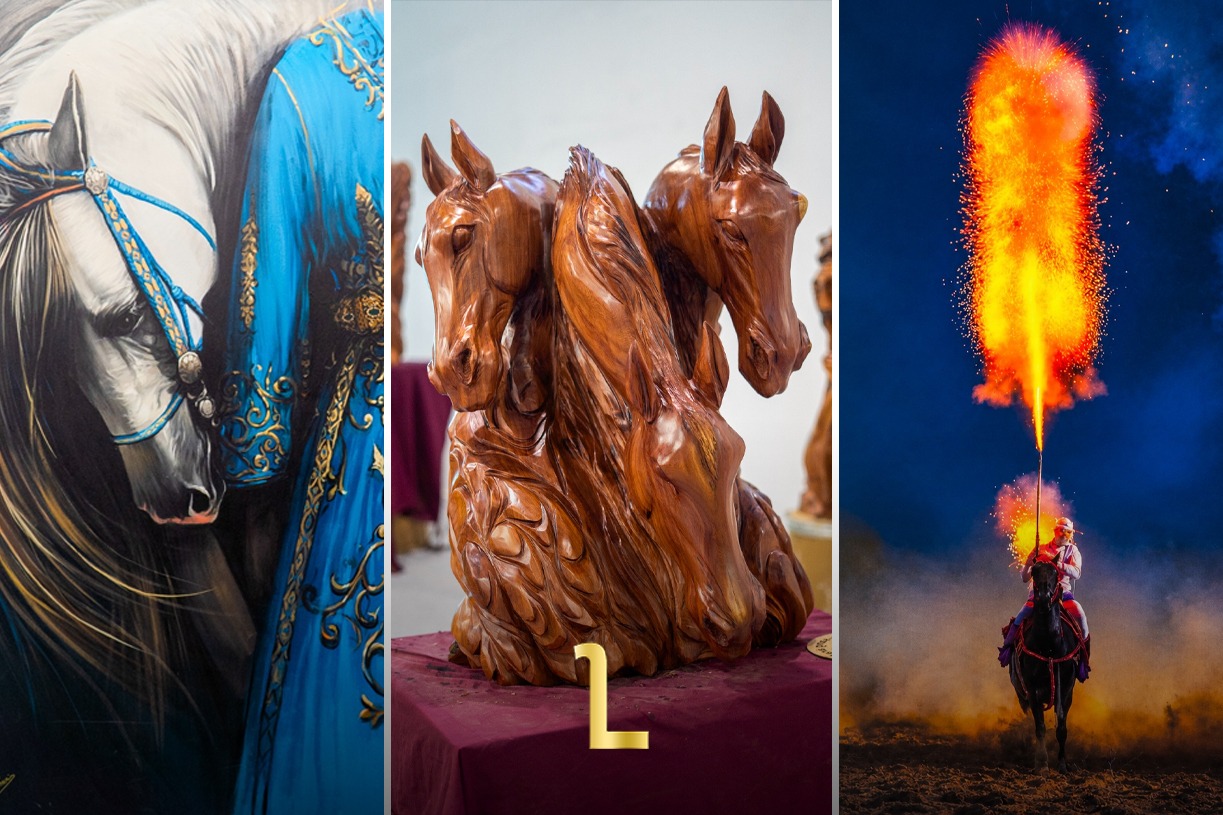
Horse-shaped sculptures greet visitors at the entrance, turning the animal’s familiar silhouette into an opportunity for artistic interpretation. Through carefully shaped forms and attention to detail, sculptors bring their own perspectives to an enduring subject.
Among them is Kamal Charir, a Meknes-based artist who transforms the details of horses into carefully crafted sculptures.
In an interview with Lifestyle magazine, Charir described the Salon as a source of motivation for artists to explore their creativity. He also spoke about Meknes’s longstanding relationship with horses and its historical ties to Sultan Moulay Ismail, explaining how this heritage continues to inspire his work.
For Charir, the horse offers one theme among many, but its place in Moroccan history gives it a particular richness to explore.
A canvas for Moroccan identity
Photography captures a moment, and sculpture gives the horse a physical form. Paintings, meanwhile, open up an even wider space for interpretation.
Inside the exhibition hall, visitors encounter a variety of artistic styles. Some paintings burst with color, while others take a more restrained approach, focusing on form, detail, and atmosphere. Some artists portray horses on their own, while others place them within a broader picture of Moroccan life and heritage.
Kenitra-based artist Lamiaa Nhari belongs to the latter group. Her paintings bring horses together with other elements of Moroccan identity, including traditional architecture, the caftan, and regional crafts.
The caftan and the horse appear repeatedly in her work, and Nhari sees a natural connection between the two.
Their shared qualities, she explained, lie in “their grandeur, elegance, and deep roots in Moroccan history and heritage.”
Through these combinations, Nhari invites viewers to see the horse as part of a wider cultural story. Her paintings become a meeting point between artistic expression and the traditions that continue to shape Moroccan identity.
“Visitors can enjoy a cultural journey through the exhibition and discover our heritage and civilization,” she said.
When horsemanship becomes an art form
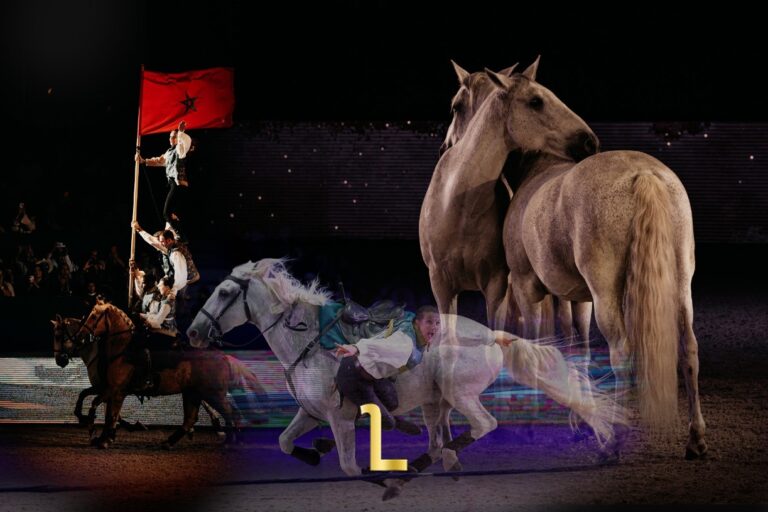
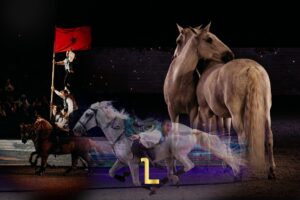
After exploring horses through photography, sculpture, and painting, visitors returned to the arena on October 16-17 to experience another kind of artistic expression: the equestrian nights.
Here, horses no longer appear on a canvas or in a sculpture. They become the performers themselves, moving in harmony with their riders and displaying the discipline, trust, and connection that years of training can build.
The performances offer more than a display of skill. Every movement, turn, and coordinated gesture contributes to a spectacle shaped by the relationship between horse and rider.
With five troupes from Morocco, France, and Portugal, the equestrian nights brought different traditions and approaches to horsemanship into the arena.
Their performances added another dimension to the Salon’s artistic program, showing how equestrian culture can communicate through movement as powerfully as art can through an image.
Where equestrian heritage meets artistic expression
At Salon du Cheval d’El Jadida, the horse connects different forms of creativity. Photographers capture its movement, sculptors interpret its shape, painters place it within Morocco’s cultural landscape, and riders express their bond with it through performance.
Together, these artistic perspectives offer a fuller picture of the horse’s place in Moroccan heritage. The Salon celebrates not only the animal itself, but also the many ways people continue to find inspiration in its beauty, history, and enduring connection to Moroccan identity.