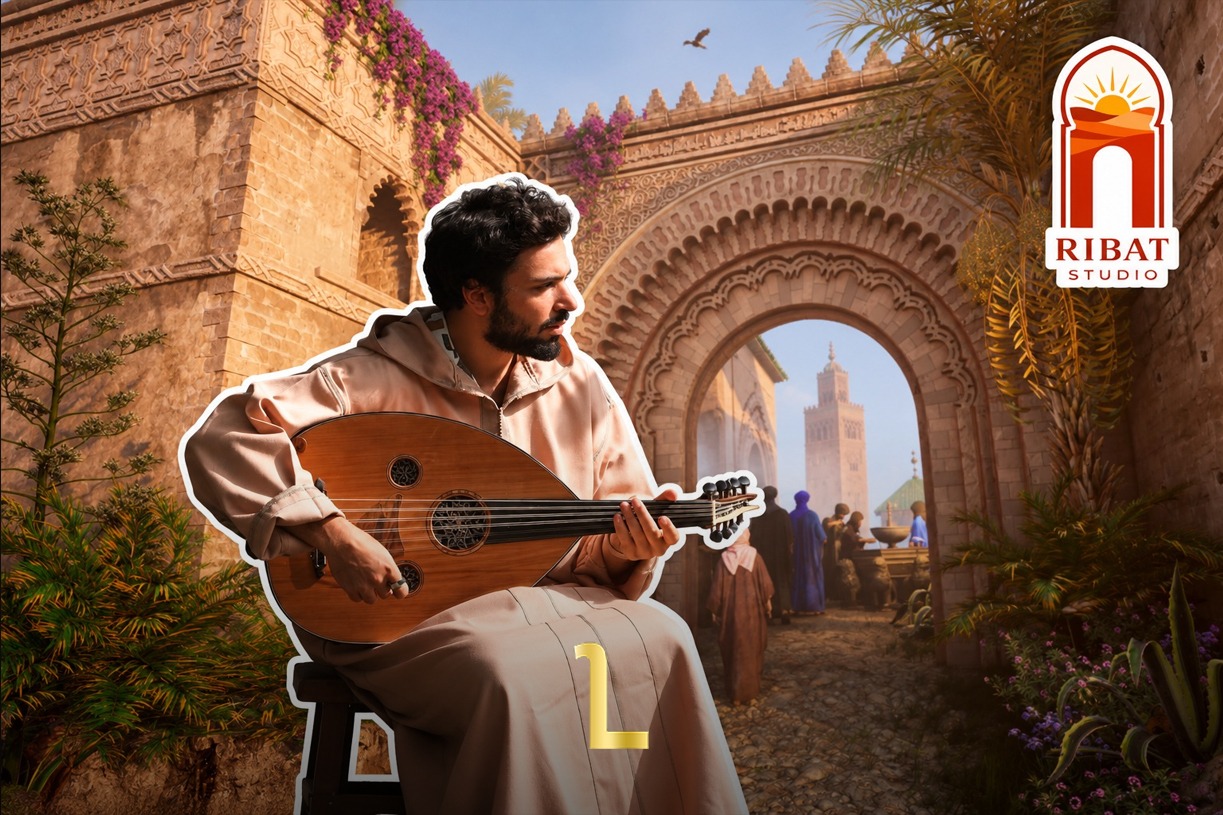
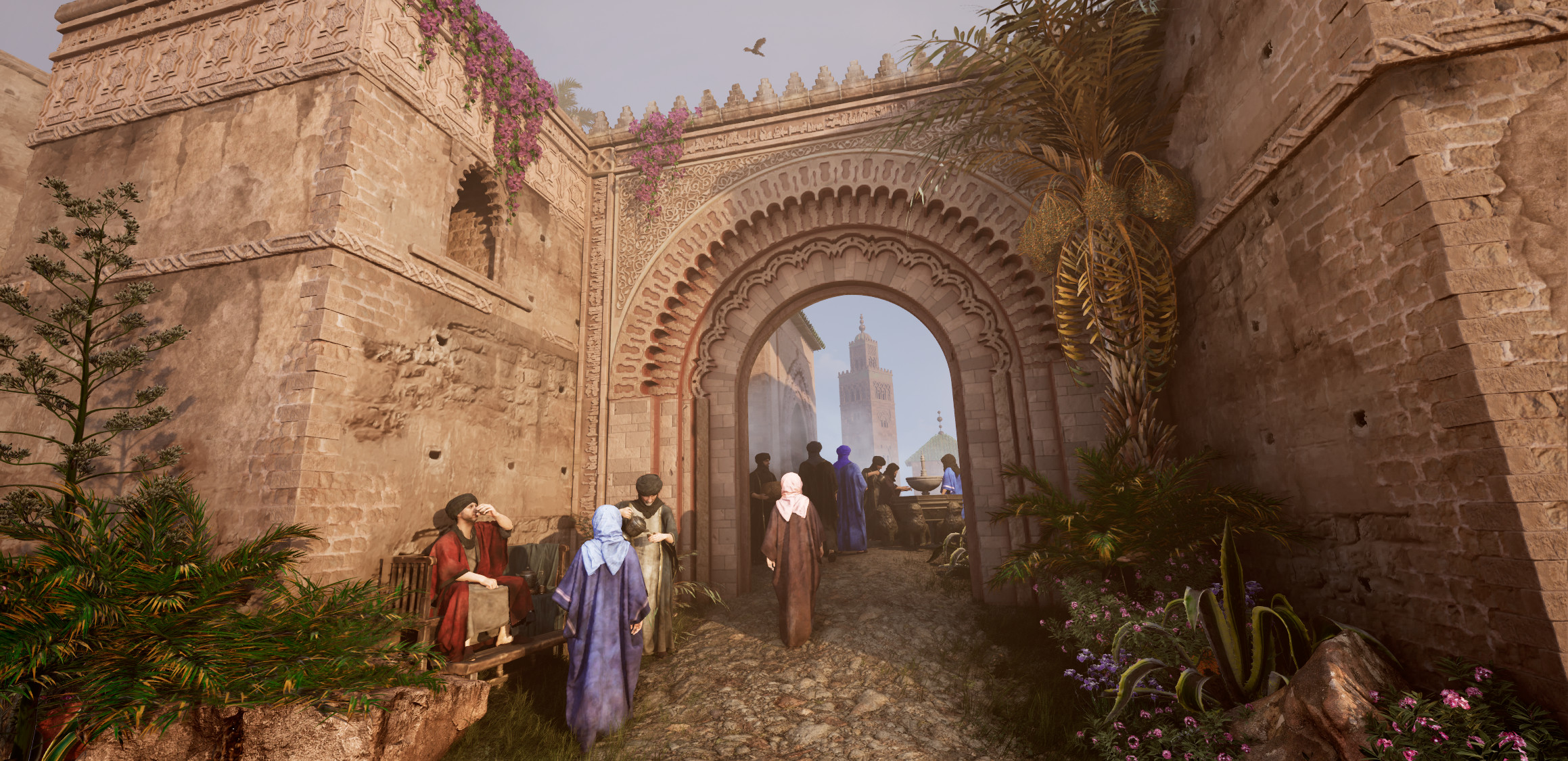
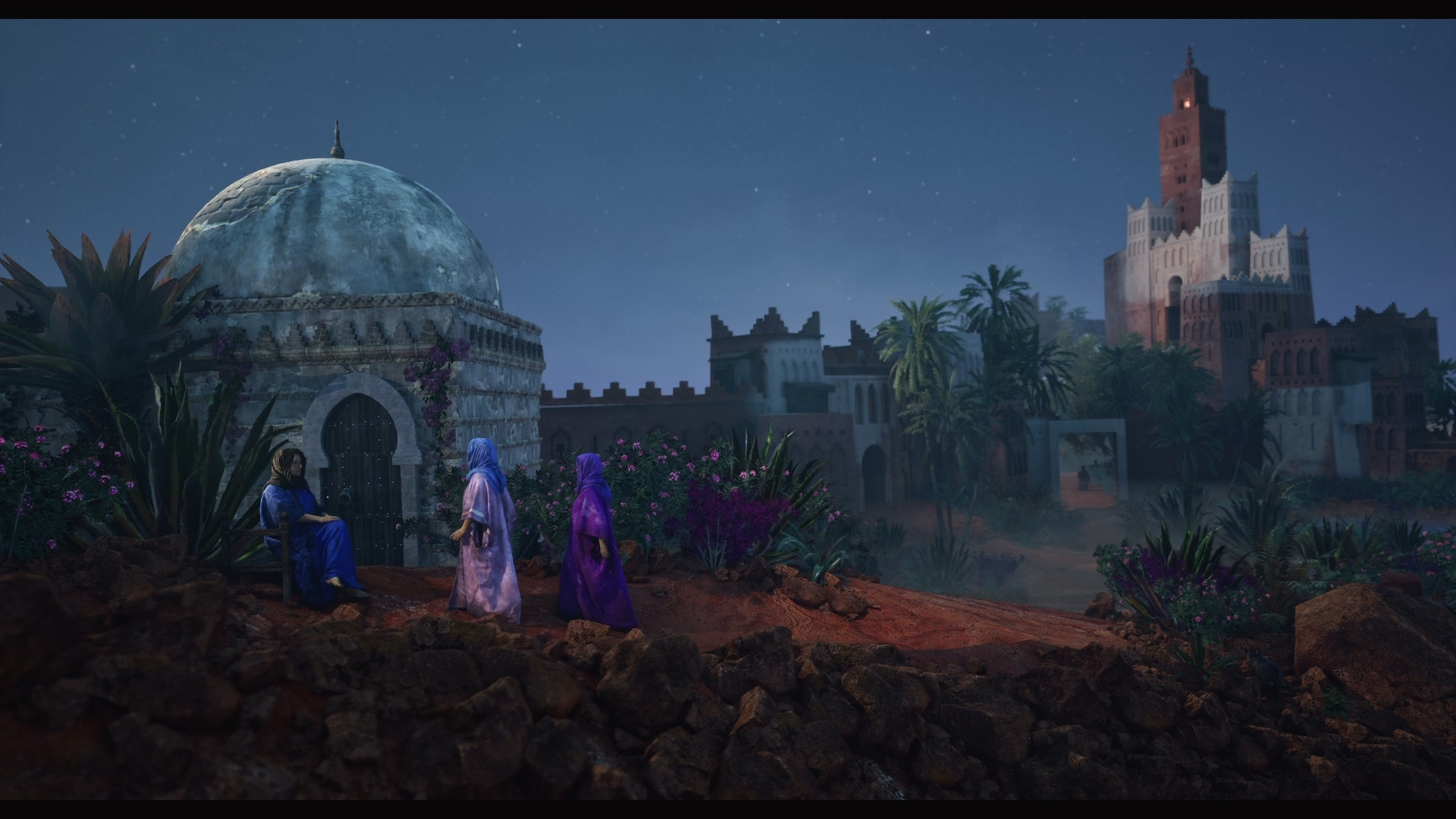
Fez — Somewhere in a fictional desert, an ancient fortified city stands abandoned against the walls of a vast gorge. Its inhabitants disappeared in a single night, leaving behind empty streets, mysterious inscriptions, and traces of a civilization whose fate remains unknown.
There are no enemies to defeat, no weapons to collect, and no battles waiting around the corner. Instead, the answers are found buried deep inside the architecture, forgotten objects, and fragments of a society that once inhabited the mysterious city.
This is the world Moroccan game developer Omar Souissi is creating with “Kasbah,” the debut project of Ribat Studios, an independent video game company he founded in Rabat in early 2026.
Souissi sees the project as representing a personal ambition that developed over seven years working as a 3D artist, creating fictional environments for other developers while gradually recognizing the creative possibilities of his own country’s visual heritage.
From building other worlds to imagining his own
Before establishing Ribat Studios, Souissi developed his experience across the international video game industry.
His professional portfolio documents work with Ubisoft, where he contributed to “AGOS,” and Hutch Games, where he worked on the racing game “Top Drives;” he subsequently held a lead environment artist position at Lunacy.
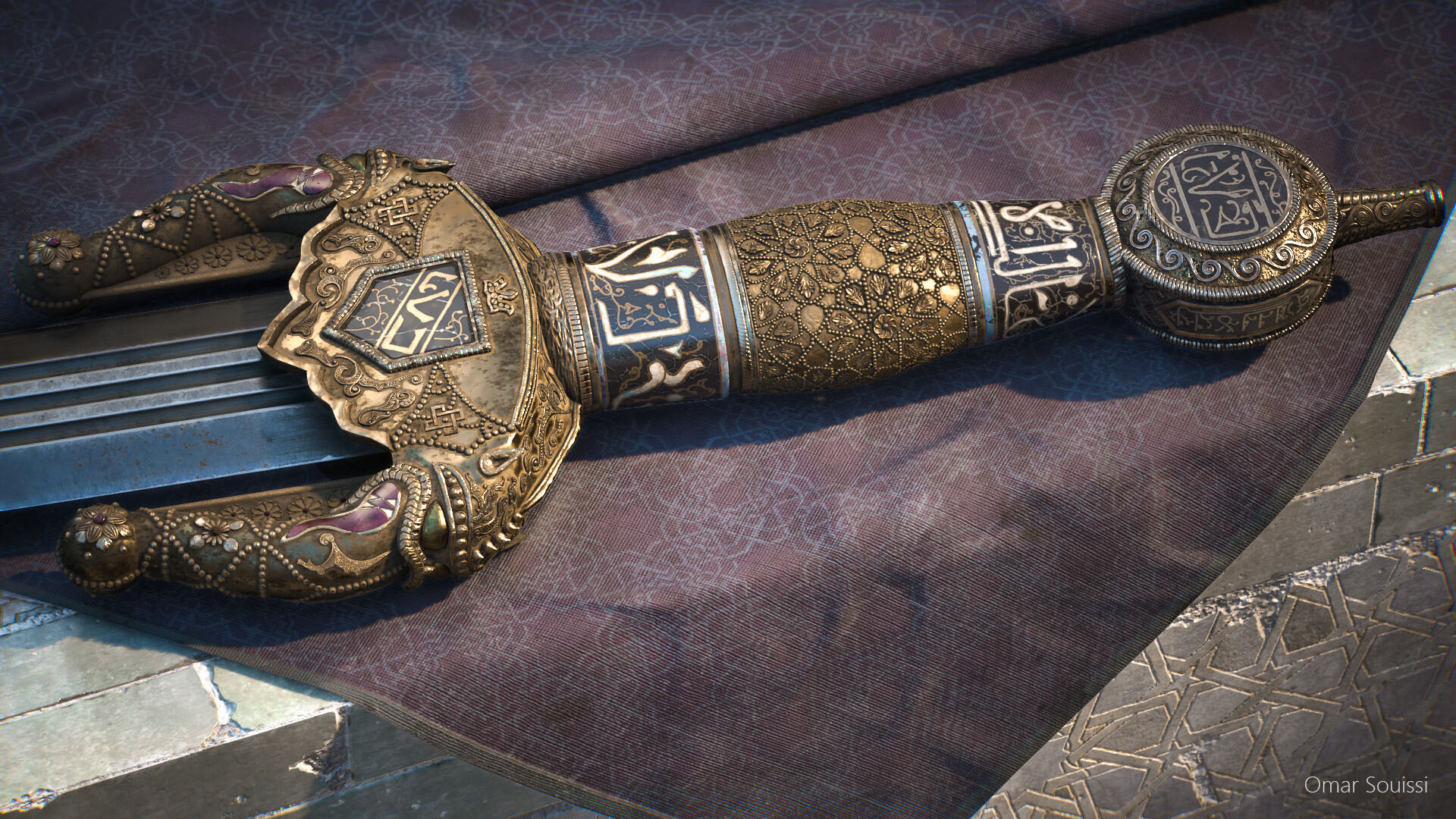
These experiences introduced him to the technical and artistic processes behind creating immersive digital environments, from architecture and lighting to the smallest details that make fictional spaces believable.
Throughout his career, however, Souissi found himself incorporating architectural forms and artistic references associated with the Arab world into his work.
And he eventually realized that what fascinated him was not a broadly Middle Eastern or Persian aesthetic, but something more specific: Morocco.
Growing up, he was captivated by the elaborate fictional universes of “The Lord of the Rings,” “Warhammer,” and “The Witcher,” whose creators developed entire civilizations, histories, and cultures beyond the immediate demands of their stories.
“These worlds are built with real depth, like a mirror of ours, and my biggest dream is to have something like that but inspired by our region specifically,” Souissi told Lifestyle Magazine.
For the developer, North Africa and Andalusia possess a distinct architectural and artistic identity that has rarely received the same attention as European or East Asian settings in fantasy games.
“I believe it deserves its place in the video game world as a main subject, not just as a temporary backdrop or side quest,” he said.
That conviction eventually pushed him to leave behind the familiarity of established productions and begin developing his own original game.
A Moroccan studio with a Moroccan perspective
Souissi founded Ribat Studios alone at the beginning of 2026 before gradually assembling a team of approximately ten artists, developers, writers, and designers.
Most work remotely from Morocco, while a smaller number of collaborators are based in Europe.
The studio currently funds its own development and concentrates its resources on creating “Kasbah,” a first-person exploration game for PC, developed using Unreal Engine 5.
For Souissi, building the project in Morocco was an artistic decision as much as a practical one.
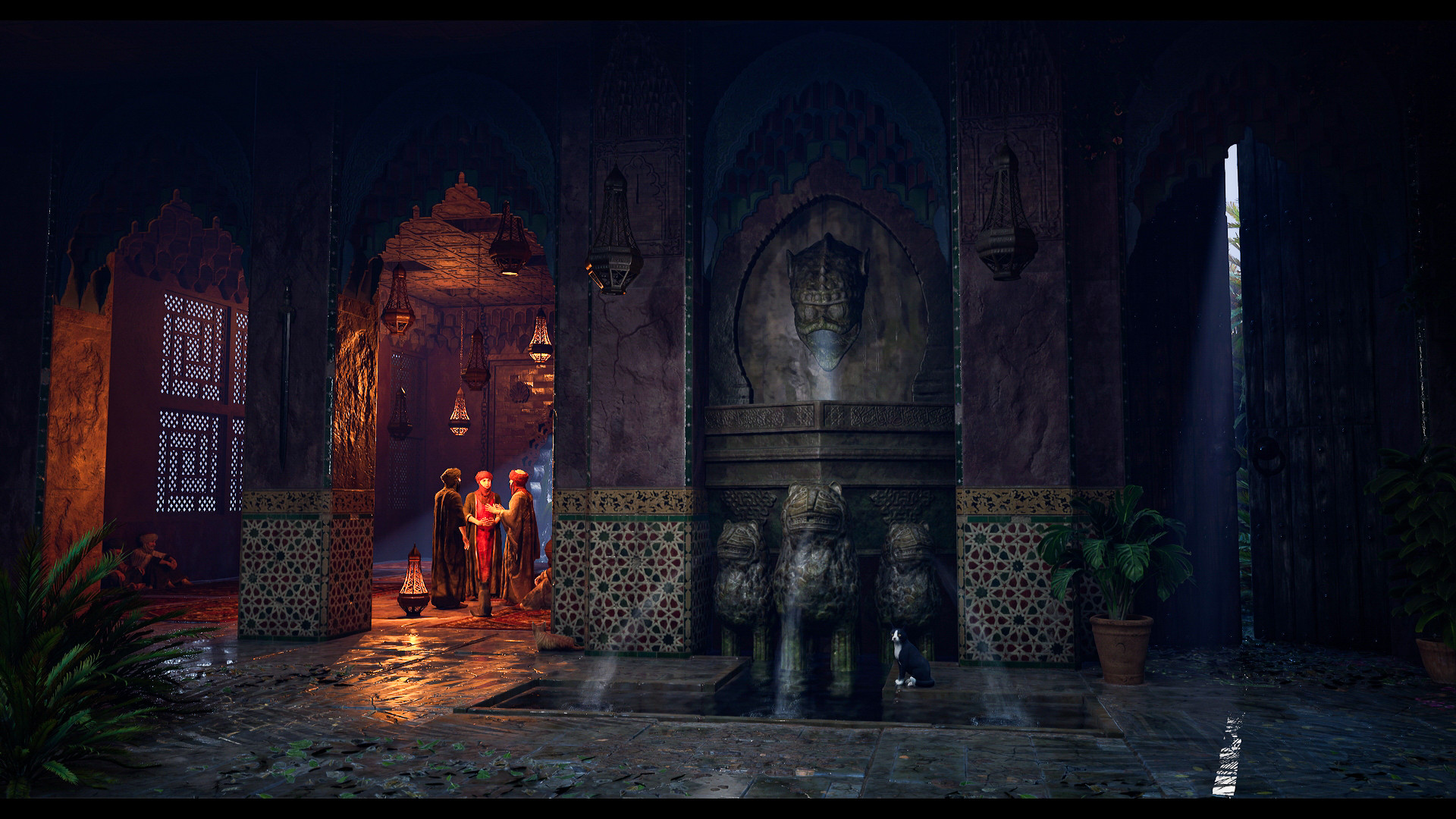
“The idea from the start was to make a Moroccan game, and that implies having a Moroccan team,” he explained.
He believes that developers who grow up surrounded by the places and traditions they depict can bring a different understanding to fictional world-building.
“It cannot be a ‘National Geographic’ game, where the team is entirely foreign and ‘studying’ Morocco,” Souissi said, arguing that the game’s identity must emerge from people who have experienced the culture firsthand.
Rather than approaching Moroccan heritage as an exotic visual reference, Souissi wants the game’s environments to emerge from an intimate understanding of their architectural and cultural foundations.
The studio’s location also makes research easier. Historical sites, traditional buildings, and distinctive landscapes are close enough for developers to visit and study directly.
“Being in Morocco also means our references are a drive away rather than Google Image searches,” he noted.
A forgotten city inspired by Morocco’s architectural heritage
The game’s setting draws heavily on the fortified villages, kasbahs, and oasis settlements of southern Morocco.
Among Souissi’s principal references are Aït Benhaddou, the historic Taourirt Kasbah, and Chellah in Rabat.
But Ribat Studios is not attempting to digitally reconstruct an existing Moroccan destination.
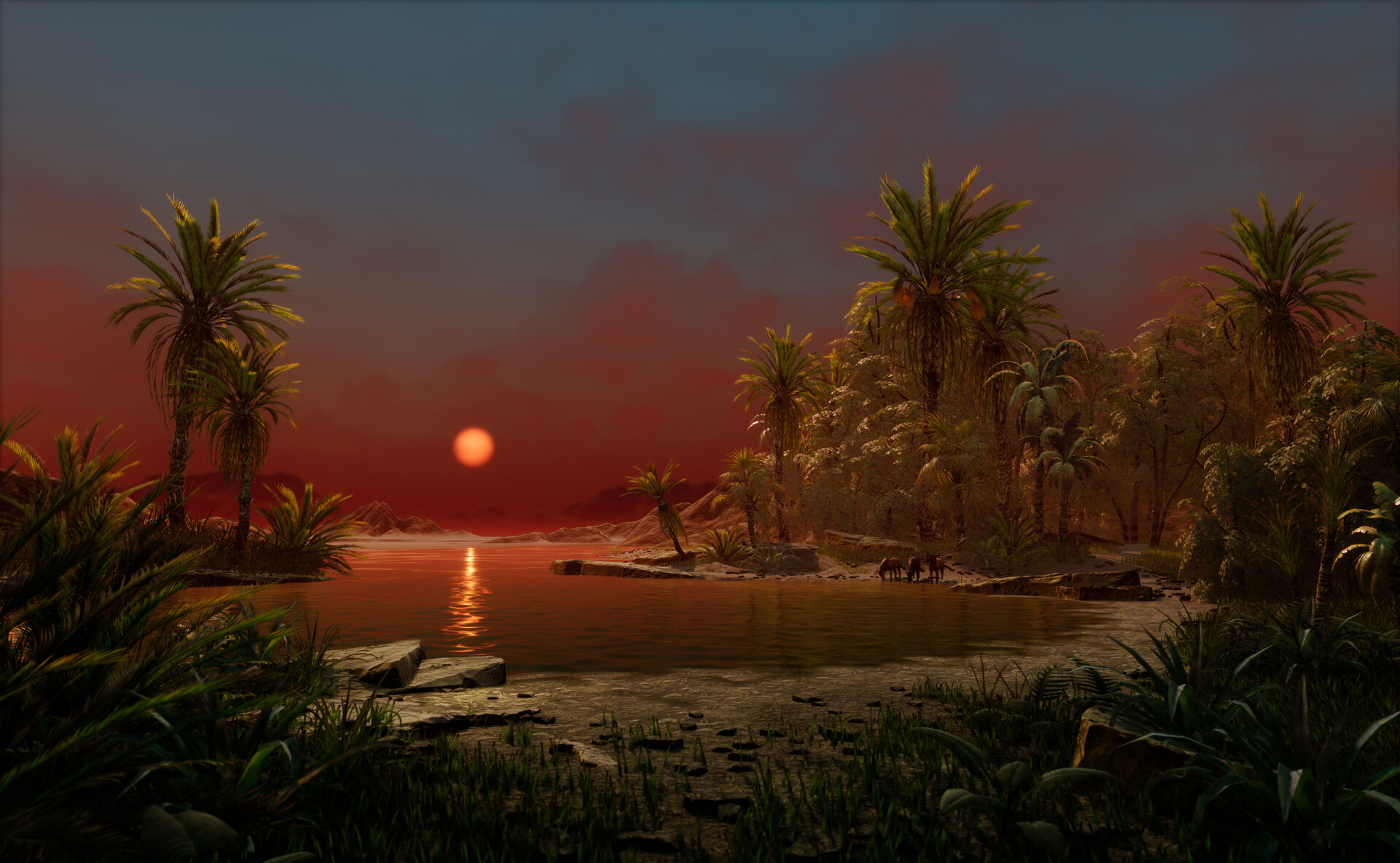
Instead, the developers study the historical and environmental circumstances that shaped these settlements, examining how inhabitants organized their cities around water access, trade, security, and daily life.
Traditional khettaras, underground channels used to transport water, provide one example of the systems informing the game’s fictional environment.
Other references include the darih, a saint’s tomb that can serve as a community landmark, alongside date harvesting and the hand pollination of palm trees in oasis agriculture.
These details help create a fictional society governed by recognizable cultural and environmental principles.
Souissi explained that his team considers why particular architectural features developed before translating those principles into an imaginary city.
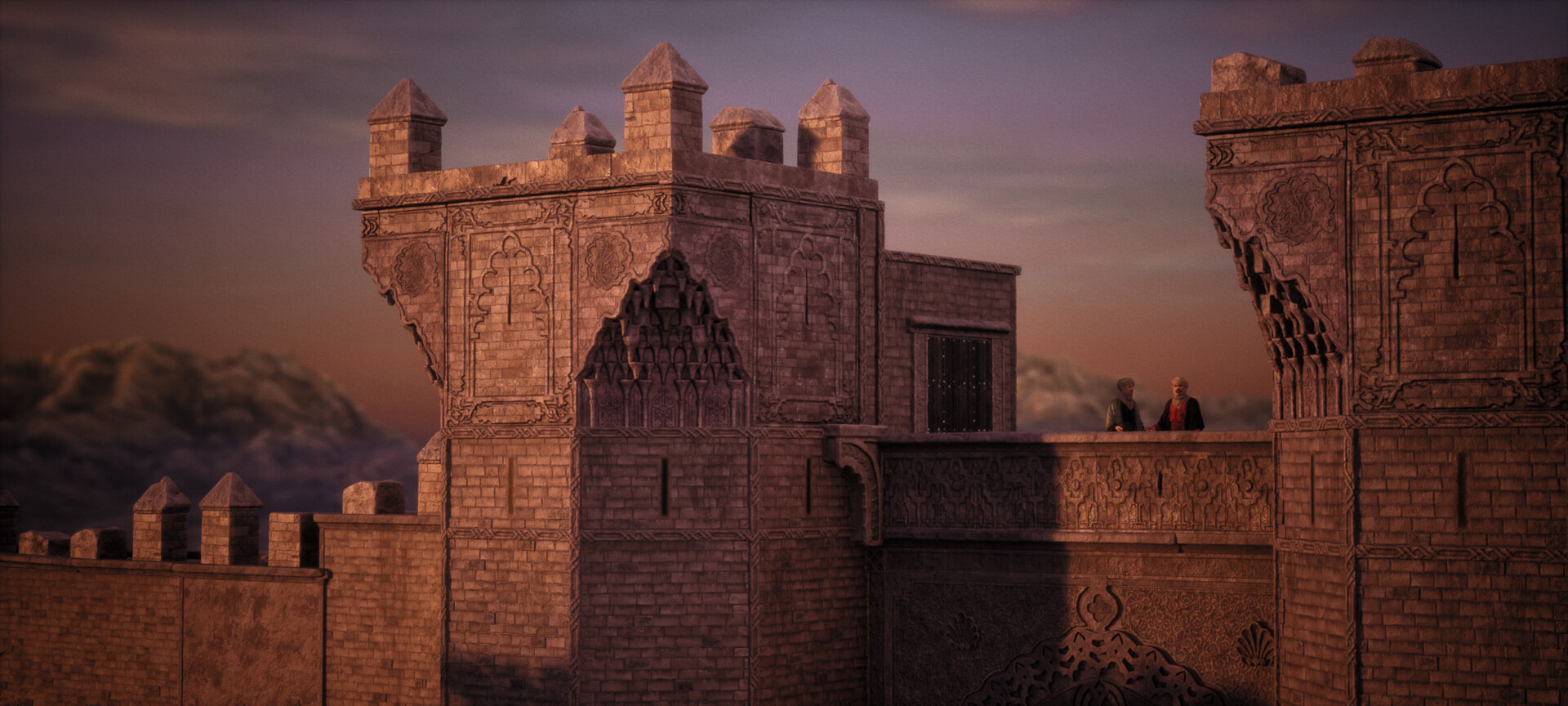
The result aims to feel authentically Moroccan without becoming a documentary or a direct reproduction of a historical location.
For him, the distinction matters. Just as Tolkien’s fictional universe draws on European mythology without functioning as a historical account, Souissi hopes to create a fantasy world whose Moroccan influences remain recognizable beneath its fictional elements.
A mystery without combat
“Kasbah” takes a different approach from conventional action-oriented fantasy games.
Players arrive in a city whose inhabitants mysteriously disappeared overnight.
As they explore its abandoned streets, buildings, and hidden spaces, they gradually uncover clues about the civilization’s history.
Progress depends on reading documents, collecting objects, understanding environmental details, and solving puzzles.
One of the game’s central mechanics allows players to glimpse moments from a location’s past, revealing information that can help them navigate their surroundings or understand previous events.
Players also gradually learn the city’s fictional language, gaining the ability to interpret information that initially appears incomprehensible.
“The feeling of progress comes from understanding, not from hard challenges,” Souissi explained. “I hope players feel curiosity first, and then the weight of what they discover.”
The studio also follows a particular rule when designing its fantasy elements: whenever a fictional object or natural feature can draw inspiration from Morocco, the team favors that approach over familiar fantasy conventions.
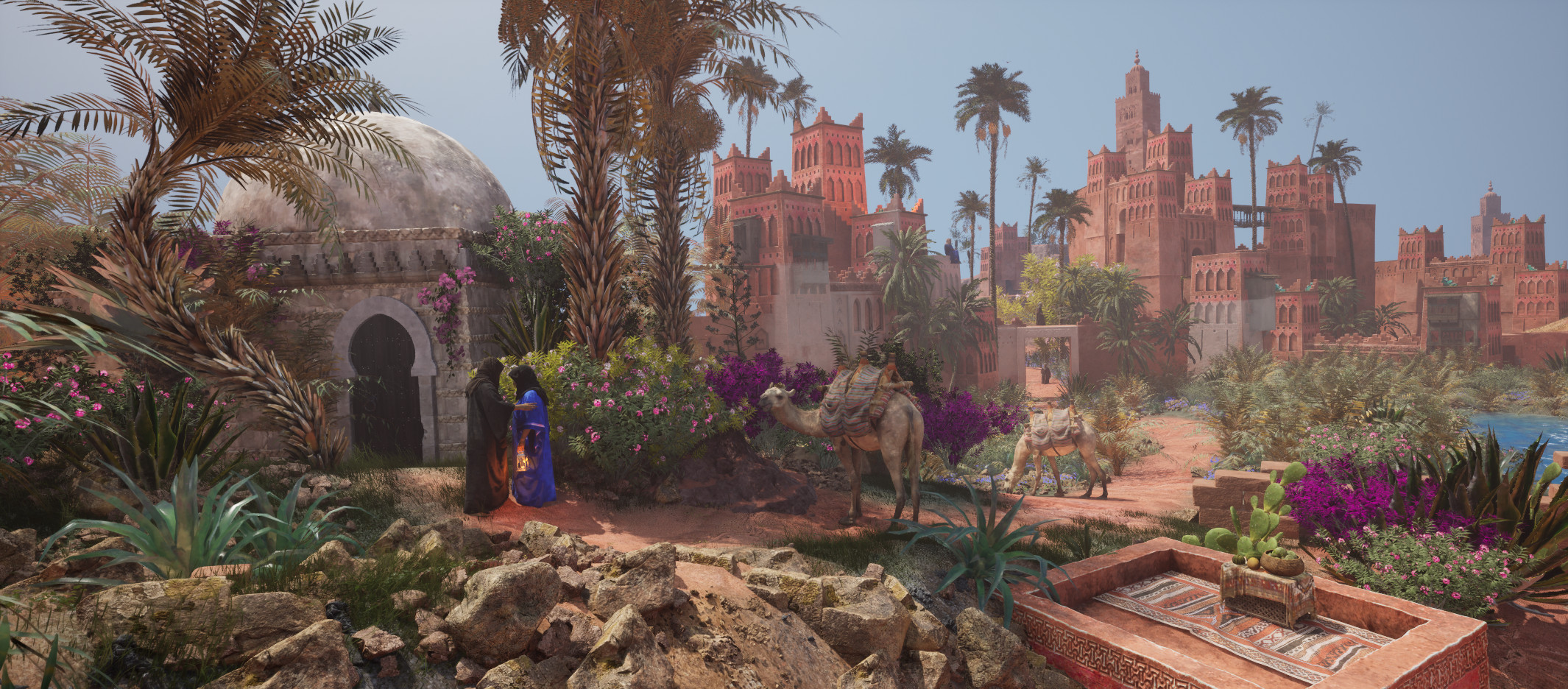
A magical plant, for instance, might take inspiration from an argan tree, a date palm, or an oleander rather than an entirely invented species.
Souissi believes these culturally specific details can make the game more interesting to international audiences rather than limiting its appeal.
He argues that players regularly immerse themselves in fictional worlds inspired by medieval Europe or Japan without sharing those cultural backgrounds.
What matters, he believes, is combining a distinctive setting with universal human experiences.
Themes such as love, family relationships, and the rise and fall of civilizations can resonate across different cultures while retaining a particular artistic identity.
Taking Moroccan game development to Gamescom
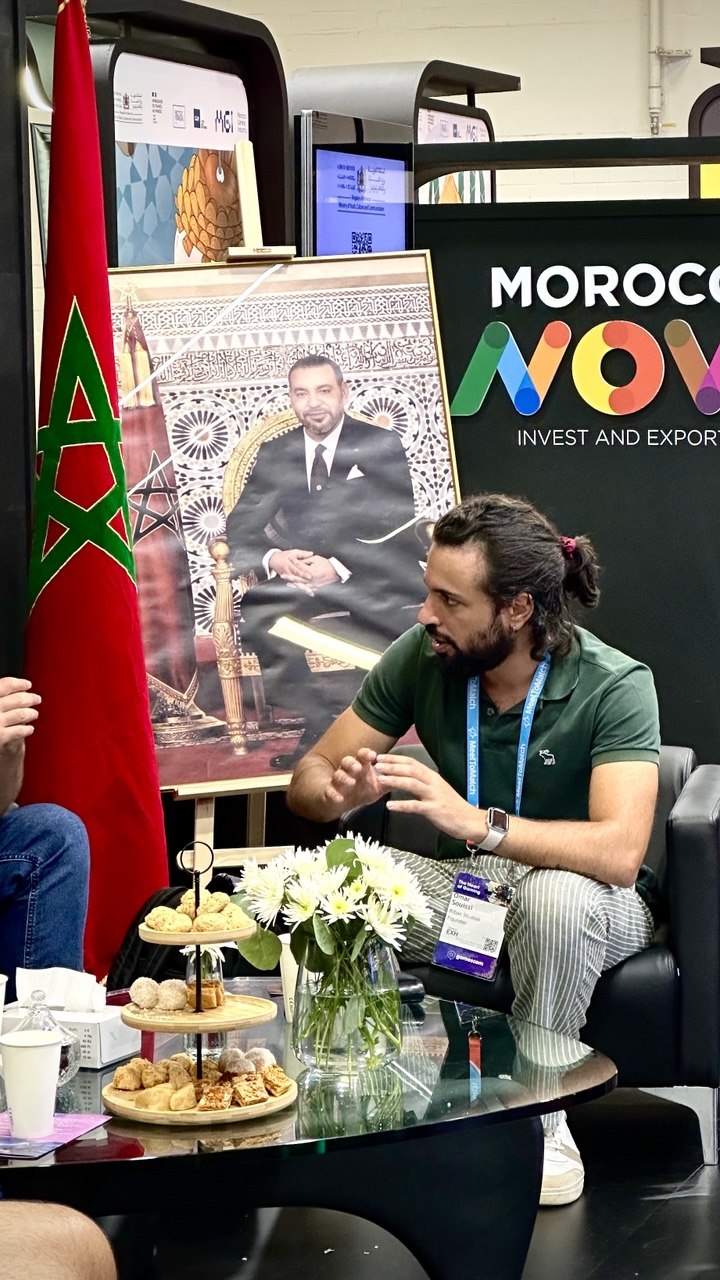
In August 2026, Ribat Studios joined the Moroccan delegation at Gamescom in Cologne, Germany, one of the world’s largest video game industry events.
The studio presented its developing project through the Morocco Now pavilion, which brought Moroccan developers into contact with publishers, investors, and international industry professionals.
The Moroccan Investment and Export Development Agency (AMDIE) highlighted the country’s participation, which included 11 Moroccan studios showcasing their projects.
Souissi described the experience as his first opportunity to discuss the project directly with publishers and players.
Although “Kasbah” was still in an early development stage, the conversations reinforced his belief that its Moroccan identity could distinguish it within an international market.
“A lot of people told us they hadn’t seen this kind of setting before, and the interest came from further away than I expected,” he recalled.
However, he also learned that publishers wanted more than an intriguing concept and atmospheric visuals.
They needed a playable demonstration capable of showing how the game’s exploration and storytelling systems would work together.
Ribat Studios is therefore focusing on producing a vertical slice, a short but representative section of the finished game.
The studio expects to complete a 15-to-20-minute playable experience in 2027, potentially returning to Gamescom that year to present it to prospective publishing partners.
Souissi emphasized that the studio’s self-funded position allows it to approach these discussions without immediately depending on outside financing.
“Being self-funded means we aren’t looking for a partner out of need,” he said, explaining that he wants collaborators who can help the game reach an international audience while preserving its creative direction.
The complete game remains approximately two to three years away, according to the developer’s current estimates.
For now, his priority is building a believable world, one that players will want to explore not because of what they can destroy, but because of what they might discover.
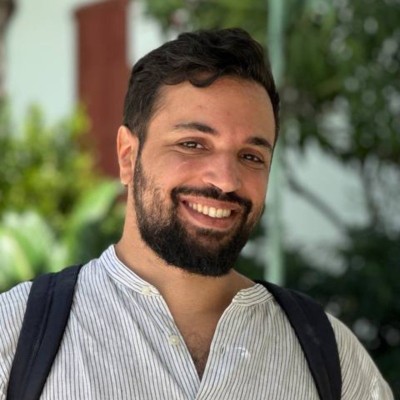
After years of bringing other developers’ imagined places to life, Souissi is finally creating one that reflects the landscapes, architecture, and cultural memories that shaped his own imagination.
And if “Kasbah” succeeds in realizing that vision, its greatest contribution may be demonstrating how Morocco’s heritage can provide the foundation for entirely new fictional worlds.