Why Istanbul’s Street Cats Have Become Part of the City’s Identity
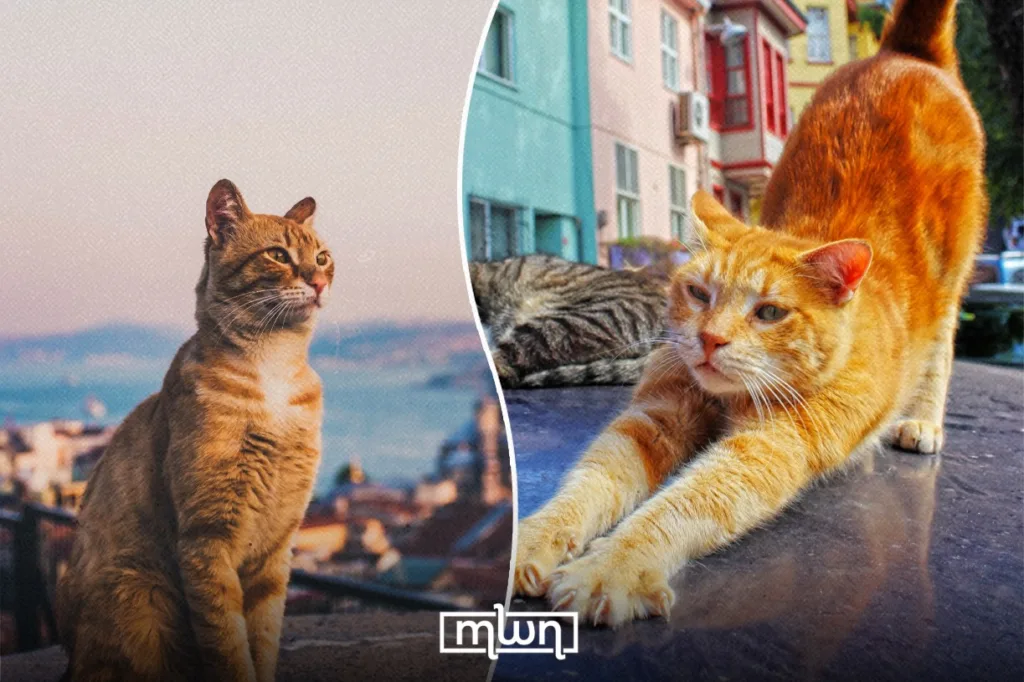
For visitors, these encounters can become part of the Istanbul experience.
Sharing the Streets: Cats and People in Morocco

Walking through the narrow streets, cats appear at almost every corner, resting on doorsteps or weaving through market stalls. Their presence feels natural, as if they have always been part of this street.
Cat vs Dog: The Real Differences Behind the Cute Photos

Choosing between a cat and a dog is less about aesthetics and more about lifestyle, responsibility, and tolerance for daily routines.
Chinese YouTuber builds a Subway for his Cats

Let’s embark on a journey of creativity, ambition, and out-of-the-box thinking. Leaving humans behind, one YouTuber decided to build a subway system, not for people, but for his cats.
In the Company of Cats: History of the Feline Life in Morocco
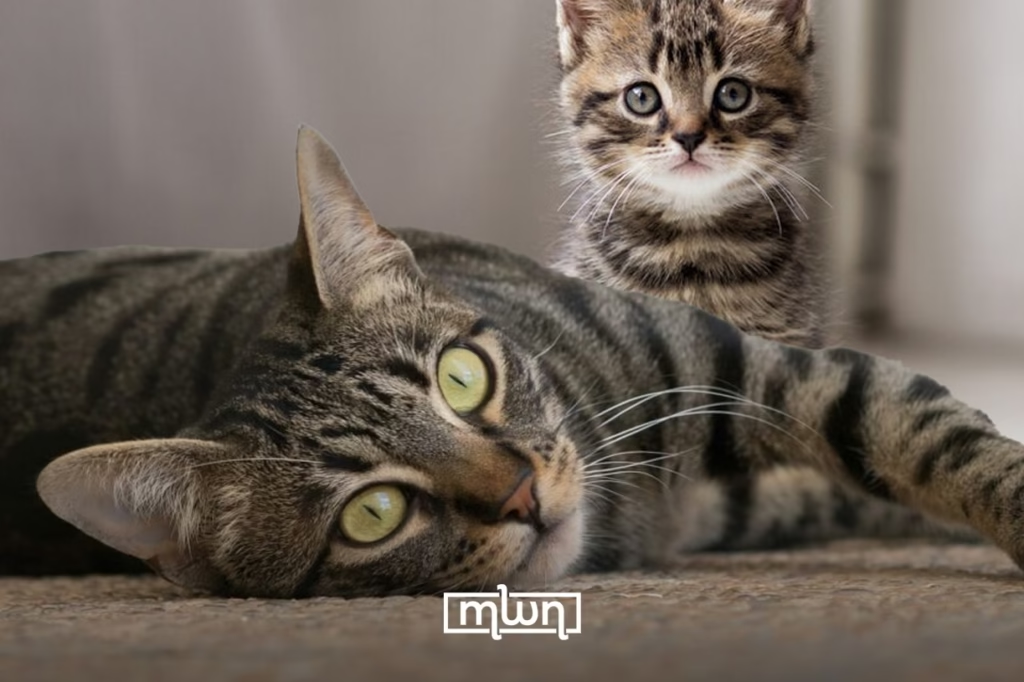
Cats are everywhere in Morocco, living alongside us, present in our beliefs, culture, and daily life. Rabat– In Morocco, you never walk alone. Whether strolling the narrow alleys of the medina or resting in the sun-drenched courtyards of a mosque, chances are, a cat is nearby. They are in markets, on rooftops, and in cafés. Welcomed, sometimes fed, always present. With a centuries-deep history, Morocco’s relationship with cats is tied to religion, culture, and utility. The cats’ long-lasting presence in Morocco is no accident. While domestic cats are now found worldwide, their origins can be traced back mainly to North Africa and the Near East, where wild cats (Felis lybica) were first domesticated over 9000 years ago. As trade routes expanded, cats traveled with merchants and sailors, embedding themselves in port cities like Tangier, Essaouira, and Casablanca. Over time, their presence became an expected part of urban life. Islam holds a special place for cats. The Prophet Mohammed is said to have had a beloved cat named Muezza. In a well-known story, when the call to prayer was heard, the Prophet chose to cut off a piece of his garment rather than disturb the cat sleeping on it. You would also see him walking by, carrying Muezza in his arms, on his way to pray in Mecca. In addition to being considered sacred, cats are believed to be a pure being as a species, and so are welcome in mosques. Such teachings helped develop a cultural respect for cats. In today’s Morocco, cats are both household companions and a big part of public life. Many families keep cats at home, loved, named, and cared for. However, the stray ones are not abandoned. The street is their home, and they are cared for by the community through shared feeding and attention. This creates a unique relationship between Moroccans and their feline friends: cats are both owned and communally watched over, part of both private homes and public spaces. Nowhere is this bond more visible than in Fez’s old medina, where cats are so deeply entangled in the citizens’ daily life that many refer to them as the guardians of the medina. While informal care remains widespread, growing awareness of animal welfare is encouraging more efforts like the TNVR method to manage overpopulation humanely. Amid all these changes and conversations around responsibility, the cat remains what it has always been in Morocco: a quiet companion, respected and welcomed, whether on the couch or in the alley.
The Purrks of Having a Cat
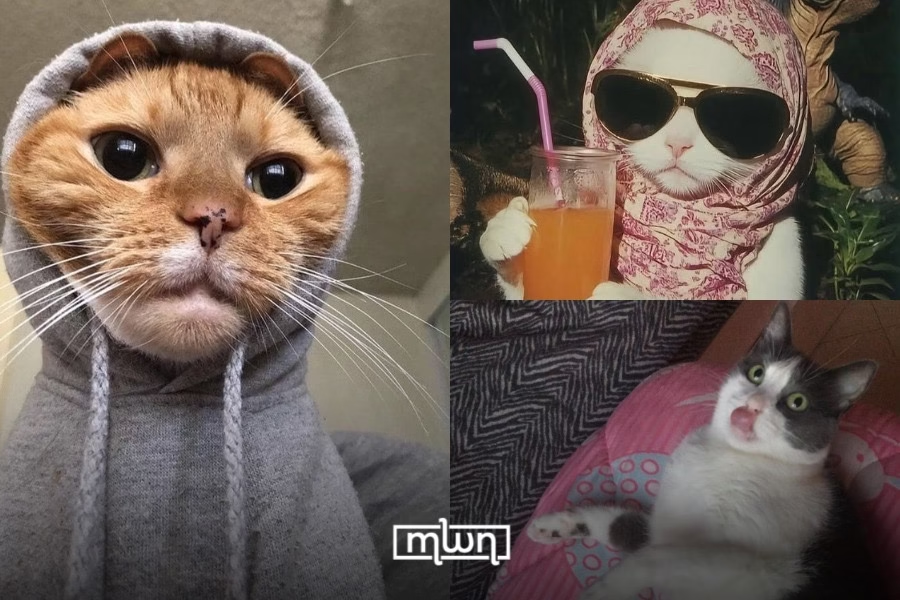
There’s something about the soft pitter-patter of paws at 3 a.m, a random tail in your face, and finding your favorite sweater covered in fur that strangely feels… like home.
New Study Reveals the Unexpected Origins of Domestic Cats

For centuries, we had the cat origin story all wrong, and now the truth is finally out. Fez– Guess what? Your house cat, the one currently ignoring you on the couch, has a wilder, more glamorous origin story than anyone thought. For decades, scientists assumed domestic cats tiptoed their way into Europe alongside Neolithic farmers, drawn by cozy grain stores and the promise of unlimited mice. Cute theory. Totally wrong. Two groundbreaking studies just flipped that narrative upside down. And the real star of the feline origin story? North Africa. Led by research teams from the University of Tor Vergata in Rome and the University of Exeter in the UK, these studies combed through vast genetic and archaeological data. And what they found is honestly the academic equivalent of a mic drop. Domestic cats didn’t even show up in Europe until thousands of years after agriculture was already in full swing. Let’s rewind. The researchers analyzed 70 ancient and 17 modern cat genomes, plus feline remains from 97 archaeological sites. What they uncovered were two big waves of cat migration. The first? Around the 2nd century BCE, when wildcats from northwest Africa were brought to Sardinia. The second, and more significant, wave happened during the Roman Empire, from the 1st to 5th century CE. This is when cats with the genetic blueprint of your modern-day purring roommate spread across Europe. All signs point back to North Africa. A parallel study from the University of Exeter backed this up by digging into over 2,400 cat bones from 206 sites. It revealed cats living in Europe long before the Romans strutted onto the scene, with feline remains in Britain dating back to the Iron Age. The takeaway? The domestic cat’s journey into Europe was slow, scattered, and deeply tied to culture. Because here’s the real kicker: cats didn’t win hearts just by catching rats. Religion and symbolism played a massive role. In ancient Egypt, cats were sacred, associated with the goddess Bastet and even mummified. The Greeks linked them to Artemis, the Romans to Diana, and Norse mythology had them trailing Freyja. That’s not pest control, it’s a full-blown PR campaign. As cats spread, they interbred with wild species, outcompeting them and reducing wildcat populations across Europe. And perhaps most fascinating of all: the mitochondrial DNA we once used to track their lineage? Turns out, it’s way too simplistic. Only deep genetic analysis revealed this tangled web of trade routes, empires, and belief systems that brought the house cat to our doorsteps. So next time your cat gives you that ancient, judgmental stare, just know, they come from a long line of North African nobility. Read also: ‘Salat Al-Qalaq’ Wins International Prize for Arabic Fiction
10 Fun Facts About Cats in Moroccan Households
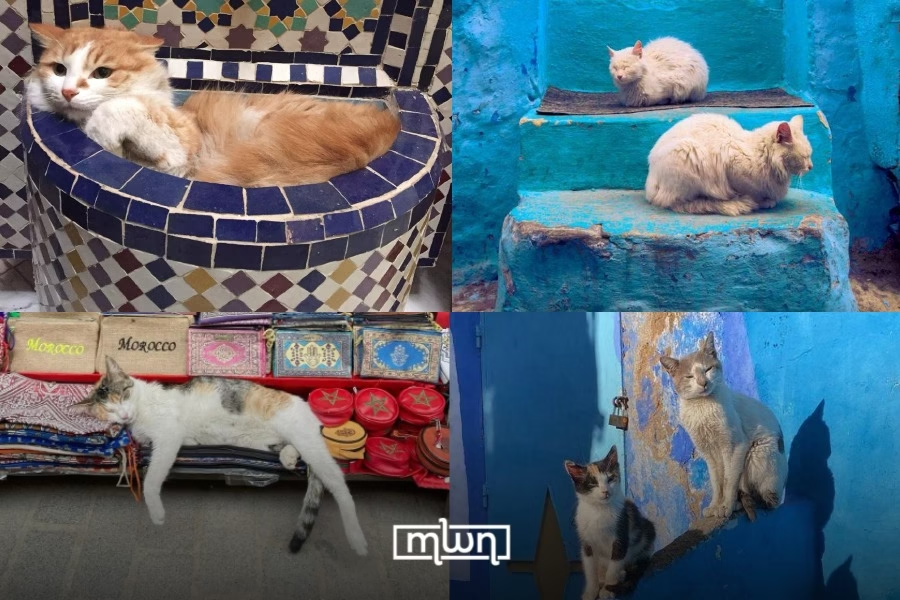
The next time you spot a cat lazily sunbathing in the middle of the medina, remember — they’re not lost.
The Secret Life of Moroccan Street Cats
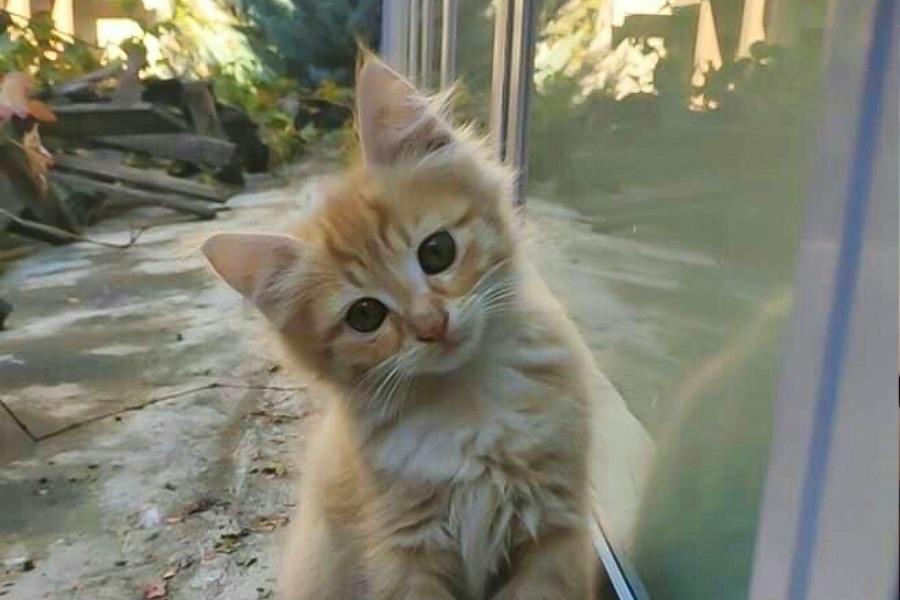
Ever wondered what it’s like to live like a Moroccan street cat? Fez – If you’ve ever wandered through the streets of Morocco, you’ve probably encountered one of the many street cats that seem to rule the roost. They’re everywhere: lounging on sun-warmed walls, strolling through streets, and even perched proudly on cafe tables, as if they own the place. But don’t let their laid-back attitude fool you; the secret life of Moroccan street cats is as intriguing as it is mysterious. Street cats as royalty In Morocco, cats are more than just street dwellers; they are treated with a kind of reverence that most other animals could only dream of. These cats have lived alongside Moroccans for centuries, and the bond between them is deep. They’re not exactly pets, but they’re not exactly wild either. Instead, they live in a limbo where they enjoy the privileges of being almost family without the responsibility. In fact, some people believe that cats in Morocco bring good luck. This belief is rooted in Islamic traditions, where cats are seen as clean and pure animals. So, if you’ve ever had a cat walk by and grace you with an air of unbothered superiority, you’re not imagining things, they know they’re royalty. Mastering the art of begging Moroccan street cats are some of the most skilled beggars you’ll ever meet. They have perfected the art of sitting just close enough to you in cafes, restaurants, or food stalls to get your attention without being too forward. They’ll stare at you with those big, innocent eyes, giving the impression that they’ve never had a meal in their life, even though they just ate a fish head an hour ago. But be warned: these cats aren’t afraid of rejection. If you don’t share your food, they’ll simply move on to the next unsuspecting tourist, often leaving a few seconds of guilt behind them. In a way, they’ve mastered the art of persistence in a way that would make any entrepreneur proud. The mystery of the cat collective Have you noticed that Moroccan street cats often travel in packs? They’re not just wandering aimlessly; they form a sort of feline community where each cat knows its place. They have designated spots in different parts of the city and operate with a social structure that’s as orderly as it is surprising. You’ll find them congregating at the edges of souks, lurking near the fish market, or lazily basking in the sunlight near the city gates. Each one plays a role, whether it’s the lookout, the beggar, or the sun-seeker. Their collective presence adds to the charm of the streets and makes them an inseparable part of the Moroccan landscape. If you ever try to befriend a Moroccan street cat, don’t expect immediate results. These cats are not the cuddly, purring types you might find in your living room. They’re independent, and their love is earned, not given. Approach with care, respect their space, and maybe, just maybe, you’ll get a little head rub as a reward for your patience. The Moroccan street cat is a master of self-sufficiency and knows exactly how to survive in one of the world’s most chaotic environments. They live in the balance of freedom and affection, embodying the mysterious charm that Morocco does so well. Read also: POV: Growing Up in Morocco – A Childhood Like No Other
Cat’s Garden in Fez Is the Purr-fect Spot for You and Your Pet

Is your cat dropping hints they’re ready for a date? (Mine definitely is!) Marrakech – At Cat’s Garden in Fez, the customers aren’t just human — yes, you read that right. This charming little spot is the ultimate escape for anyone looking to have a quirky date or meet a brand-new furry friend. And here’s the fun part: their crepes. They’re so good, you’ll find yourself asking the real question — are you willing to share with your furry companion? Let’s be honest, the answer might be a no. Oh, and don’t even think about breaking the rules of the “Kingdom of Cats“ as they call it. Their Instagram is basically a crash course in feline etiquette — because when cats rule, you follow — right? Here’s a fun fact: Moroccan medinas have always been a cat-lover’s dream. Wander through the narrow streets of any city, from Fez to Marrakech, and you’ll find cats lounging in sunny corners, perched on ancient walls, or napping in market stalls. These furry locals aren’t just part of the scenery — they’re part of the community. In some cities, locals even set up dedicated spots for them, complete with food, water, and a cozy nook to rest. It’s a sweet, unspoken bond between people and their feline neighbors. There’s something so heartwarming about the way these cats are cared for — it’s like a living reminder of the generosity and warmth Moroccan culture is known for. So, if you’ve ever wondered what it’s like to have a coffee break with a side of purrs, the medinas — and Cat’s Garden — have got you covered.