Fez — If you are trying to break into Morocco’s film industry, fighting for the director’s chair might not be the smartest place to start.
The Moroccan Cinematographic Center (CCM) reported that its first 2026 professional cinema-card session received 222 applications across 14 specialties.
Directing dominated the field with 57 applications. Production coordination followed with 43, while cinematography attracted 24, set decoration drew 20, and costume received 18.
Then the numbers fall sharply.
Only 10 people applied in lighting, nine in sound, nine in makeup, six in editing, five in special effects, four in machinery, and just one person applied in cinematic hair.
That does not mean Morocco has only one film hairstylist, nor does it prove that these specialties currently have more vacancies. The figures represent applicants seeking professional cards during one specific 2026 session.
Still, the imbalance offers a rare glimpse at where professionals are concentrating their ambitions and where far fewer people are appearing in the pipeline.
The jobs behind the camera matter more than ever
The timing makes those numbers especially interesting.
Morocco is actively trying to expand the amount of international film work completed inside the country. In July, the Ministry of Youth, Culture and Communication launched construction of the International Cinema City in Ouarzazate.
The MAD 240 million ($25 million) project will cover 10.49 hectares and include a 3,000-square-meter studio, technical facilities, post-production services, training spaces, and facilities dedicated to creative technology.
The ministry has also announced plans for a specialized training and continuing-education unit in Ouarzazate linked to the Higher Institute for Audiovisual and Cinema Professions. The stated goal is to develop Moroccan skills that can meet the needs of the expanding production ecosystem.
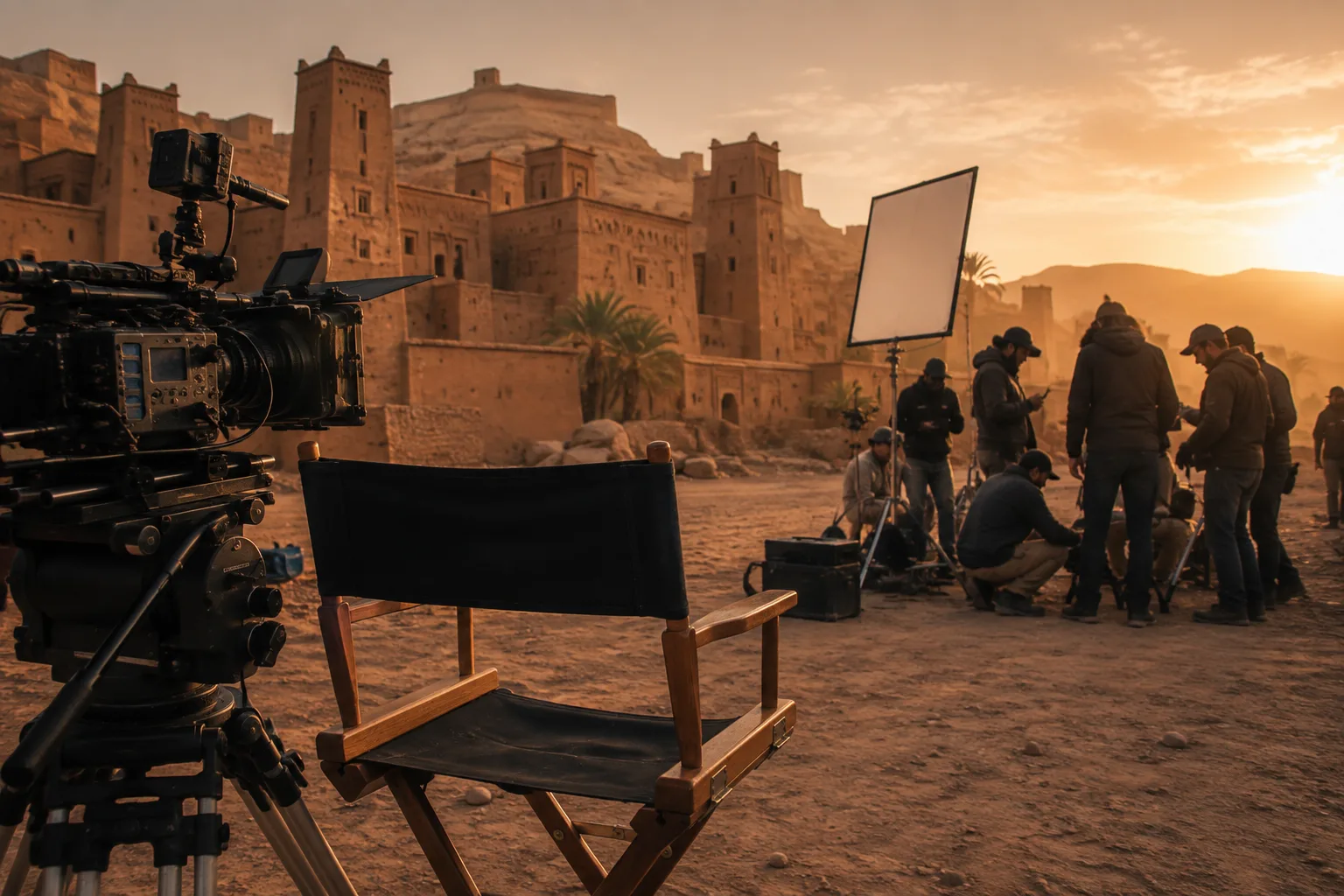
That means Morocco does not only need directors and actors. Bigger productions require editors, lighting crews, machinists, special-effects technicians, makeup artists, hairstylists, set specialists, and dozens of other professionals whose names rarely appear on posters.
What the professional card actually requires
The cinema card is a professional credential, not a job application.
The CCM explains that applicants submit their requests digitally and provide qualifications or evidence of professional experience. People without formal film diplomas can instead submit proof that they have worked on cinematic or audiovisual productions.
The commission said it approved cards for 191 candidates, including 57 women and 55 department heads. Five files were postponed and 31 were listed as rejected. The published outcome figures total 227, however, which does not reconcile with the CCM’s stated 222 applications.
The broader takeaway remains clear. Morocco wants a larger and more technically capable film industry, while its latest professional-card data shows applicants heavily favoring some careers over others.
For anyone thinking about working in cinema, the overlooked opportunity may not be calling “action.” It may be becoming exceptionally good at one of the jobs every director needs once the camera starts rolling.