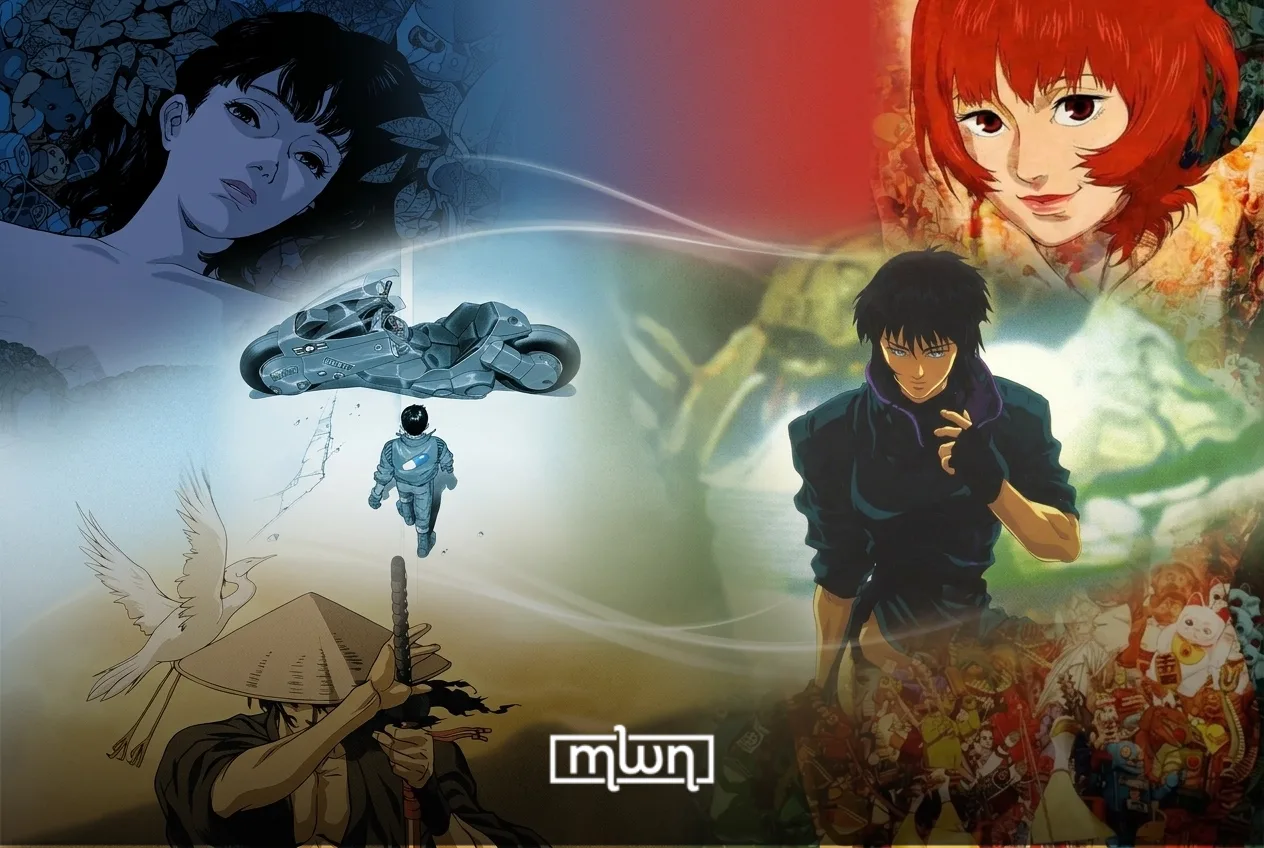
Fez — Anime has never belonged exclusively to children, and these five movies make that obvious within minutes.
Mature anime does not simply mean more blood or nudity. At its best, the medium uses animation to explore identity, technology, violence, obsession, trauma, and questions about what it means to remain human.
For viewers ready to move beyond lighter animated entertainment, these five films offer a strong place to start.
5. “Paprika”
Satoshi Kon’s 2006 “Paprika” starts with technology that allows therapists to enter their patients’ dreams. Then somebody steals the device.
IMDb describes the film as a psychological thriller in which a therapist must stop the chaos unleashed when the dream machine disappears. The platform currently gives it a 7.7 out of 10 rating from more than 115,000 users.
Reality quickly stops behaving normally. Dreams begin spilling into waking life through giant parades, talking objects, strange transformations, and images that seem to operate according to their own logic.
“Paprika” is the kind of movie that becomes less understandable if you look away for five minutes. That is part of the fun.
4. “Ghost in the Shell”
Mamoru Oshii’s 1995 “Ghost in the Shell” takes place in a future where the line separating humans from machines has become increasingly difficult to identify.
Major Motoko Kusanagi, a cybernetic government agent, investigates a mysterious hacker known as the Puppet Master.
IMDb classifies the movie as adult animation, cyberpunk, dystopian science fiction, and an artificial-intelligence story. It currently holds a 7.9 rating from around 176,000 users.
There is plenty of action, but “Ghost in the Shell” is ultimately more interested in consciousness.
If a body can be replaced, memories manipulated, and intelligence created artificially, the film asks what remains that can still be called a self.
Nearly three decades later, that question feels considerably less hypothetical.
3. “Akira”
Katsuhiro Otomo’s “Akira” remains one of the easiest recommendations for anyone who thinks animation cannot feel enormous, violent, and genuinely unsettling.
Released in 1988, the film takes viewers into Neo-Tokyo, where biker gangs, political unrest, government experiments, and psychic powers collide.
IMDb lists the movie as an R-rated cyberpunk and dystopian science-fiction film. It currently carries an 8.0 rating from roughly 229,000 users.
The story centers on Kaneda and Tetsuo, two teenage bikers whose friendship is torn apart after a secret military project awakens terrifying abilities in Tetsuo.
The destruction is spectacular, but the movie works because the power underneath it feels personal.
Tetsuo is angry, insecure, humiliated, and suddenly strong enough to make everyone around him pay for it.
That is a dangerous combination in any city, especially one already falling apart.
2. “Ninja Scroll”
“Ninja Scroll” is where this list stops pretending children should even be in the room.
Yoshiaki Kawajiri’s 1993 dark fantasy follows wandering swordsman Jubei Kibagami as he becomes involved in a conspiracy featuring assassins, supernatural abilities, political betrayal, and one particularly unpleasant group known as the Devils of Kimon.
IMDb describes it as adult animation combining samurai action and dark fantasy. The film holds a 7.8 rating from about 45,000 users.
The movie is graphic. It contains extreme violence, nudity, sexual material, and sexual assault.
But reducing “Ninja Scroll” to shock value misses why it became such a recognizable title among older anime fans.
Its sword fights are fast and brutal. Its villains have memorable supernatural abilities. Its feudal Japanese setting constantly moves between historical adventure and outright horror.
At the center is Jubei, a detached mercenary who gradually finds himself fighting for something beyond money and survival.
If “Akira” represents cyberpunk anime at its most explosive, “Ninja Scroll” does something similar for violent samurai fantasy.
1. “Perfect Blue”
Satoshi Kon’s “Perfect Blue” is the film to show someone who still believes animation cannot deliver serious psychological horror.
The 1997 movie follows Mima Kirigoe, a pop idol who leaves music to become an actress.
IMDb summarizes the story as Mima gradually losing her grip on reality after becoming the target of an obsessive stalker. The film currently holds an 8.0 rating from more than 125,000 users.
Her career transition becomes increasingly disturbing as acting scenes, memories, online posts, hallucinations, and real violence begin blending together.
What makes “Perfect Blue” especially effective today is its treatment of celebrity identity.
Mima discovers that other people have developed an idea of who she is and become angry when the real person refuses to remain inside that version.
Long before influencers, parasocial relationships, and permanent online identities became everyday language, “Perfect Blue” understood how terrifying it could be to lose ownership of your public image.
These five films come from very different corners of anime, but all of them reject the idea that animation has to soften its subject matter.
Sometimes drawing the nightmare only gives filmmakers more freedom to make it worse.