Scientists Crack the Code Behind the World’s Oldest Synthetic Blue
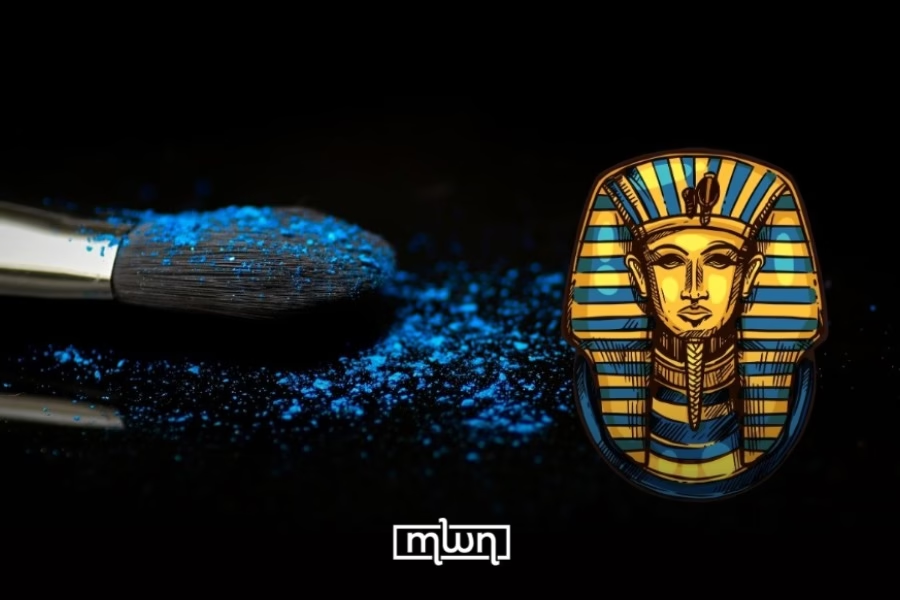
Ancient Egypt’s boldest color has just been brought back to life Fez– When we think of ancient Egypt’s genius, we usually jump straight to mummies, pyramids, and the whole “defying time” business. But there’s another masterpiece that often gets overlooked: “Egyptian blue,” a vivid, shimmering pigment that just happens to be the oldest synthetic color known to humankind. Yes, they made their own paint… thousands of years before oil paints were a thing. Fast forward to 2025, and a team of researchers from Washington State University, along with collaborators from the Carnegie Museum of Natural History and the Smithsonian, have managed to do something pretty spectacular: they’ve recreated this ancient color from scratch using modern science. And no, it wasn’t as simple as mixing blue food coloring into playdough. So, what’s the big deal with Egyptian blue? For starters, it’s not just a color, it’s a scientific puzzle, an artistic statement, and a materials engineering marvel all rolled into one. At the heart of this shade is a rare compound called “cuprorivaite”, a turquoise-leaning mineral that forms when you heat a precise mix of silica, copper oxide, and calcium carbonate at temperatures reaching 1000°C. The Egyptians pulled this off without labs or thermocouples, just fire, intuition, and a bit of magic. The recent study, published in “Heritage Science”, took that recipe and modernized it. The researchers tested 12 different versions using ultra-pure materials, think clean silica (a fancy way to say sand), natron (basically Egyptian baking soda), and copper sources. They experimented with heating times and temperatures, observing how each tiny tweak changed the outcome. It turns out even slight differences in cooling speed or ingredient ratios affected whether you got a deep ocean blue, a dusty teal, or something closer to moss. The team didn’t stop there. They compared their lab-made pigments with actual samples from two ancient Egyptian statues, one from the reign of Akhenaten (14th century BCE), and another from the Ptolemaic era. Using high-powered tools like electron microscopes and X-ray diffraction, they found a striking match. The structure of the blue crystals, the way the light reflected off the pigment, all of it mirrored the real deal. That’s not just color-matching; that’s forensic archaeology meets material science. The coolest part? This isn’t just a “wow, neat history” moment. Egyptian blue emits infrared light, which means it could be used in cutting-edge tech, from anti-counterfeiting inks to medical imaging. Shrink its particles down to the nanoscale, and it becomes even more efficient. Imagine a color invented to paint a falcon god’s crown, now helping detect fingerprints or improving cancer scans. Ancient Egypt, meet modern innovation. And if all that feels a little too high-tech, here’s something simpler: this rediscovered pigment could one day end up in luxury textiles. Imagine wearing a scarf dyed with a color formula that dates back to the Pharaohs, one that never fades, never dulls, and comes with a story longer than most civilizations. Today, these re-created pigments are on display at the Carnegie Museum in Pittsburgh, nestled inside a gallery devoted to ancient Egypt. But they’re more than museum pieces, they’re proof that even secrets buried for millennia can be brought back to life, with a little curiosity, a lot of collaboration, and just the right amount of fire. Read also: Saudi Arabia Is Building a New SuperCity With an F1 Track
Scientists Say They’ve Discovered a New Color, And No, You’ve Never Seen It Before
Forget everything you know about the color wheel, this new discovery might change it. Fez – A group of scientists in the US is making a wild, fascinating claim: they’ve discovered a color that no human eye has ever seen. Like, ever. It’s not just a new shade of teal or some ultra-rare Pantone chip; this is supposedly an entirely new color experience, and they’ve named it “olo”. Here’s how it happened: researchers conducted an experiment where volunteers had carefully controlled laser pulses beamed directly into their eyes. Sounds terrifying, but it was all very scientific. The lasers targeted specific cone cells in the retina, the ones responsible for detecting color, and when they were stimulated in just the right way, participants reported seeing something…different. Something that didn’t fit into the standard rainbow we all know. The study, published in Science Advances, was co-led by Professor Ren Ng of the University of California, who described the outcome as “remarkable.” He explained that our perception of color depends on how our three types of cone cells (red, green, and blue) are activated. Usually, the brain blends the signals to make the colors we know. But in this case, the stimulation was so specific, it might have short-circuited the usual processing and triggered a whole new visual sensation. Imagine telling someone who’s never tasted pineapple what pineapple tastes like. That’s kind of what describing “olo” is like, it exists outside our visual vocabulary. It’s a color that, according to the team, doesn’t even exist in the real world… yet. Of course, not everyone’s ready to hang a new crayon in the box just yet. Some scientists argue that the discovery is more of a perceptual illusion than an actual new color. After all, the human eye has limits, and we haven’t evolved to see beyond them, unless, apparently, you throw lasers into the mix. Still, even skeptics admit this could be a big deal for color science. One exciting possibility? Helping people with color blindness. If olo can be accessed by tweaking how color is perceived, not just what’s physically present, it might open new pathways for expanding the color experience of those who’ve never been able to tell red from green. Apparently, our understanding of sight is far from finished. And honestly, the idea that there’s still something completely new out there for our eyes to discover? That’s pretty cool. Read also: YouTube Turns 20 with Over 20 Billion Videos
The Colors of Moroccan Cities
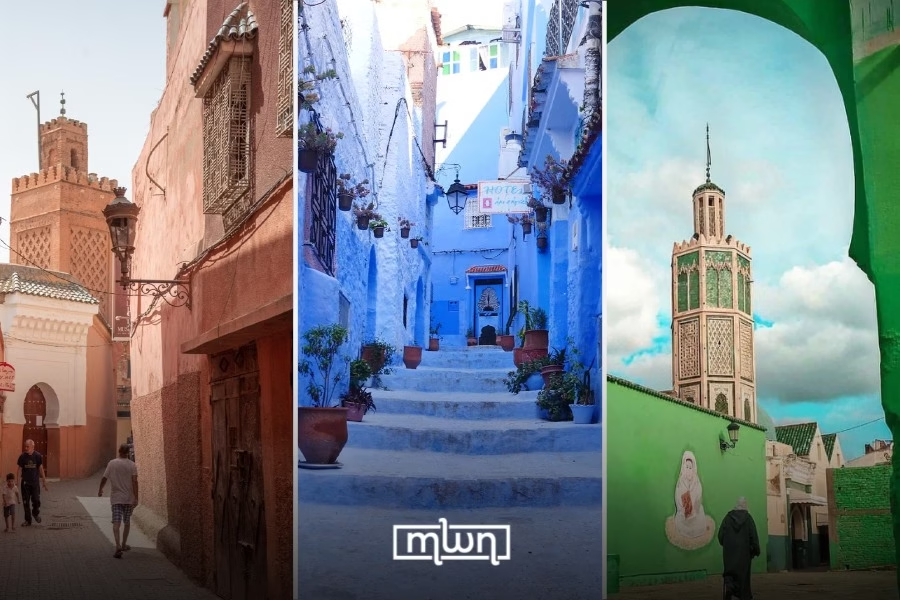
Did you know that each city in Morocco is defined by its own color? Fez– Morocco, a land where tradition and modernity blend seamlessly, is a country that paints itself in the most striking colors. From lush greens to tranquil blues, deep reds, and radiant yellows, each Moroccan city tells its own story through the shades that adorn its streets. These hues are more than just aesthetics, they reflect the essence of the people, history, and environment that shape them. Let’s explore the colors that define Morocco’s cities and uncover the soul of each one. Ouazzane: The green city Nestled at the southern edge of the Rif Mountains, Ouazzane is affectionately known as Morocco’s “Green City.” This tranquil town is enveloped by lush landscapes, where olive groves and rolling hills create a serene atmosphere. The abundant greenery not only offers a refreshing visual respite but also symbolizes renewal and peace, distinguishing it from other regions of Morocco. Ouazzane’s verdant surroundings reflect a deep-rooted connection to the land, inviting visitors to experience both its natural beauty and its rich cultural heritage. Chefchaouen: The blue city Chefchaouen, with its iconic blue-painted walls and alleys, is a place where color and calm merge effortlessly. The blue that envelops the city is no mere decoration; it has deep cultural and spiritual significance. Some say it symbolizes the heavens, others believe it keeps away insects and makes the houses cooler, but all agree that it brings an unmatched sense of serenity. The city’s tranquil blue streets are a haven for travelers and locals alike, offering a peaceful escape where the sky and the buildings seem to unite in perfect harmony. Marrakech: The red city Marrakech, with its rich, warm tones, is the epitome of Morocco’s unique energy. Known as the “Red City,” the hues of terracotta and ochre that cover its buildings exude warmth and history. This color palette speaks to the city’s deep roots in both ancient tradition and contemporary life. The ochre-colored walls of Marrakech’s old medina, contrasted by the souks and modern cafes, create a dynamic that feels timeless yet ever-evolving. The red here doesn’t just capture the eye, it embodies the spirit of resilience and passion that defines Marrakech. Casablanca: The white city Casablanca, Morocco’s economic heartbeat, is known as the “white city” for its sleek, whitewashed buildings that grace the coastline. The city’s clean, airy aesthetic reflects its modern identity, while the white symbolizes purity and openness. Casablanca’s wide boulevards, lined with artistic structures, evoke a sense of elegance and progress. With the Atlantic Ocean as its backdrop, the city shines with a cosmopolitan energy that perfectly balances Morocco’s rich history and its forward-thinking future. Fez: The yellow city Fez, with its labyrinthine medina and ancient charm, often carries the moniker of the “yellow city.” The warm, golden tones of its buildings are a testament to the city’s intellectual and spiritual history. Fez was once the center of learning in the Arab world, and its color reflects the city’s luminous past. The golden hues of the city’s ancient walls and intricate mosaics evoke a sense of wisdom and culture that has persisted through the ages. In Fez, yellow symbolizes the light of knowledge and the enduring spirit of a city that has shaped Moroccan heritage. Beyond the iconic hues of Morocco’s best-known cities, there are countless other towns and regions that add their own colors to the country’s palette. From the pink-tinged buildings of Taroudant to the golden desert sands of Zagora, Morocco is a canvas where every corner offers a new shade, telling a different story. Each color in Morocco’s cities is a reflection of its people, its history, and its place in the world; rich, varied, and eternally captivating. Read also: Taza: The Forgotten Jewel of Morocco
The Secret Power of Colors in Your Outfit
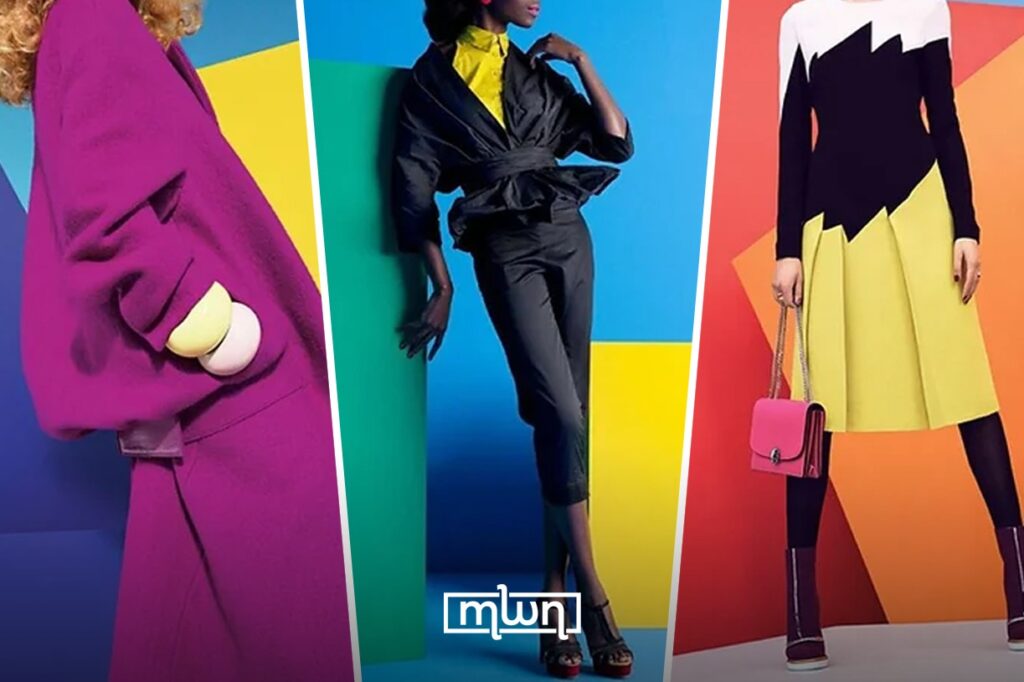
What if the colors you wear could secretly control your mood and the way people see you? Fez – Every morning, when you pick out your clothes, you’re not just choosing a style; you’re setting the mood for your day. Will you feel bold or calm? Strong or soft? The colors you wear don’t just affect you; they also send silent messages to those around you. Let’s discover how the colors in your wardrobe shape your mood and the way others see you. Colors have a deep impact on the brain, influencing emotions in ways we don’t always realize. Here’s how different shades can shape your energy and mindset: Warm colors (red, orange, yellow) – These shades spark energy, confidence, and even a little boldness. Perfect for days when you want to stand out. Cool colors (blue, green, purple) – They bring calm, balance, and focus. Great for moments when you need to stay collected. Neutral colors (black, gray, white, beige) – These give off a sense of stability and reliability, making them timeless wardrobe staples. Want to feel powerful? A pop of red might do the trick. Need a peaceful vibe? Soft blues or greens can help. The colors you wear can shift your mood without you even realizing it. How colors influence others Before you even speak, your outfit is already saying something. Colors are a form of silent communication. Red – Grabs attention, shows confidence, and radiates passion.Blue – Builds trust and gives off a calm, professional vibe.Black – Exudes power, elegance, and mystery.Yellow – Feels bright, optimistic, and full of energy. Soft pastels make you seem warm and approachable, while deep, rich tones give off authority and strength. Your color choices shape how people respond to you; whether they see you as a leader, a creative spirit, or someone easy to talk to. How to choose the right color for the right moment Next time you open your closet, ask yourself: How do I want to feel today? Energized? Go for warm tones. Focused? Cool shades are your best friend. How do I want people to see me? Professional? Blue or gray. Approachable? Soft pastels. What message do I want to send? Whether it’s confidence, creativity, or elegance, your colors will speak for you. Clothes aren’t just fabric, they’re tools. They shape your mood, influence your energy, and change how others perceive you. Next time you want to choose what to wear don’t forget to use this article as your personal guide. Read also: The Ugly Impact of Beauty Standards on Mental Health