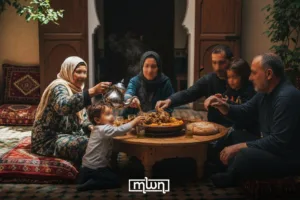
Fez — Across the country the rhythm is familiar—markets are busy in the morning, mosques fill for Jumuʿah, then kitchens come alive as steam from couscous pots perfumes the house.
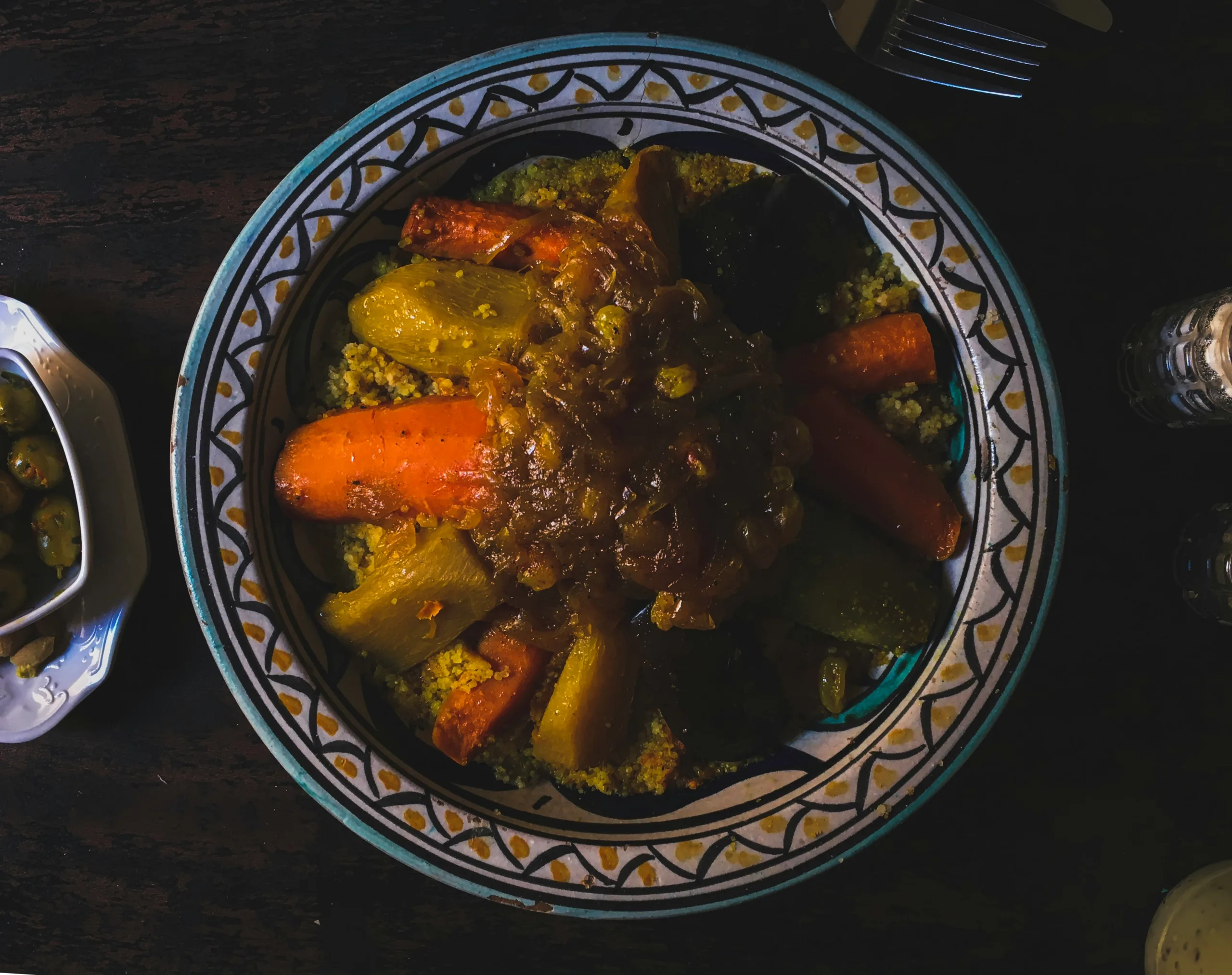
By early afternoon a large platter anchors the table, grains fluffed, vegetables stacked into a small pyramid, broth ladled around the edges. Neighbors and relatives drift in, someone brings bread or fruit, there is always space for one more seat.
The tradition is old yet adaptable. Families choose meat, chicken, or fish depending on season and budget, some finish with caramelized onions and raisins known as tfaya—others keep it simple with garden vegetables and chickpeas.
In the diaspora, the same platter becomes a bridge to home, a way to share Moroccan hospitality with friends from different backgrounds.
What keeps the tradition strong is not only taste and memory; a weekly meal that everyone expects reduces planning stress, preserves time for conversation, and offers a reliable moment for elders to see children and grandchildren. The ritual turns Friday into a gentle reset, a pause before the weekend that many find restorative.
How Friday couscous helps
Couscous is naturally balanced when prepared in the traditional way. Semolina or whole-wheat couscous provides slow energy, the generous mound of carrots, zucchini, turnips, pumpkin, or cabbage adds fiber and vitamins. Chickpeas bring plant protein and minerals, and a modest portion of meat or fish rounds the plate.
Because grains and vegetables are steamed, the dish leans on broth and spices for flavor rather than heavy fats, and small tweaks such as extra seasonal greens or whole-grain couscous can make it even lighter without losing satisfaction.
Eating from a shared platter encourages pace and presence; people pass vegetables, talk, and take breaks between bites, which supports mindful eating and often gentler digestion.
The table becomes a classroom for children, they learn to serve elders first, to share fairly, and to appreciate the order of the pyramid, lessons that travel beyond lunch.
Friday couscous is also kind to the household budget. Seasonal produce and grains do the heavy lifting while a small cut of meat flavors a large pot of broth, leftovers reheat well on Saturday, so very little goes to waste. Buying from local souks and mills keeps value in the community, and many families use olive oil from nearby presses, choices that support small producers and reduce reliance on imported foods.
There is a mental health benefit to routine. Knowing what lunch will be each Friday cuts decision fatigue, frees time for prayer or rest, and gives extended families a dependable occasion to reconnect. For students and workers who return home at midday, the meal functions as a weekly checkpoint, a chance to review the week and set intentions for the next.
The custom travels well. In Paris, Montreal, or Madrid, a Friday couscous quietly turns an apartment into a cultural salon, friends crowd around the platter, stories are traded, recipes evolve, and a new circle forms. Whether at home in Morocco or abroad, the practice endures because it nourishes on several levels at once, taste, health, wallet, and the simple human need to gather.