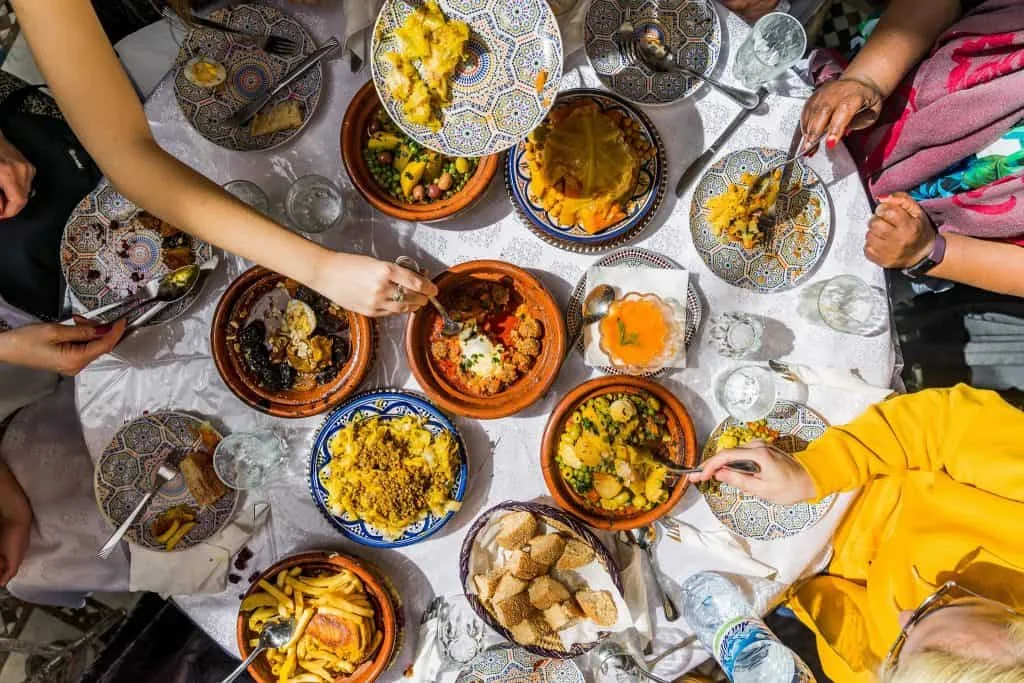
Rabat – If you’ve ever been lucky enough to be invited into a Moroccan home, you already know that it’s not just a visit, it’s an experience. A Moroccan family gathering is unlike any other — a beautiful mix of tradition, generosity, and mint-scented hospitality.
In Morocco, hosting guests is sacred. It’s not just something we do — it’s an art form that must be done perfectly.
The moment you step inside, you’re greeted with dates and milk — a timeless symbol of welcome, especially if it’s your first visit. Then you’ll be guided straight to the pride of every Moroccan home: the salon — a carefully curated space waiting for special guests.
You’ll be showered with warmth from every corner: “Marhba bik!” (“Welcome!”), “Dar darkom” (“Make yourself at home!”), and “Nhar kbir hada!” (“What a blessed day!”) These are all phrases that will follow you from the doorway to your seat, echoing genuine joy at your presence.
Moroccan hospitality speaks many languages: through words, food, and the endless refilling of tea glasses. You might think you’re just stopping by, but by the time you leave, you’ll feel like you’ve eaten enough for an entire village.
“Atay,” (Moroccan tea), is the real star of the day. Sweet, fragrant, and poured with grace, it’s more than a drink; it’s how we say, “You belong here.” Alongside it come trays of delicate pastries like “ghriyba,” “kaab ghzal,” and “feqqas”; each bite a small love letter from Moroccan kitchens.
When lunchtime arrives, buckle up. There’s no “light meal” in a Moroccan home. Expect at least two dishes: perhaps “lham bel barqouq” (lamb with prunes), “mrouziya,” “bastilla,” “djaj mhamar b daghmira” (roast chicken with spiced onion sauce), or “seffa medfouna.” If it’s Friday, be prepared for the classic couscous served with “lben” (buttermilk).
Just when you think your stomach has reached its limit, dessert makes its grand entrance: plates of seasonal fruit, usually oranges, bananas, or peaches. During summer, watermelon becomes the star of the show, working like a natural air conditioner to refresh you during the scorching days.
If you think the feast ends here, you’re mistaken. After lunch, it’s time for heartfelt conversations about everything and nothing: life, politics, and people. Meanwhile, “atay” is once again brewing in the kitchen, sometimes joined by coffee to satisfy everyone’s preferences.
Soon, the table transforms again, this time into a mosaic of Moroccan snacks: “msemen,” “baghrir,” “harcha,” “cakes,” “briwat,” and more. And yes, you will be urged to keep eating.
At a Moroccan table, there’s something for every taste, and you can’t leave until there’s truly no room left in your stomach.
When it’s finally time to leave (or so you think), a playful battle begins: you stand up to go and your hosts insist you stay a little longer. And deep down, you already know who’s going to win. Before you know it, you’re sipping “harira” and nibbling on “chebakia” and boiled eggs.
And when you do manage to leave, you won’t go empty-handed. Expect a small container of leftovers — a final act of love — proof that Moroccan hospitality doesn’t end at the door.
Because in Morocco, when you’re a guest, you’re family.