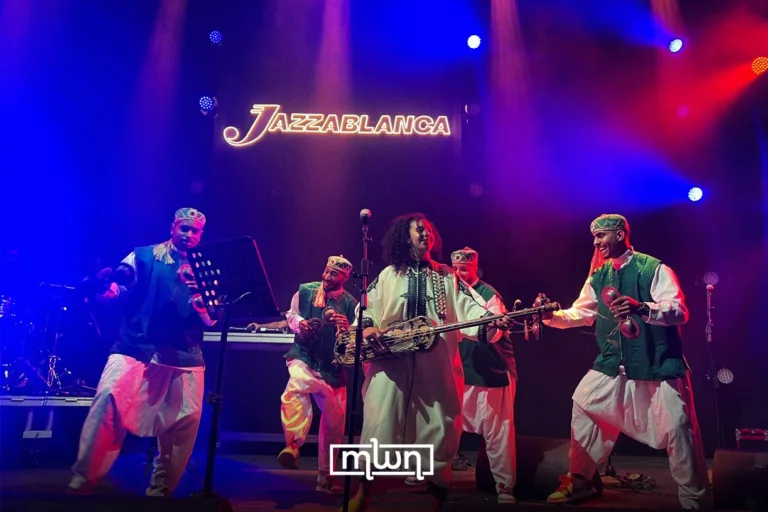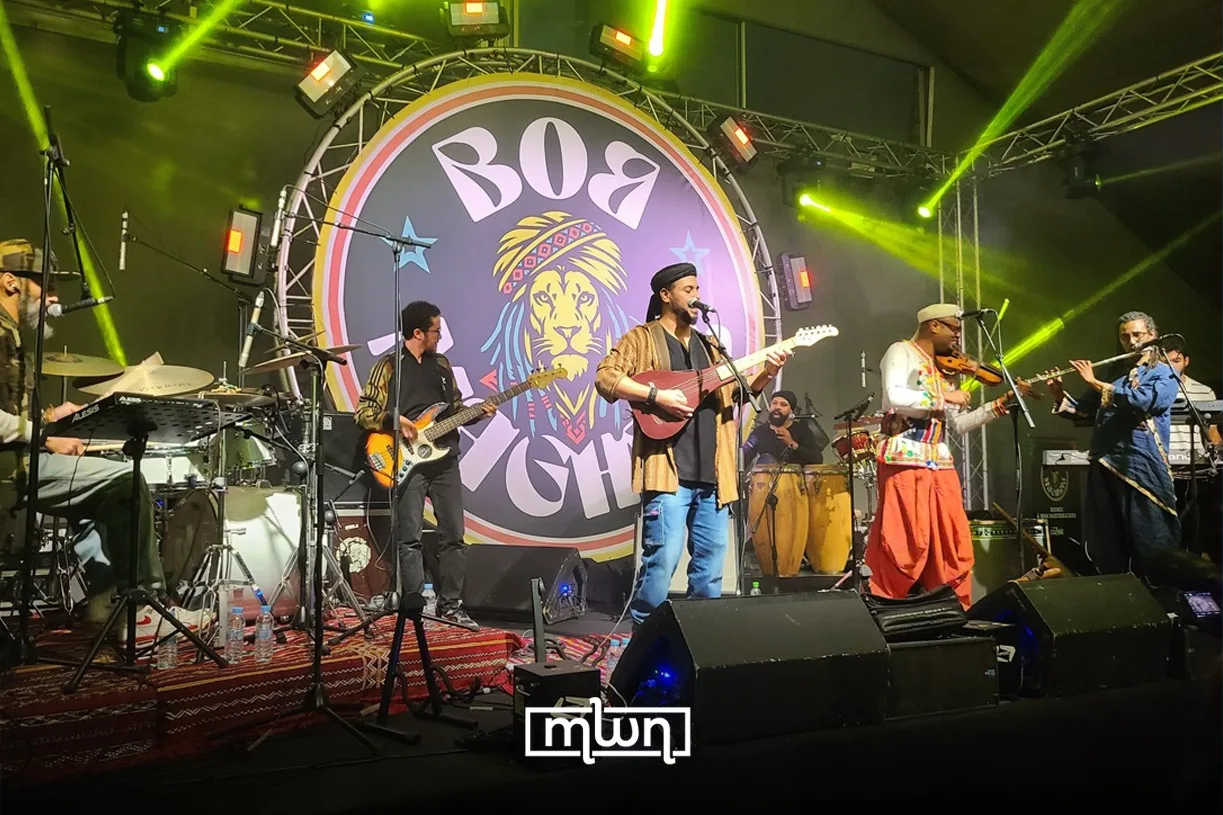
Casablanca – Following a decade of silence, Bob Maghrib made a long-awaited return with an exclusive show on April 1 at Casablanca’s Studio des Arts Vivants, unveiling a new lineup shaped by a renewed artistic direction and a refined musical vision.
The comeback took form through a live preview that breathed life back into a long-standing creative idea: blending reggae with Moroccan musical heritage. Well, it’s not as a contrast, it’s actually a natural meeting point.
Founded in 2011 in tribute to the 30th anniversary of Bob Marley’s passing, the project was built on reimagining the late artist’s iconic songs through the lens of traditional Moroccan instruments.
These reinterpretations bring new depth to Bob Marley’s repertoire.
Music in a time of uncertainty
In an exclusive interview with MWN Lifestyle, Adil Hanine shared the message the band aims to convey amid ongoing global crises.
“I think this coincidence means that we came back after ten years at the same time today, like the world has gone a little bad, war is everywhere, conflict and as you guys know reggae music is a message of peace and unity and resistance so we are here to represent this movement”
According to him, the comeback is also an opportunity “to show the world that Moroccan traditional instruments are not just made for folklore, pure Moroccan music, we can also use it in different styles and different sounds, different arrangements and it can open for other bands.”
He added, “it’s still our heritage, it’s our DNA and we can’t run away from it, so better use it than hide it.”
Yesterday’s concert featured famous titles like “Africa Unite,” “Could You Be Loved,” and “War,” which took on a new texture and spirit as reggae rhythms intertwined with traditional Moroccan sounds.
Together, they form an immersive experience where identity, resilience, and cultural dialogue quietly emerge at the core.
At the heart of this soundscape, the deep, resonant voice of the Guembri takes center stage in a mesmerizing blend with the groovy, rhythmic pulse of the bass. Around it, the Ribab, Oud, and Loutar unfold in melodic layers, adding a rich, textured depth to the composition.
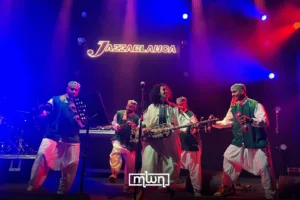
This return features a renewed lineup of Moroccan musicians, with Adil Hanine on drums and vocals, Foulane Bouhssine alternating between guembri, violin, and vocals, Anas Chlih on loutar and vocals, and Fayçal Boudli on bass.
Simo Babara joins on percussion and backing vocals, alongside Mourad Belouadi on guembri and vocals, and Wassim Taghzouti on keyboard and backing vocals.
Where cultures intertwined through sound
More than a simple comeback, this musical revival marks a celebration of the seamless blending of two distinct musical worlds into a shared artistic expression, striking a balance between reggae rhythms and Moroccan heritage.
For Bob Maghrib, this fusion is rooted in a shared African identity, making the blend feel natural rather than forced.
“The fusion has to feel fluid, so that when people listen, they don’t feel like they’re hearing two different cultures, but one culture. At the core, it’s African culture, and we are Africans ourselves, so blending these genres comes naturally to us,” said Foulane Bouhssine to MWN.
Co-founder of L’Boulevard Hicham Bahou, told MWN that such music speaks a universal language, where audiences sing along and connect with the energy despite linguistic barriers.
“It is a tribute, through a Moroccan sound, to universal music and to an artist who resonates with people everywhere, even if they do not understand English. And that’s the magic of these artists who transcend all that. It’s that we understand what they mean, even when we don’t understand the language.”
Through the fusion of the two musical worlds, this artistic project goes beyond mere entertainment. It serves as a creative way to preserve Moroccan heritage while introducing these deeply rooted sounds and instruments to both national and international audiences, across generations.
While artistic innovations often aim to engage and entertain, they can also carry a deeper, thoughtful vision. When combined, these elements create a meaningful experience that resonates beyond the stage, connecting cultures and keeping musical traditions alive.