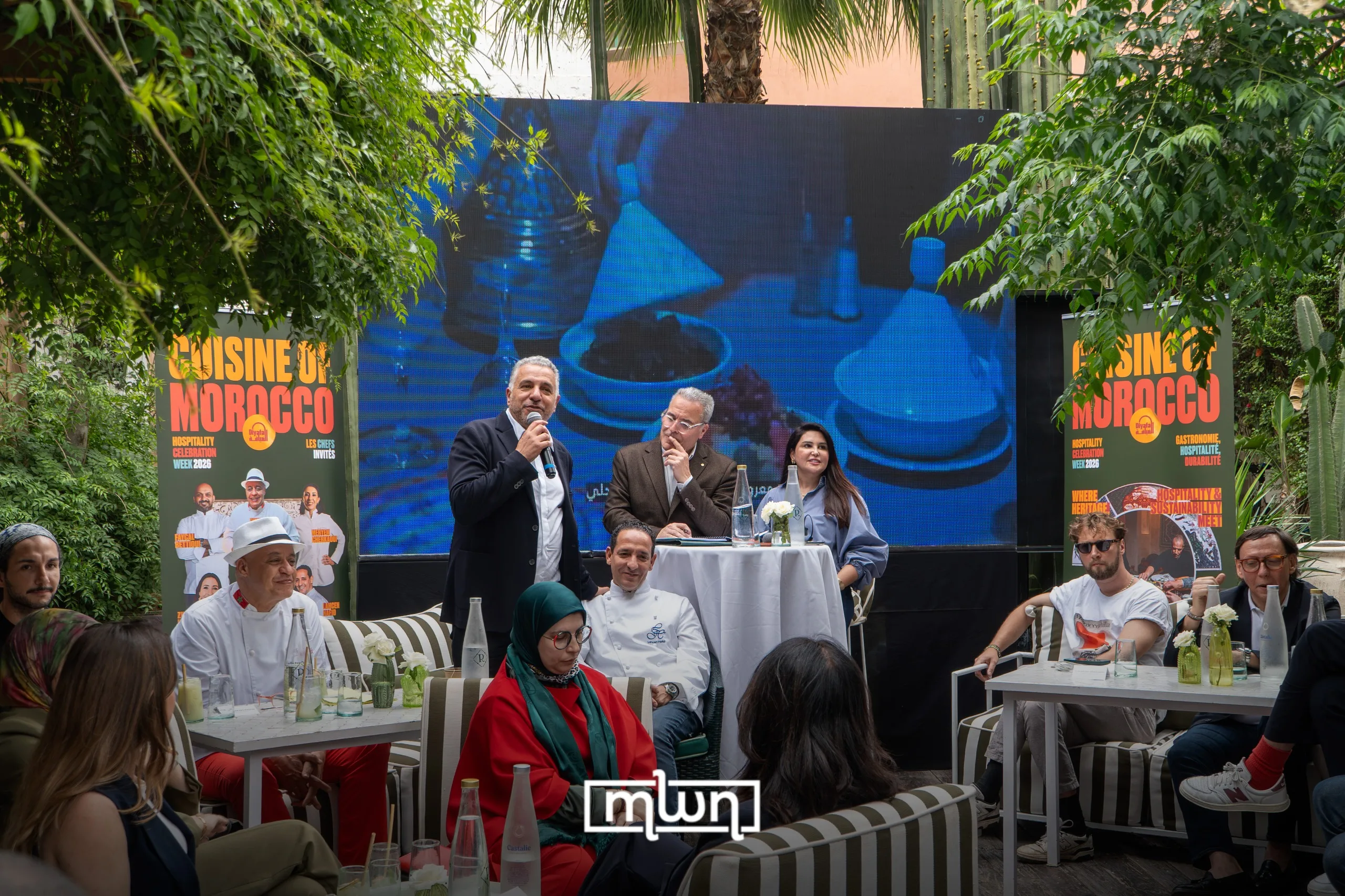
Rabat – In the gardens of the Rôtisserie de la Paix in Marrakech, the second edition of Cuisine of Morocco, organized by the Fédération Nationale de la Restauration Touristique (FNRT), positioned itself as a strategic milestone within the Semaine des Métiers du Tourisme led by the CNT.
The event became a working platform where sustainability, transmission, innovation, and inclusion intersected to outline a new direction for Moroccan gastronomy.
At the center of this vision, FNRT President Imane Rmili described the initiative as a collective construction effort rather than a static concept.
“We have tried to bring together restaurateurs, recyclers, chefs, and students in order to discuss and work towards creating a Moroccan model of sustainability,” she told MWN Lifestyle, framing the event as a space of convergence between actors who rarely sit at the same table.
Her ambition reflects a wider institutional direction: the gradual integration of eco-responsible practices across Morocco’s restaurant sector, aligning environmental responsibility with economic sustainability.
In this framework, Cuisine of Morocco becomes less an event and more a prototype for systemic change.
That idea of transition and expansion resonates strongly in the voice of Chef Moha, who sees the event as a starting point for global visibility.
“The goal of this event is to make Moroccan gastronomy known at an international scale,” he said, adding that what is unfolding in Marrakech is “only a small beginning for a major event.”
For Moha, the stakes are clear: Moroccan cuisine is already deeply known within the country, but its global positioning requires a deliberate shift in narrative, innovation, and representation.
That ambition is shared by Chef Fayçal Bettioui, who emphasizes dialogue and industry-wide exchange as essential to progress.
“We’re here to meet other chefs, suppliers, and have conversations about the future of gastronomy in Morocco,” he noted, positioning the gathering as a space of professional connection rather than mere celebration.
Between these two perspectives, global projection and internal exchange, lies a sector actively negotiating its identity.
Chef Zineb Karakchou represents this emerging generation of chefs shaped by both tradition and rising expectations.
“We are here to talk about the new generation of chefs and the rising expectations in the industry,” she said, highlighting the dual responsibility of learning from established figures while also asserting a new culinary identity.
She also emphasized the importance of visibility and mentorship within the profession, stating, “I’m very happy to be here alongside such great chefs, to learn from them, but also to showcase the new generation that exists today.”
Yet the transformation described at Cuisine of Morocco extends beyond haute gastronomy.
It reaches into training, inclusion, and social empowerment through initiatives such as Amal Non-Profit, represented by marketing and communication manager Oumayma IZM.
The organization operates at the intersection of education and social impact through a 10-month culinary training program for women combining theory, practice, and internships.
“We are working to empower women through culinary training,” she explained, positioning food not only as a profession but as a pathway for social and economic autonomy.
Amal’s presence at the event also included its “coffee bike,” a mobile initiative fully led by deaf employees.
“It’s a special project to our hearts where everyone can interact, learn some sign language, and get a peek into the community of the deaf people,” IZM said, framing inclusion as a lived, daily practice rather than a concept.
Across these different voices, a coherent narrative emerges: Moroccan gastronomy is no longer defined solely by heritage or prestige, but by its ability to adapt, include, and project itself globally.
As the FNRT positions sustainability as both a necessity and a direction, the event suggests that the future of Moroccan gastronomy will not be built in isolation, but through collaboration, between chefs and communities, institutions and innovators, tradition and reinvention.