Fez — Chicken daghmira is one of Morocco’s most comforting dishes, built around a sauce so rich that it often matters as much as the chicken itself.
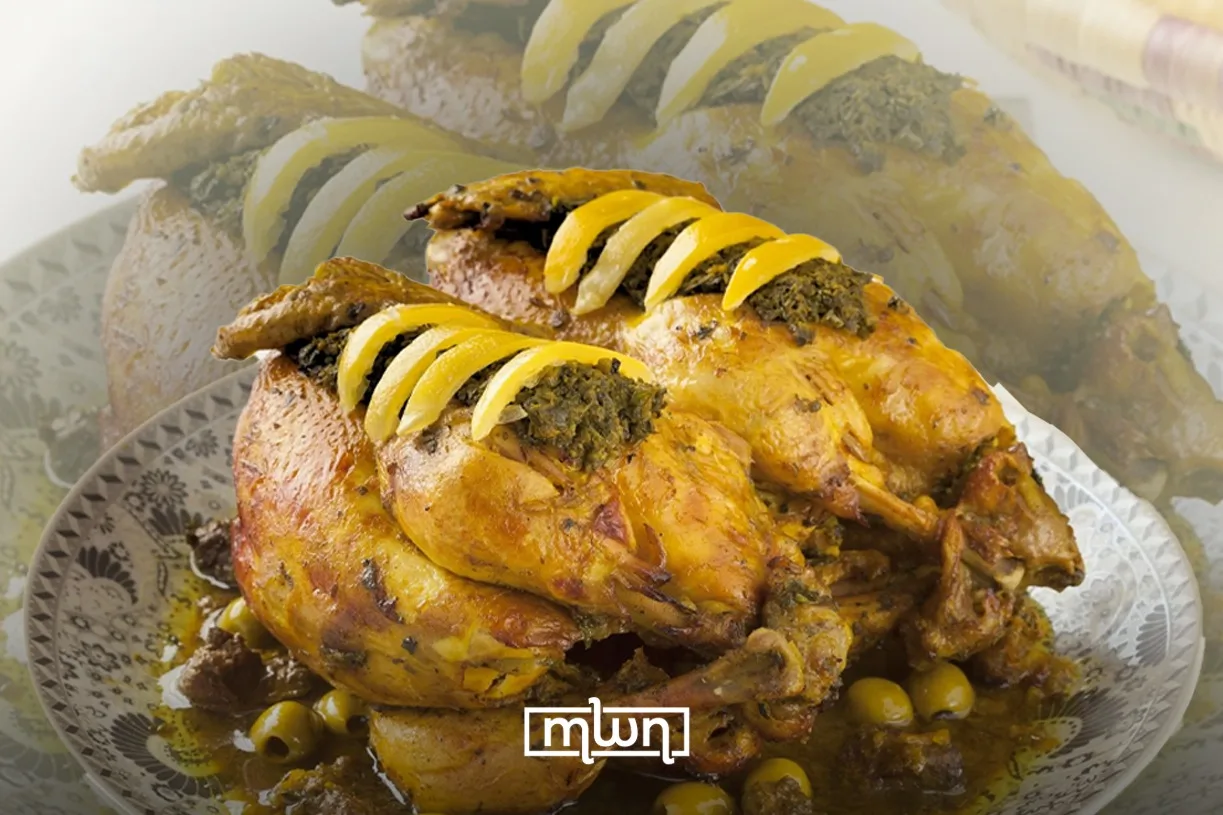
In Moroccan cooking, daghmira refers to the thick onion sauce served with chicken, especially festive chicken with preserved lemon and olives.
It is closely linked to “djaj m’qualli” or “djaj mhammer,” where the chicken is cooked with spices, herbs, onions, preserved lemon, and sometimes olives before the sauce is reduced into a glossy, concentrated topping.
Daghmira is a thick onion paste or gravy created through long cooking and reduction, while another Moroccan recipe source defines it as a creamy sauce made with chopped onions, spices, preserved lemon, garlic, coriander, and chicken giblets.
The best daghmira is not watery. It should cling to the spoon, coat the chicken, and gather at the bottom of the plate like a dense, savory jam. When done right, it carries the sweetness of onions, the salt of preserved lemon, the warmth of ginger and turmeric, and the deep richness of smen.
The secret is onions, not shortcuts
For the richest daghmira, onions must be the foundation. A whole chicken needs at least four to five large onions, finely chopped or grated. The smaller the onion pieces, the easier they melt into the sauce.
A classic base starts with olive oil, a little neutral oil or butter, garlic, ginger, turmeric, black pepper, saffron or saffron water, chopped parsley and coriander, preserved lemon pulp, and a small spoon of smen. Chicken liver is optional, but many Moroccan cooks use it to deepen the sauce. Liver is sometimes crushed into the daghmira to create a richer paste.
The chicken should first be rubbed with spices, garlic, herbs, preserved lemon pulp, oil, and smen. Let it marinate for at least one hour, or overnight for a stronger flavor. Then place the onions in a heavy pot, add the chicken, and cook gently with only a small amount of water.
This is where many people ruin daghmira: they add too much water. The onions already release liquid. The goal is not to boil the chicken in soup, but to steam and braise it until the meat is tender and the onions collapse.
How to build the thickest sauce
Once the chicken is cooked, remove it from the pot and brown it in the oven with butter or smen until the skin turns golden. Keep the onions and cooking liquid in the pot.
Now the real daghmira begins. Simmer the onions uncovered over medium-low heat, stirring often. The sauce should slowly reduce, darken, and thicken. This can take time, but patience is the entire recipe.
As the water evaporates, the oil begins to separate slightly from the onions. That is a good sign. The sauce should become glossy, not dry. If it sticks too much, lower the heat and stir. If it tastes flat, add a little preserved lemon rind, pepper, or a small pinch of salt, but be careful because preserved lemon and smen are already salty.
For an extra rich version, mash the cooked chicken liver into the sauce near the end. This gives daghmira a deeper, restaurant-style body without making it taste strongly of liver.
Finishing the Moroccan way
When the daghmira is thick, place the roasted chicken on a serving plate and spoon the sauce generously over and around it. Garnish with preserved lemon rind and olives. Some families serve fries around the chicken, especially for festive meals.
The final texture should be heavy and spoonable. It should not run across the plate like broth. It should sit proudly under the chicken, almost like a savory onion confit.