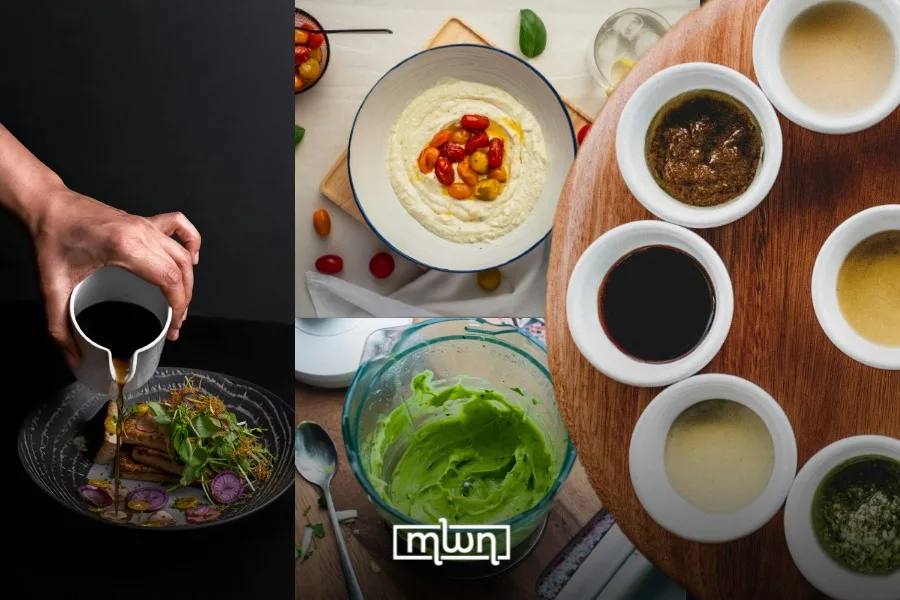
Safi – The best low-calorie dips right now have one thing in common: they rely on acid, fresh herbs, and protein for flavor instead of fat.
The shift extends beyond home kitchens. In its 2026 flavor outlook, the Institute of Food Technologists (IFT) highlighted a growing interest in “unique sources of acid or sour flavors,” including sudachi, calamansi, verjus and sumac, which chefs use to brighten rich food.
Summer proves the point better than any report. The heat flattens the appetite for heavy foods, cold dishes need a bright note to come alive, and a sauce built on lemon instead of oil feels like a seasonal upgrade rather than a compromise.
Here are five low-calorie dips worth learning now.
Whipped cottage cheese
Cottage cheese is a fresh, mildly tangy cheese known for its loose white curds. For years, its lumpy texture kept it at the back of the fridge.
Everything changed when people started blending it.
The curds disappear, leaving behind a silky, creamy base that’s thick enough to hold a spoon and tastes surprisingly close to sour cream, with its richness coming from protein rather than butterfat.
That single discovery moved fast! What began as a kitchen habit passed around on TikTok now sits on shelves.
Use it as a base rather than a finished dip. Blended until smooth, it absorbs flavors from herbs, citrus, garlic, roasted peppers, or chili, while remaining thick enough to hold up beside a platter of raw vegetables all afternoon.
Green goddess without the mayonnaise
Green goddess is an American herb dressing, and the reason it never travelled well is that the original was built on mayonnaise, which turns heavy the moment the weather does.
Swap in thick yogurt and the whole equation changes. The dressing keeps the deep herbal color, the bite of caper and lemon, and a body that clings to a lettuce leaf instead of sliding off it, while the sludge that made it a once-a-year indulgence simply goes.
Everything drops into a food processor at once: parsley, chives and whatever soft herbs are wilting in the fridge, then lemon juice and zest, capers, garlic and a little olive oil, over the yogurt. Pulse rather than blitz, so it stays a dressing and not a soup.
Sealed in a jar it keeps five days, roughly how long that bunch of herbs would have lasted anyway.
Zhoug, harissa’s green twin
Start from harissa, because everyone knows harissa. Now take away the dried red chilies, the smoke and the long cooking, and put in fresh green ones and a fistful of raw herbs instead.
What you have is zhoug: harissa’s green opposite, raw where the other is cooked, herbal where the other is smoky, and every bit as violent.
Yemen’s version has no dairy in it anywhere, and it looks: coarse, glossy, savage green.
Cilantro and parsley go in with green chilies, garlic, cumin and coriander, and it blends rough and blazing, herbal and hot in the same mouthful. You tune it by how many chilies you are willing to face.
The IFT considers zhoug among the Middle Eastern condiments moving into 2026, alongside muhammara and baba ghanoush, so consider this the year it arrives properly.
A spoonful is a serving. It rescues charred vegetables, fried eggs and anything gone dull in the fridge overnight, and it holds about a week, or months in the freezer if you portion it.
Nuoc cham
There is nothing creamy about this dip because it contains virtually no fat. That is precisely the point. Nuoc cham is the lightest option on this list and also the boldest.
The one ingredient to explain is fish sauce: anchovies salted and left to ferment, then pressed into a thin brown liquid.
It smells alarming in the bottle and tastes of nothing but savory depth on the plate, and a few drops do what a handful of salt cannot.
Whisk it with lime juice, sugar, warm water, garlic and chili until the sugar dissolves, and that is the method, no blender and no emulsion. It comes out pale and thin, and it hits like a slap of citrus and salt.
Vietnamese cooks pour it over noodle bowls, summer rolls and shredded salads, and it works on all three because it seasons rather than coats. Make it in a jar, keep it a week, shake before pouring.
Ponzu
Made by combining soy sauce with citrus, traditionally yuzu, ponzu delivers a balance of salt and acidity in a thin, umami-rich sauce that brings depth to everything from vegetables to grilled meats.
Think of it as a seasoning rather than a dressing. That is precisely its advantage: a spoonful over cold green beans, sliced cucumber or grilled fish does the work a vinaigrette would need three times the volume to manage, and you pour it from the bottle without making anything first.