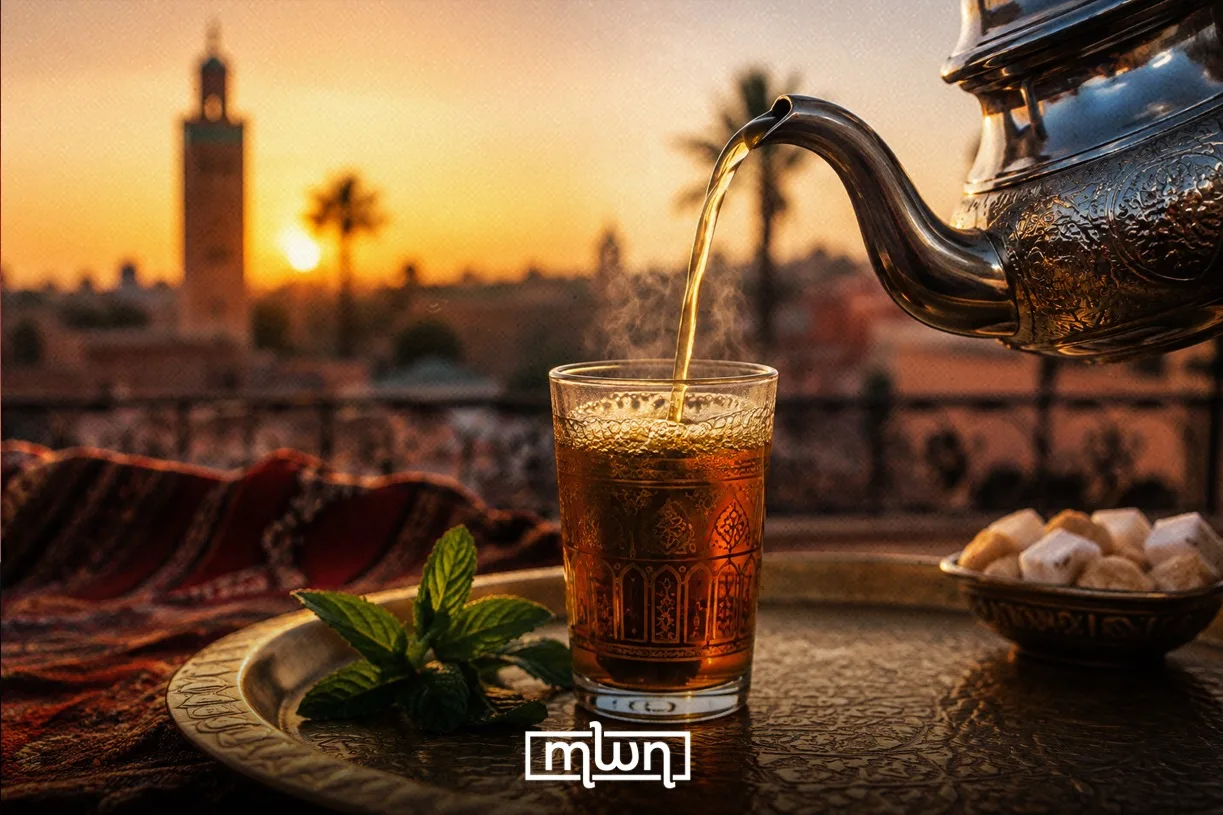
Casablanca – If you step into Morocco and ask for its famous drink, “Atay” (Moroccan tea) will definitely be one of the first things you are offered. The ingredients may be simple, but getting that perfect glass comes with a few rules you need to know.
Tea leaves, sugar, water, and mint. Simple enough, right? But the secret to a good atay starts with rituals that happen long before the tea even reaches the teapot.
The glasses matter
First things first, tea glasses play a bigger role than you might think.
In Moroccan homes, tea glasses are treated almost like treasures. They are reserved for atay, washed carefully, and dried with a towel kept specifically for them.
In other words, don’t even think about using them for juice or another drink. That’s a taboo. A true crime against one of Morocco’s most beloved staples.
Even a little grease left behind by a towel used for other utensils can affect the tea, especially the foam it’s famous for. And yes, that foam matters. We will get to it.
Tea is all about balance
So, what about the tea leaves and sugar?
There are no strict measurements. It’s mostly about intuition, experience, and knowing your teapot. The amount also depends on how strong you like your atay.
More tea leaves will give you a stronger taste, while less will make it lighter. But the real goal is balance. Not too strong, not too light. Just right.
Pick your favorite herb
Herbs are another story, and they can easily spark a debate.
Some people swear by mint, saying it’s what gives Moroccan tea its signature charm. Others prefer wormwood, while some would rather have no herbs at all.
Mint brings its own magic through its fresh taste and unmistakable aroma. You can smell it from a distance and immediately know that a good glass of atay is somewhere nearby (And yes, I am personally on team mint).
Wormwood, on the other hand, brings a more bitter and earthy taste and is especially popular during winter. Some people also choose thyme or other herbs depending on their preference.
But whatever you choose, one rule does not change: the water has to be boiling. Not just hot. Boiling.
That’s what helps release the tea’s full flavor. If the water is not boiling, the result simply will not be the same.
The art of pouring
Think the tea is ready once everything is in the pot? Not quit
After adding the tea, herbs, sugar, and boiling water, let it sit for a few minutes so the flavors can come together. Then comes another familiar Moroccan ritual: pour the tea back and forth between the teapot and a glass before returning it to the pot.
Let it sit again for a little while, and now we are getting somewhere.
But even pouring has its own rules.
Hold the teapot high above the glass. The higher, the better. That famous stream of Moroccan tea is not just for show. It helps create the foam, while also giving the person pouring a chance to show off their skills.
And whatever you do, don’t fill the glass all the way to the top. Leave enough space to hold it comfortably without burning your fingers.
A little Moroccan tea secret: “Tech7ar”
There is also a technique known as “tech7ar” that some tea lovers swear by.
For this one, hold off on the mint. Start with the tea, sugar, and water, then place the teapot over medium heat and keep a close eye on it.
As the tea begins to rise and the foam starts forming, turn off the heat and add the mint.
The idea is to avoid putting the mint directly over the heat, which can affect its flavor. Adding it afterward allows its taste and aroma to come through while giving the other ingredients more time to come together.
Once the mint is in, give it a little more time, pour it back and forth, then it’s finally ready to serve.
If you prefer to skip the “tech7ar” step, you can simply follow the traditional process with the mint added earlier and allow the tea more time to develop its flavors.
And finally, after all those little rules, rituals, and a bit of patience, the only thing left to do is pour, sip, and enjoy.
Read Also: Kass vs Cuppa: Teatime in Morocco, From a British Perspective