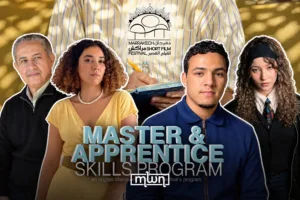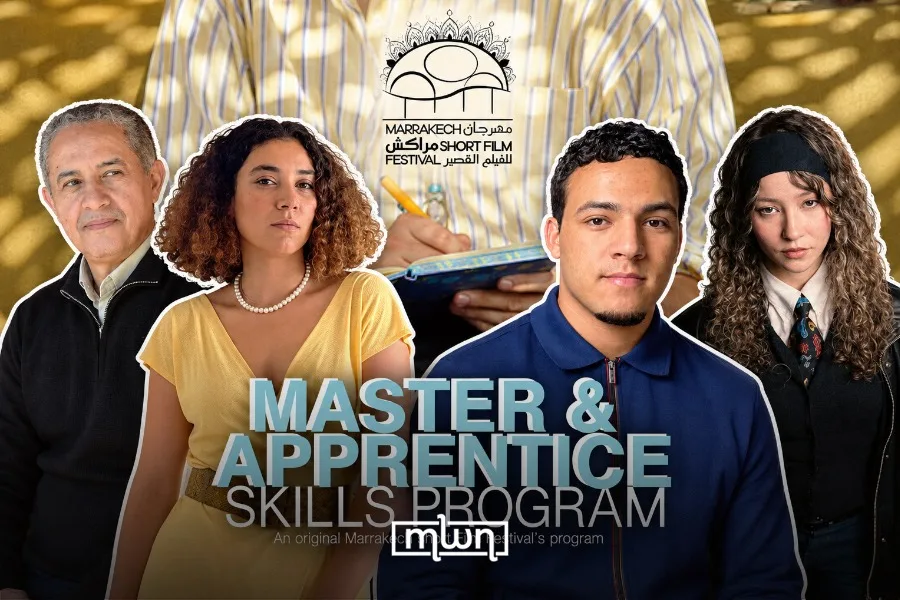
Fez — The Marrakech Short Film Festival (MARRAKECHsFF) has turned an old Moroccan model of learning into a space for thinking differently about cinema.
Its “Master & Apprentice Program” takes inspiration from craftsmanship, where knowledge traditionally moves from an experienced master to an apprentice through observation, repetition, correction, and practice.
The object being studied is different, but the principle remains familiar. Instead of watching how a master works with wood, metal, leather, or thread, apprentices are learning how to look at an image, listen to sound, question editing, recognize cinematic language, and defend an interpretation.
For Ramia Beladel, founder and director of MARREKCHsFF, that connection to Moroccan modes of learning is fundamental to the program.
“In Morocco, learning through practice is deeply rooted in our culture, particularly in the tradition of craftsmanship, where knowledge is passed from master to apprentice through observation, hands-on experience, and the gesture itself,” Beladel told MWN Lifestyle magazine.

The festival formally introduced the “Master & Apprentice Program” in 2024 as an initiative dedicated to film criticism, in collaboration with the Swiss Embassy in Morocco. The inaugural edition paired established film critic Abdelkarim Ouakrim with emerging critic Youssef Sebti. The initiative returned the following year as the festival continued its focus on transmitting critical knowledge between generations.
But Beladel sees the idea as larger than a workshop or a series of lectures.
“The ‘Master & Apprentice Program’ draws inspiration from this long-standing model of transmission and brings it into the cinematic field, with a particular focus on film criticism,” she explained.
The objective, she added, is to establish “a direct working relationship between an experienced professional and a new generation of critics.”
Through that relationship, the program attempts to transmit “methods, perspectives, and practical knowledge” while allowing younger voices to bring their own perspectives into Moroccan film criticism.
The apprentice is not being trained to reproduce the master’s taste. The program instead raises a more complicated question: how do you inherit knowledge without inheriting somebody else’s conclusions?
Learning how to look at a film
Film critic and “Master & Apprentice” mentor Karim Oukarim approaches that question by keeping the film itself at the center of the sessions.
His method is deliberately different from the conventional image of a professor standing before students and explaining cinema through theory alone.
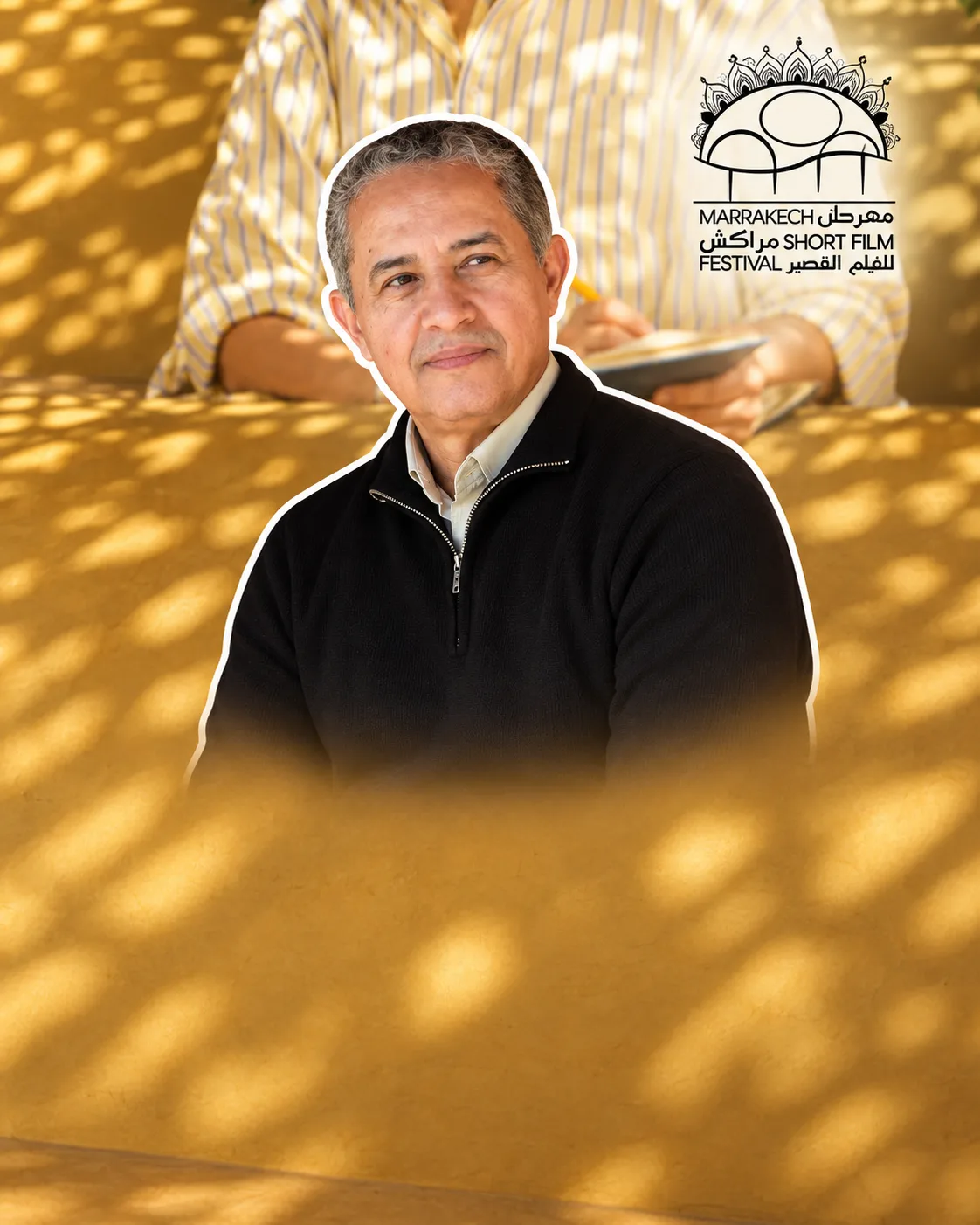
“I do not try to be academic,” Oukarim said. “I do not try to be like what we have, for example, in universities, where lessons are often more theoretical.”
Instead, he begins with films. Participants receive works to watch before their sessions. Some come from the festival’s official or parallel selections, while others are chosen by Oukarim because they open a path toward a particular cinematic movement, genre, or technique.
“Then we come and analyze the film,” he said. “We analyze the film, and at the same time we extract its fundamentals,” Oukarim explained. “We break down its cinematic language: the image, editing, sound, lighting, all the directing components, the screenplay. We try to dismantle the film.”
Dismantling does not mean destroying the experience of watching cinema. It means slowing the experience down enough to understand how it was constructed.
A viewer may know that a scene made them uncomfortable. Criticism asks why.
Was it the distance between the camera and the actor? Was it silence? Was information withheld through editing? Did lighting restrict what could be seen? Was tension produced through performance, framing, sound, or the screenplay itself?
Oukarim uses individual films as doors toward larger cinematic traditions.
He said sessions have moved from particular works toward Italian Neorealism, multi-perspective cinema, films confined to one principal location, and other forms that allow apprentices to see how a film belongs to a history beyond itself.
For him, the relationship is also supposed to be conversational. “In general, it is an interactive meeting,” Oukarim said.
The master may bring history and experience, but the apprentice must eventually learn how to argue.
When the critic and director become the same person
For Salma Mouaafi, a young Moroccan filmmaker and apprentice in the program, learning to criticize films quickly became a way of criticizing her own decisions.
“Personally, I feel like the Marrakech Short Film Festival helped me a lot to develop a more critical eye,” Mouaafi said. “When you start analyzing the choices of other filmmakers, you also begin questioning your own choices as a director,” she explained. “You ask yourself, ‘Why am I using this shot? Why did I choose to tell this story this way?’”
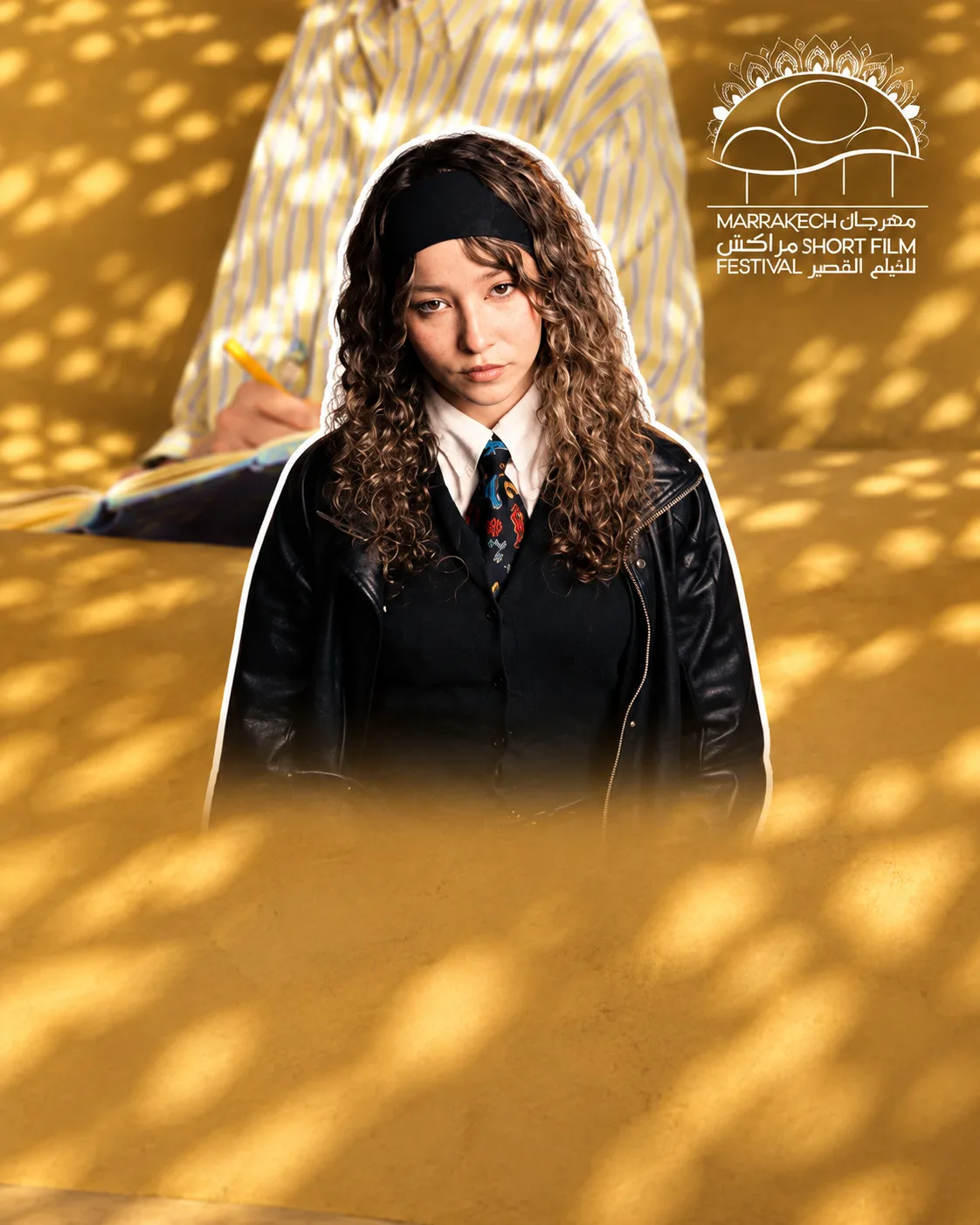
That reflex can be uncomfortable at first. Directing requires making hundreds of decisions, some carefully planned and others intuitive. Criticism forces those instincts back into consciousness.
For Mouaafi, storytelling sits at the heart of that responsibility. “As a film director, I believe that every one of us has a story,” she said. “Every single thing and every person has a story; it just needs to be told the right way.”
Her comments also expose a tension that extends far beyond criticism: who gets to decide what “the right way” looks like?
Mouaafi believes young Moroccan filmmakers have no shortage of stories.
“I think we have a lot of talented people and many original stories to tell. Our culture is very rich,” she said. “But it can still be difficult to find your place in the industry.”
The challenge, in her view, is not reducible to talent. “It is not about whether you make a good movie or not,” Mouaafi said. “We also need the right spaces, experienced professionals, and opportunities so that our voices can be heard.”
Production can introduce another layer of difficulty. She described situations in which filmmakers struggle to find producers who understand their vision, or encounter people who want to reshape the story itself.
For Mouaafi, that becomes particularly troubling when the pressure affects the filmmaker’s relationship with their own experience.
“I teach storytelling,” she said. “For me, how you tell the story is very important. When somebody else tries to change that aspect, it becomes kind of problematic.”
She said she has confronted that tension while developing her latest film.
Who gets to decide what looks Moroccan?
Mouaafi’s concern eventually reaches one of the most complicated questions facing filmmakers from countries frequently viewed through an outside lens: what happens when international expectations begin shaping local stories?
Experimentation exists in Morocco, she said, particularly among younger filmmakers. But experimentation also requires resources.
“There is a lot of creative energy, especially in the new generation of filmmakers,” Mouaafi said. “But experimenting is not always easy because we have limited funding and limited production opportunities.”
Funding can also arrive with expectations about how Morocco should appear.
“Sometimes, there are certain expectations about what a Moroccan film should look like, or what subjects a Moroccan film should address,” she said.
For Mouaafi, the problem becomes clearer when a film begins performing an externally recognizable version of Morocco rather than expressing the filmmaker’s own reality.
“Sometimes, when you get funding from the outside, they want to tell the story from their perspective, whereas we as Moroccans should tell the story from our perspective,” she said.
She used the example of familiar cultural imagery being pushed into films simply to make them appear visibly Moroccan.
“Sometimes we run into clichés like showing a hammam or other elements pushed into the film just to make it look ‘Moroccan,’ whereas we as Moroccans do not experience our stories like that,” she said. “Our stories are not like that.”
Her argument is not that Moroccan filmmakers should reject cultural markers. A hammam can obviously belong in a Moroccan story.
The issue is agency. There is a difference between an image emerging from experience and an image being inserted because an imagined international spectator expects to see it.
“It does not feel authentic,” Mouaafi said. “For me, a movie should feel authentic and personal.”
Film criticism becomes unexpectedly important here.
A strong critical culture can move beyond asking whether a film “represents Morocco” and begin asking what kind of Morocco the film constructs, who is constructing it, and for whom.
Criticism without one correct answer
Ali Biad, a young Moroccan filmmaker and apprentice, approached the program from another direction.
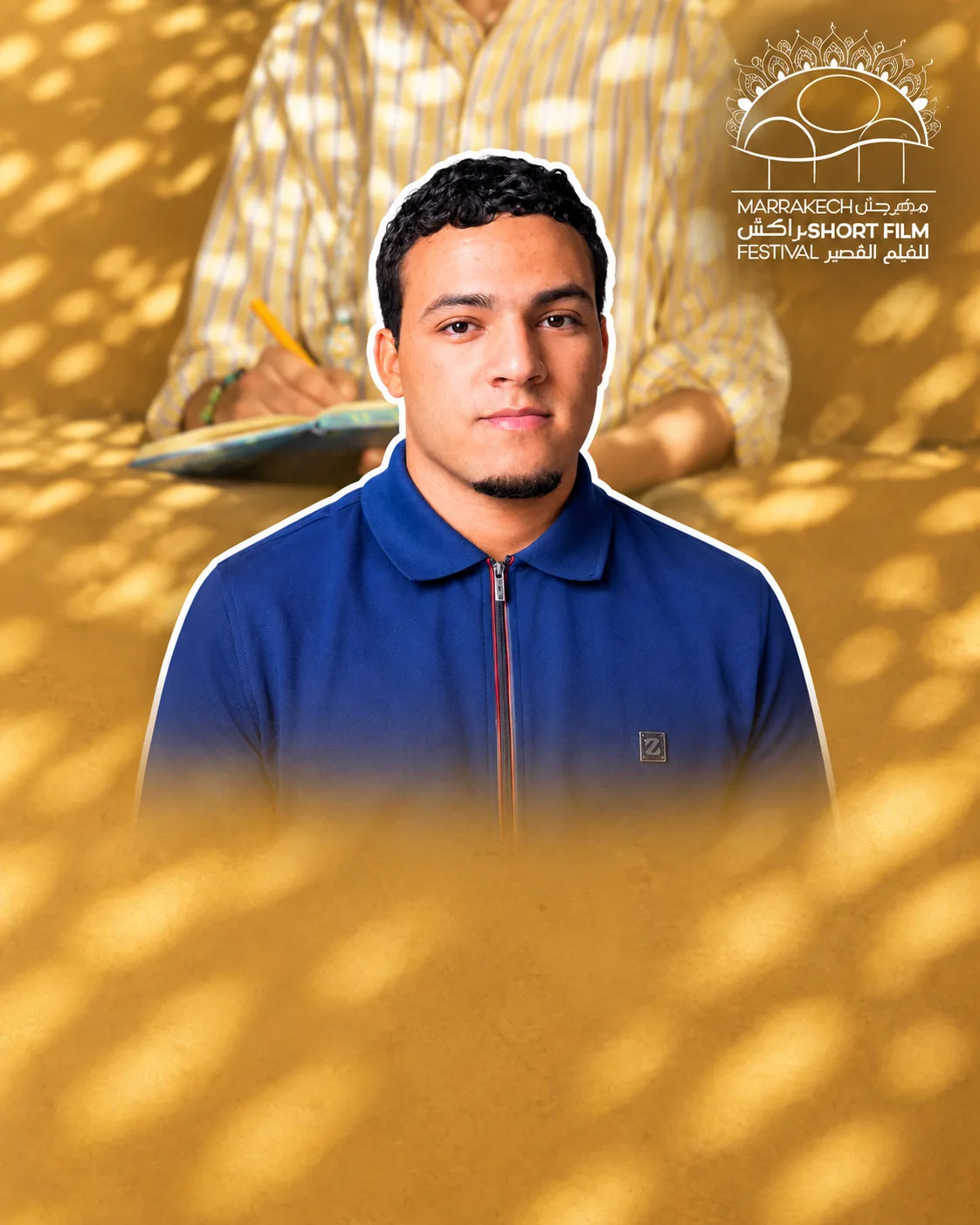
For him, one of its strongest qualities was that the relationship did not feel like a rigid transfer of answers from teacher to student.
“It was actually very dynamic,” Biad said. “It was not at all a linear teacher-to-student interaction. It was very interactive, and we all contributed to the success of the program.”
That interaction changed how he thought about interpretation.
“One of the things that I have learned in this program is that there is not only one view,” Biad said. “There are always many perspectives from which we can see life, or cinema in general.”
The statement touches on a fundamental contradiction within criticism.
A critic needs conviction. An essay that refuses to say anything becomes meaningless.
Yet criticism also collapses when the critic starts believing that one interpretation can exhaust a film.
For Biad, cinema resists that closure because it is connected to the way people understand everyday experience.
“I believe that cinema is a way not only of seeing the world, but also of thinking about the world and the everyday life of people,” he said.
He also sees encouraging signs in Morocco’s younger filmmaking generation.
“Cinema in Morocco has potential. There is hope, there is always hope,” Biad said.
“From what I have seen in these films, I actually see that young filmmakers are trying new things,” he added. “Their cinema is very experimental because they are always trying new things, and most of the time they succeed at what they try. That is what makes it interesting.”
A gap between making cinema and discussing it
Oukarim shares some of Biad’s optimism about young Moroccan directors. He sees new filmmakers continually entering the field through cinema institutes, while others arrive from unrelated academic and professional backgrounds because they are drawn toward filmmaking.
“With young filmmakers, each time we see young people with a new vision and new ideas,” Oukarim said.
Short films, he argues, can be particularly conducive to that search.
“There are some young people, especially in short films, who try to make films with new visions, new forms, and new approaches,” he said.
“The short film gives more room for experimentation,” Oukarim added.
His assessment of Moroccan film criticism, however, is less optimistic. “Unfortunately, film criticism does not attract enough people,” he said.
While young critics emerge, he believes their numbers remain limited compared with the growth Moroccan filmmaking has experienced.
Oukarim remembers a period when newspapers devoted regular space to cinema and individual Moroccan films could generate numerous critical texts.
The contemporary media environment produces far more immediate discussion, particularly through social platforms. He welcomes the fact that these platforms can encourage people to become interested in films.
But he insists on maintaining a distinction. “Anything that attracts people to cinema and makes them follow films is good,” Oukarim said. “But criticism is something else.”
For him, critical practice requires going beneath reaction. “To analyze the film and its components is one thing,” he said. Producing a podcast, Instagram video, TikTok, or YouTube discussion can serve another purpose.
Building the ecosystem around the film
That is where the “Master & Apprentice Program” acquires significance beyond the people directly participating in it.
A cinema culture does not begin when a director calls action and end when the credits roll.
Films need producers willing to take risks. They need technicians, actors, festivals, programmers, distributors, theaters, archives, journalists, critics, and audiences willing to argue about what they have seen.
MARRAKECHsFF has increasingly framed itself within that broader ecosystem. Its sixth edition is scheduled for September 25 to 30, with the festival describing professional exchange and opportunities for emerging Moroccan talent as central parts of its developing identity.
Its “AMANAR” industry platform also brings filmmakers, producers, institutions, and emerging professionals together through discussions, masterclasses, and professional encounters.
Oukarim believes the festival has already distinguished itself by refusing to limit its identity to screenings.
He pointed to its masterclasses, discussions, professional guests, and international relationships as evidence of a festival attempting to create its own editorial and cultural direction.
For Beladel, however, the essential idea behind “Master & Apprentice” remains remarkably simple. Knowledge survives when somebody passes it on.
The real ambition is therefore not to teach young critics what to think about films. It is to give them enough tools, history, confidence, and proximity to cinema that they can eventually decide for themselves.
For the filmmakers among them, the same practice can turn inward. They learn to ask not only whether an image works, but why they made it. Not only whether a story appears Moroccan, but whether it feels truthful to the person telling it.
And perhaps that is the deeper value of bringing an old apprenticeship model into contemporary cinema.
The master passes down a way of looking. What the apprentice eventually chooses to see must remain their own.