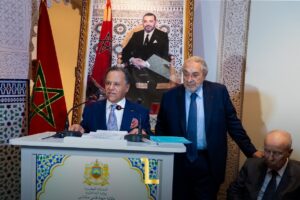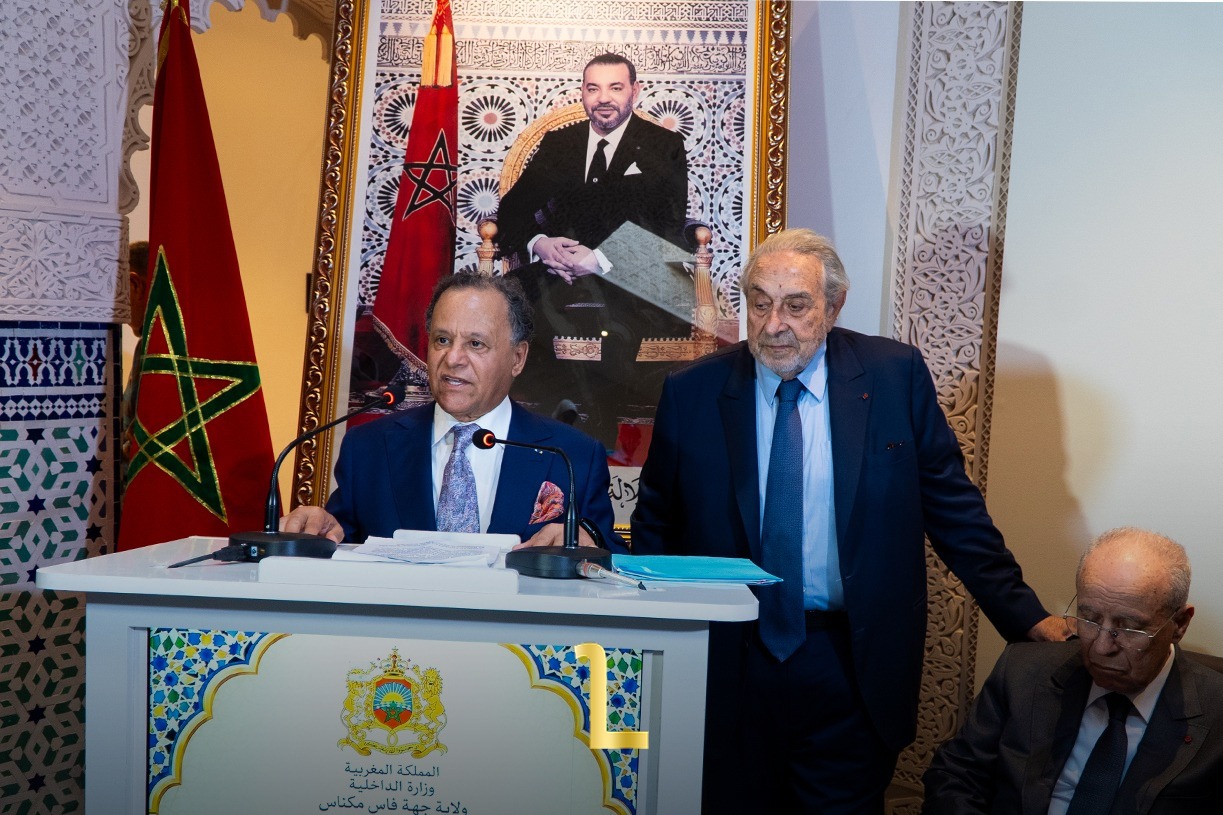
Fez — A rabbi’s prayer opened one of the most significant new cultural spaces in Fez on Monday, as the Museum of Moroccan Jewish Culture welcomed officials, diplomats, cultural figures, and members of Morocco’s Jewish community.
During the ceremony, the rabbi expressed gratitude to King Mohammed VI and to Morocco’s Muslim community, placing the museum’s opening within a wider message of coexistence and shared national memory.
The October 12 inauguration brought together Minister of Endowments and Islamic Affairs Ahmed Toufiq, National Foundation of Museums President Mehdi Qotbi, Foundation for Judeo-Moroccan Cultural Heritage Founding President Serge Berdugo, and Fez-Meknes Wali Khalid Ait Taleb, alongside ambassadors and other guests.
Located in the heart of Fez’s Mellah, the museum traces more than 2,500 years of Jewish presence in Morocco through manuscripts, ritual objects, archaeological pieces, clothing, jewelry, archives, music, and traditional crafts.
A museum built around Morocco’s plural identity
The project began in April 2019, when King Mohammed VI launched construction during a visit to Fez as part of the rehabilitation of the old medina.
At the same time, restoration began on the nearby Al-Batha Palace, which later became the Museum of Islamic Arts.
The two institutions sit around 100 meters apart, creating what organizers describe as a dialogue between different components of the same Moroccan identity.
During the inauguration, Qotbi returned repeatedly to that idea of plurality.
For him, the significance of the museum extends beyond preserving objects. It gives younger Moroccans a physical space in which to encounter a part of their own national story.
“Today, Morocco is sending a powerful message to the world from Fez, the spiritual capital of the kingdom,” Qotbi told Lifestyle magazine.
“At a difficult time, when wars are taking place around the world, Morocco is sending a message of peace, fraternity, and living together.”
Qotbi also emphasized the role and significance of transmission.
He said the museum allows young Moroccans to discover a heritage that “is part of our history, our culture, and our national heritage.”
The museum presents that history as social as well as religious. Its permanent exhibition spans two levels and follows Jewish life through community institutions, religious traditions, family rituals, professions, and everyday experience.
Serge Berdugo calls it part of an ‘eternal Morocco’
Serge Berdugo, one of the central figures behind the project, described the museum alongside Al-Batha as a pair of institutions illustrating Morocco’s diverse national identity.
“The intention was for these two museums to embody Morocco’s national identity, which is unique, diverse, and representative of all the country’s components,” Berdugo told Lifestyle magazine.
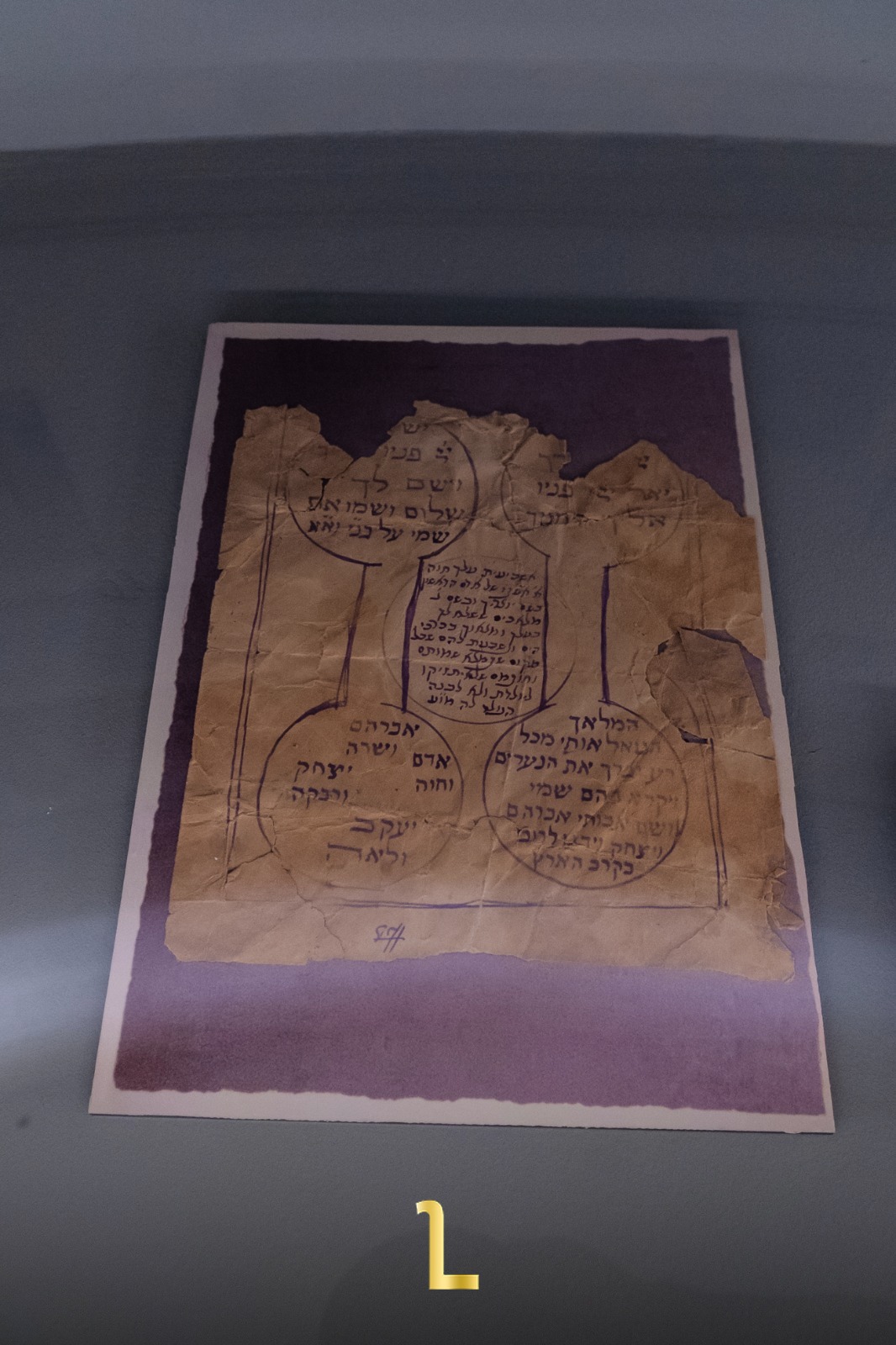
He stressed that the institution presents Moroccan Jewish life in Fez through both sacred and secular dimensions.
Visitors encounter the synagogue, Hebrew school, rabbinical court, religious celebrations, marriages, funerary traditions, and the professions historically practiced within Jewish communities.
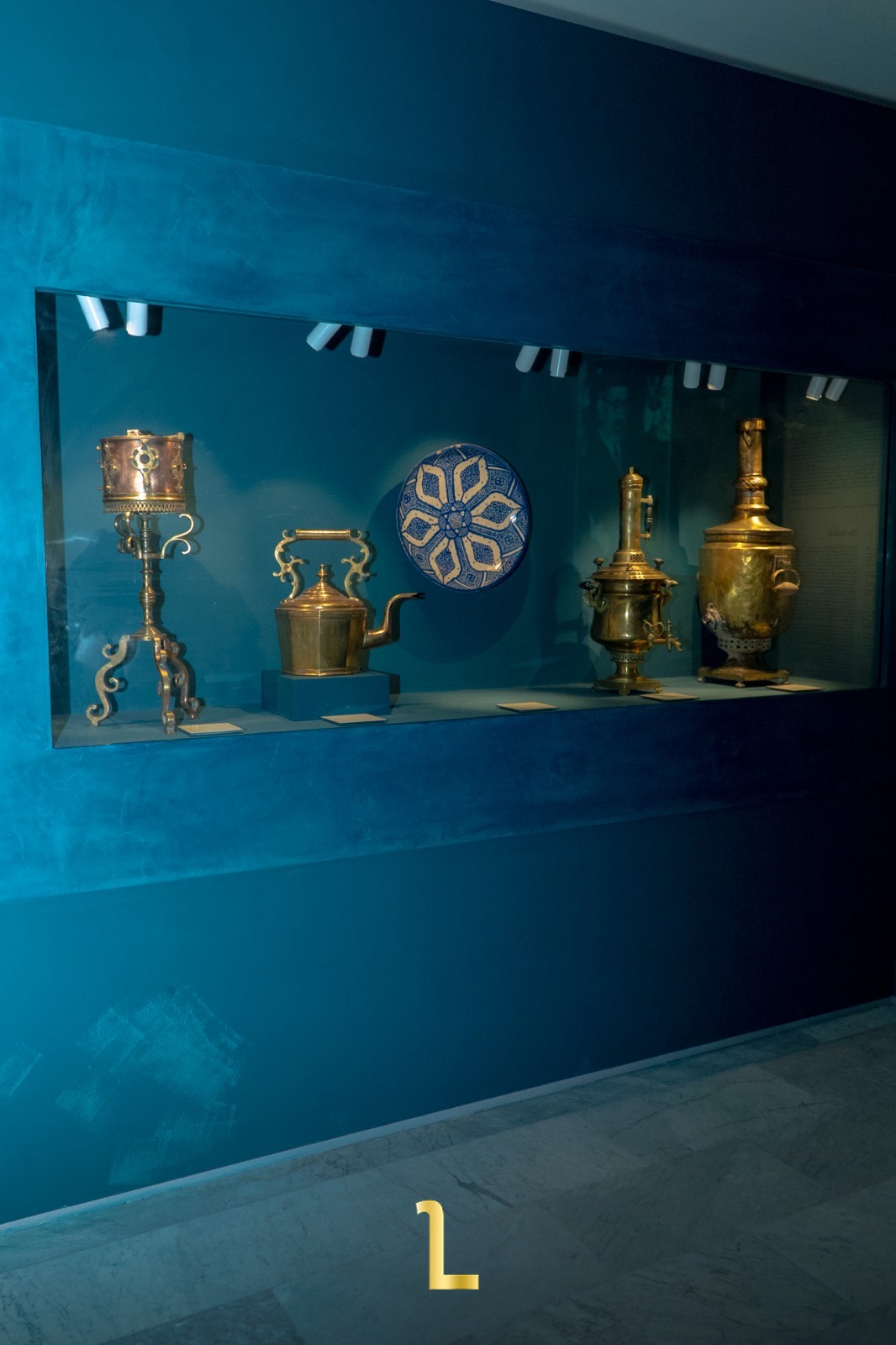
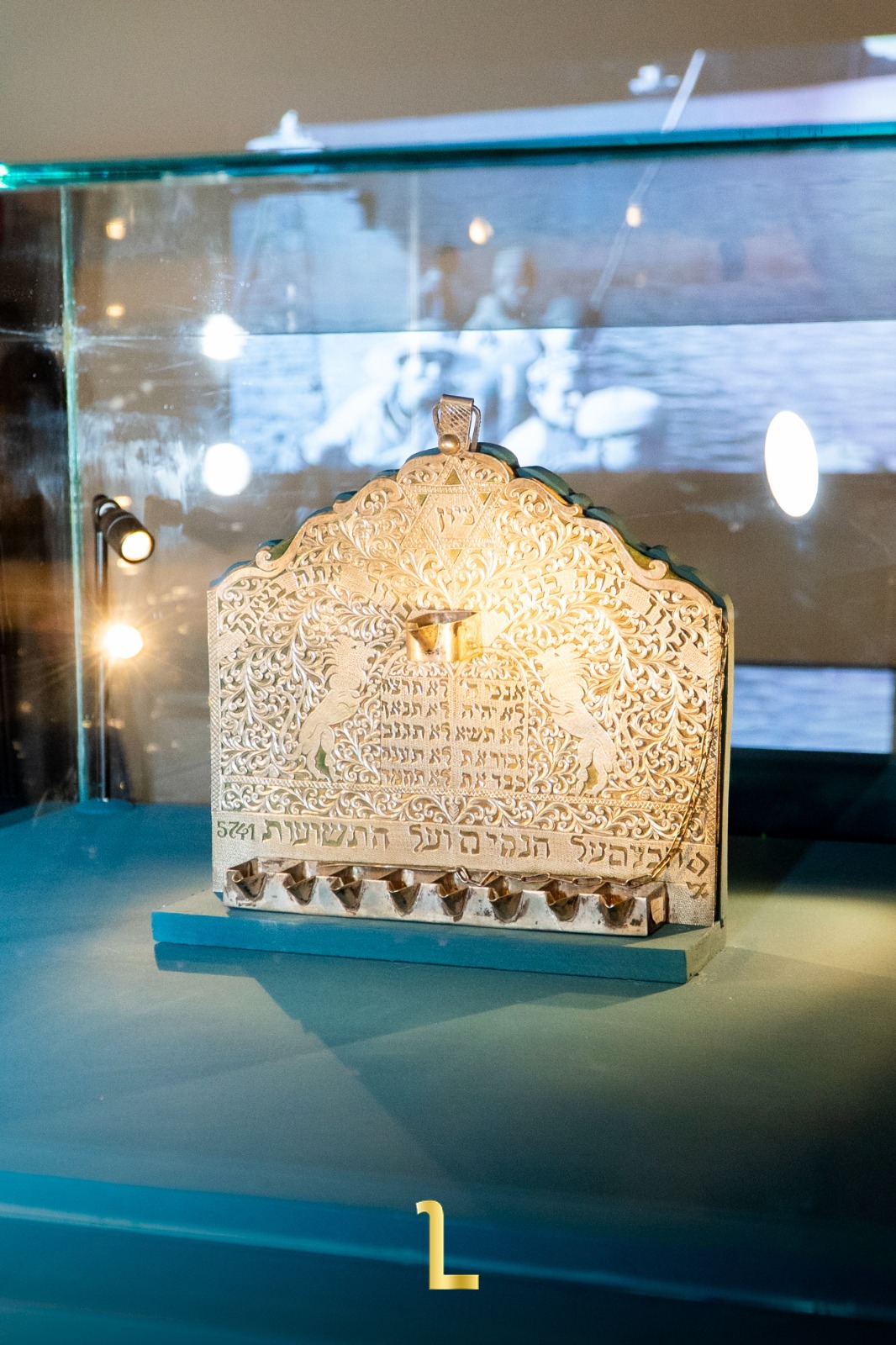
A reconstructed jeweler’s workshop recalls the importance of Jewish artisans in Moroccan jewelry-making, while displays bring together silver ornaments, regional clothing, woven textiles, musical instruments, Torah scrolls, ketubbot, and other ritual objects.
For Berdugo, however, the museum belongs to a story larger than one community.
“This museum represents a genuine treasure for the Jewish community, of course, but above all for Morocco — an eternal Morocco that comes from the heart and that Moroccan Jews cherish with all their soul,” he told Lifestyle magazine.
His remarks during the ceremony also placed the institution within a history of exchange, creativity, proximity, and coexistence between Moroccan Jews and Muslims.
More than two millennia inside one building
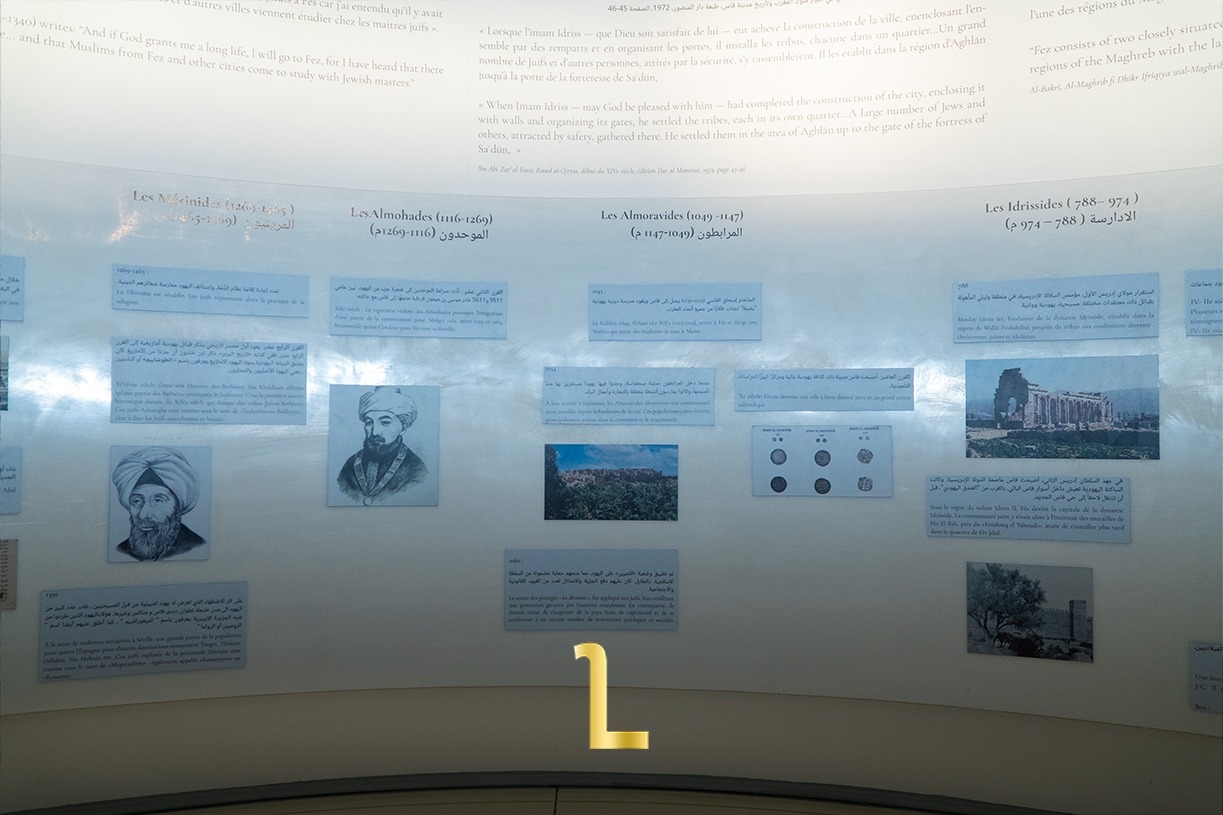
The museum’s ground floor opens with a timeline covering more than 2,500 years of Jewish presence in Morocco.
It moves through the establishment of Fez’s Mellah in 1438, the arrival of Jews expelled from Andalusia in 1492, and the development of Jewish religious, intellectual, commercial, and social life across the country.
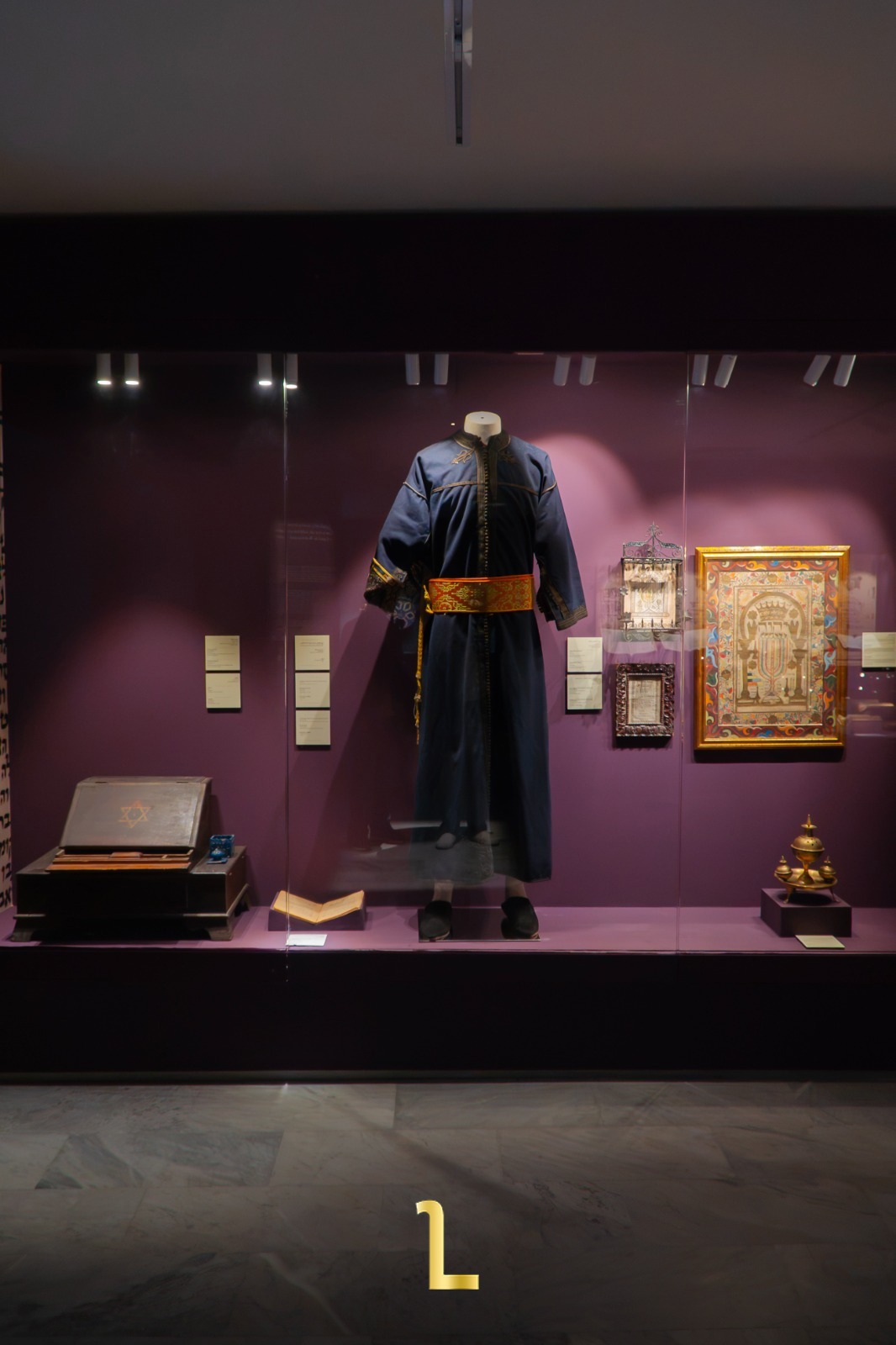
Windows looking directly onto the Jewish cemetery connect the museum’s historical narrative with the physical landscape of memory outside.
Upstairs, the story becomes more intimate.
The life-cycle section follows birth, circumcision, bar mitzvah, marriage, and death. Another section moves through the Hebrew calendar and the Moroccan expressions of its festivals, bringing together religion, cuisine, music, family transmission, and collective memory.
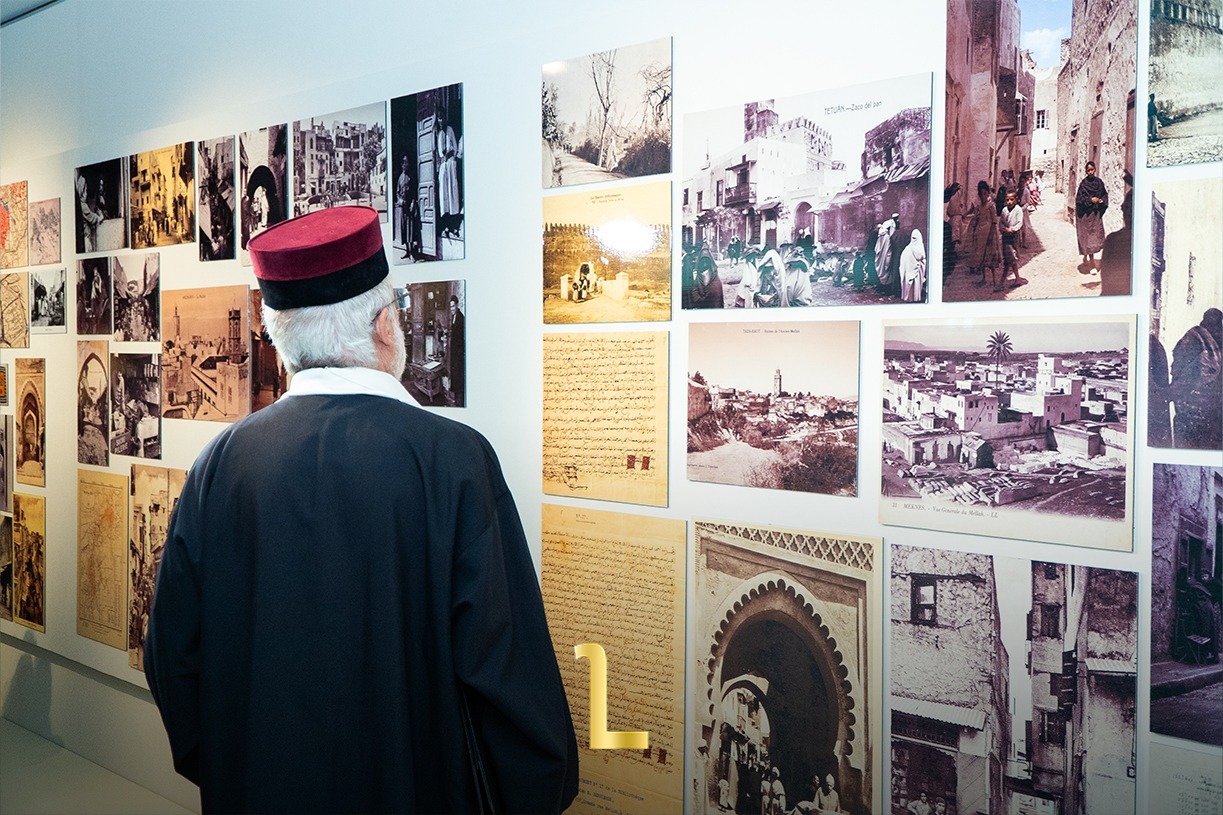
The building itself draws on Moroccan architecture through zellige, carved plaster, painted wood, and a marble fountain. It covers more than 1,700 square meters, including roughly 1,200 square meters devoted to exhibitions.
‘This is our history’
Moroccan singer Maxime Karoutchi, known for performing Judeo-Moroccan music alongside the wider Moroccan repertoire, also framed the museum through national belonging.
“Every Moroccan citizen should know their history and where they come from, because that is how they can know where they are going,” Karoutchi told Lifestyle magazine.
For him, Jewish heritage should not be approached as something separate from Moroccan identity. “This is our history,” he said.
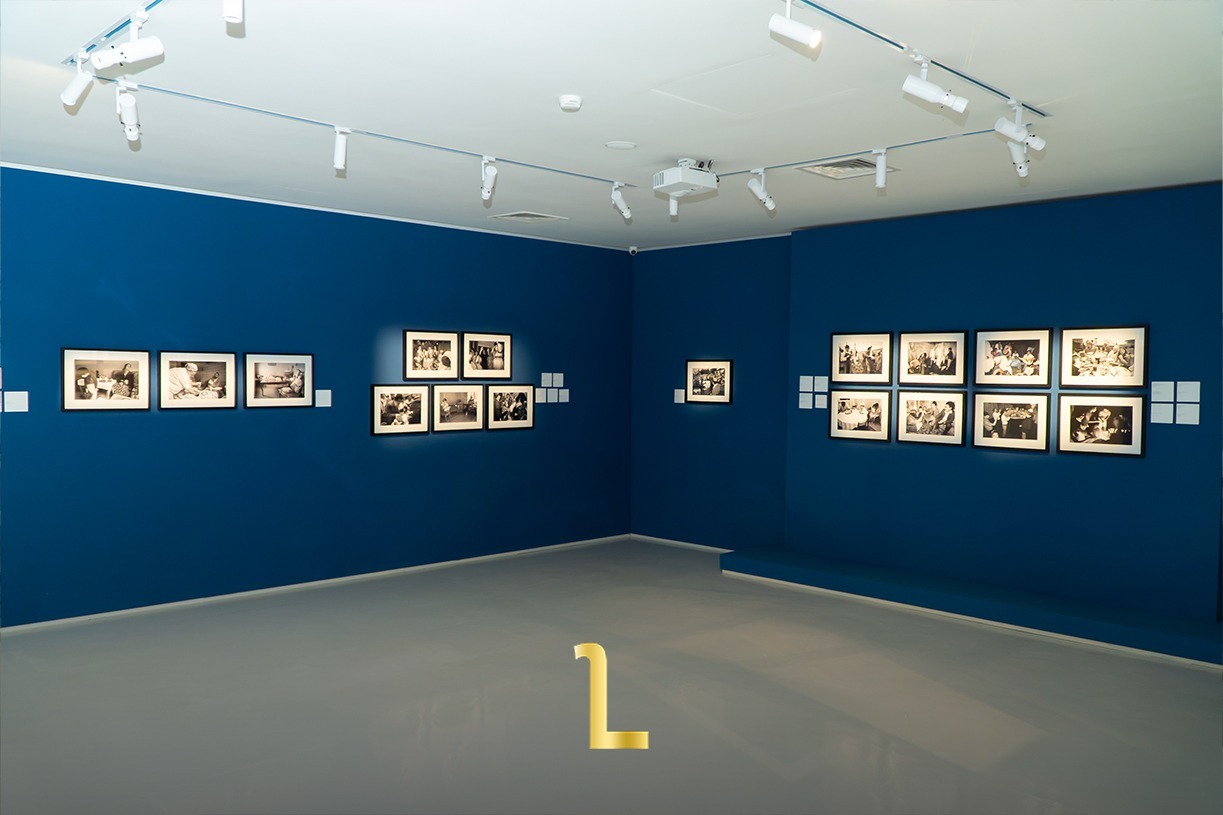
That message ran through much of the inauguration, from the rabbinical prayer and expressions of gratitude to the speeches emphasizing shared memory.
The museum is presented by its organizers as the first publicly funded museum in an Arab-Muslim country devoted entirely to Hebrew culture. Its collection, however, tells a distinctly Moroccan story.
The unique history of Fez, a city shaped for centuries by religious scholarship and cultural exchange, gives the museum its broader significance. And the project is designed to create a place where memory is an integral part of the present, and where Morocco’s plurality is genuinely preserved through the lives and objects that built it.