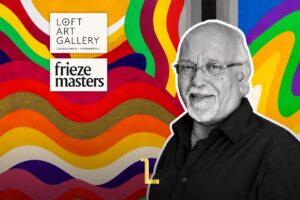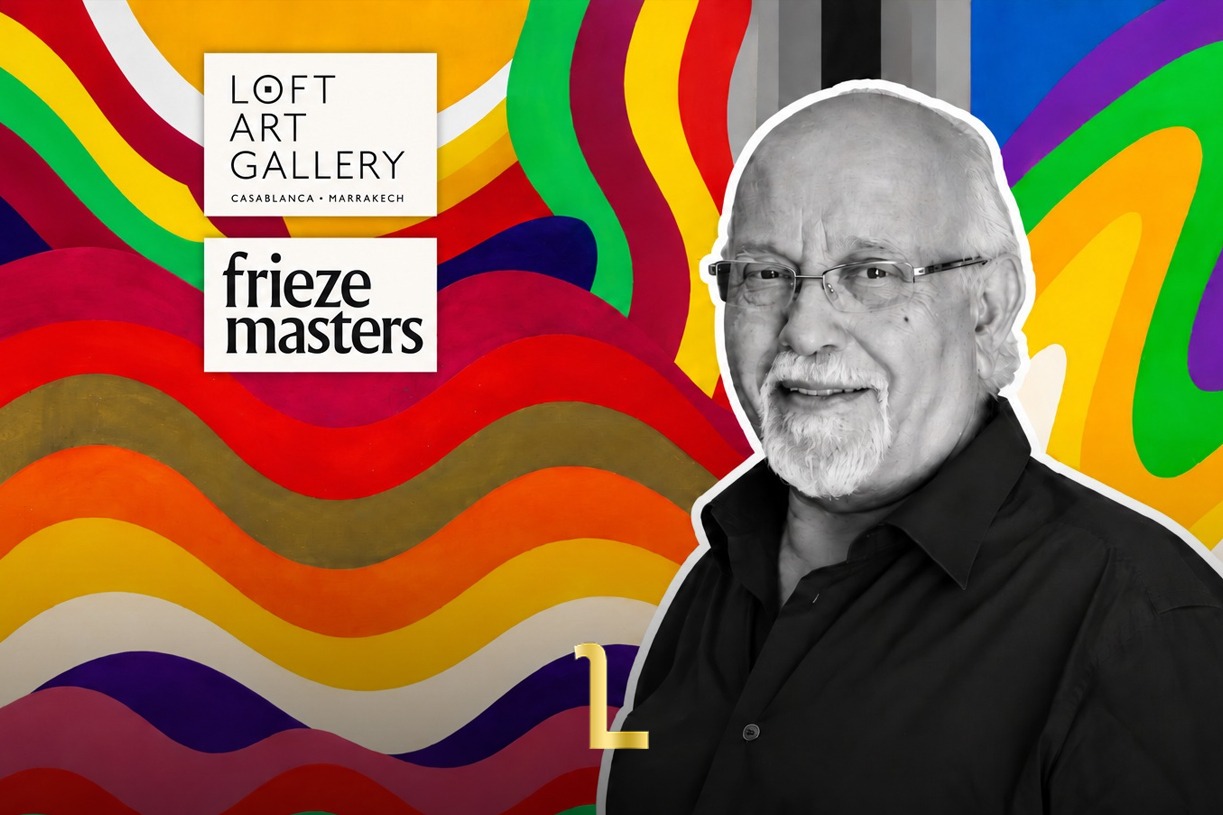
Fez — Moroccan modernist Mohamed Melehi takes center stage in London as Loft Art Gallery makes its debut at Frieze Masters with an exhibition celebrating his distinctive wave paintings.
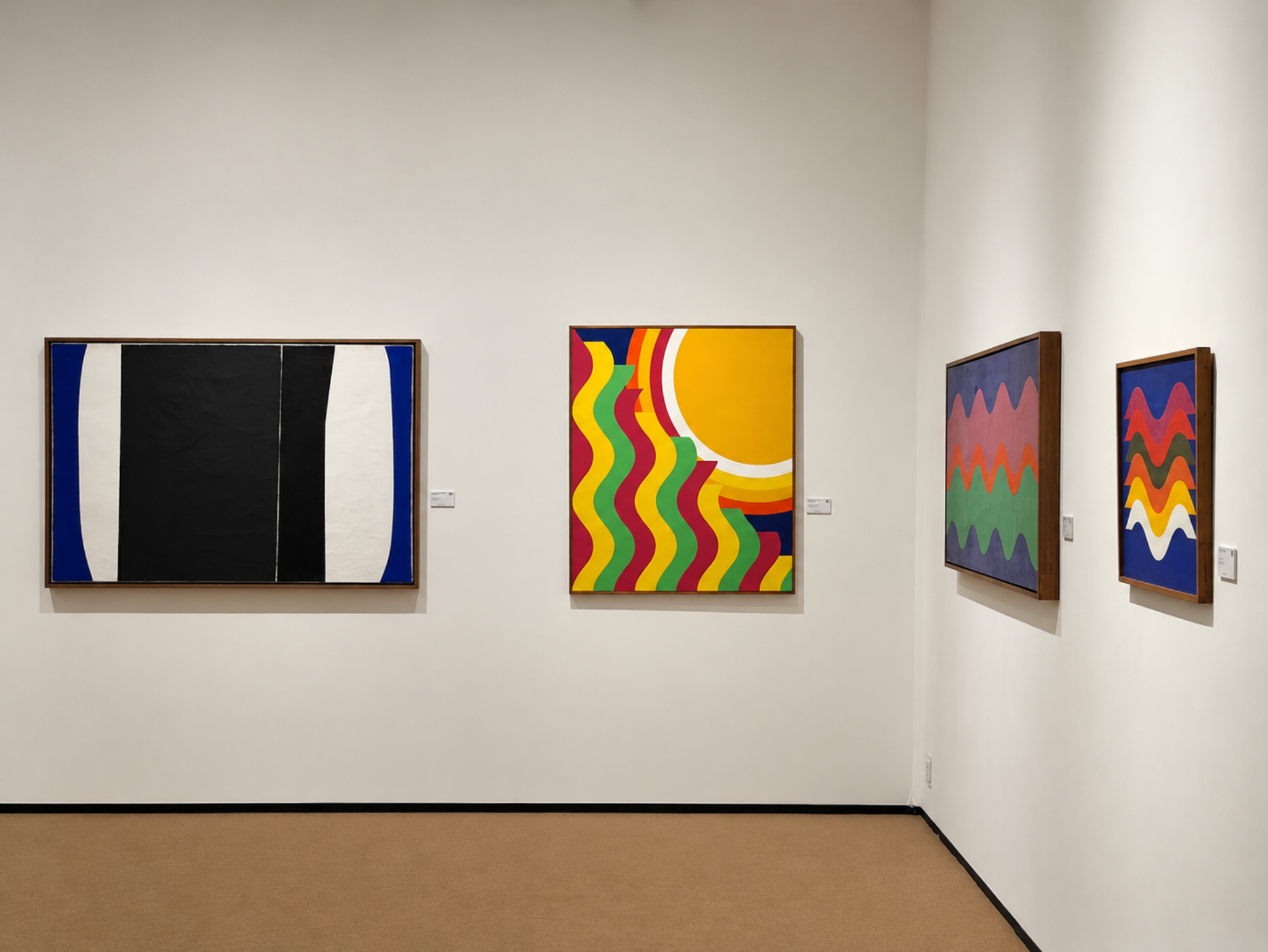
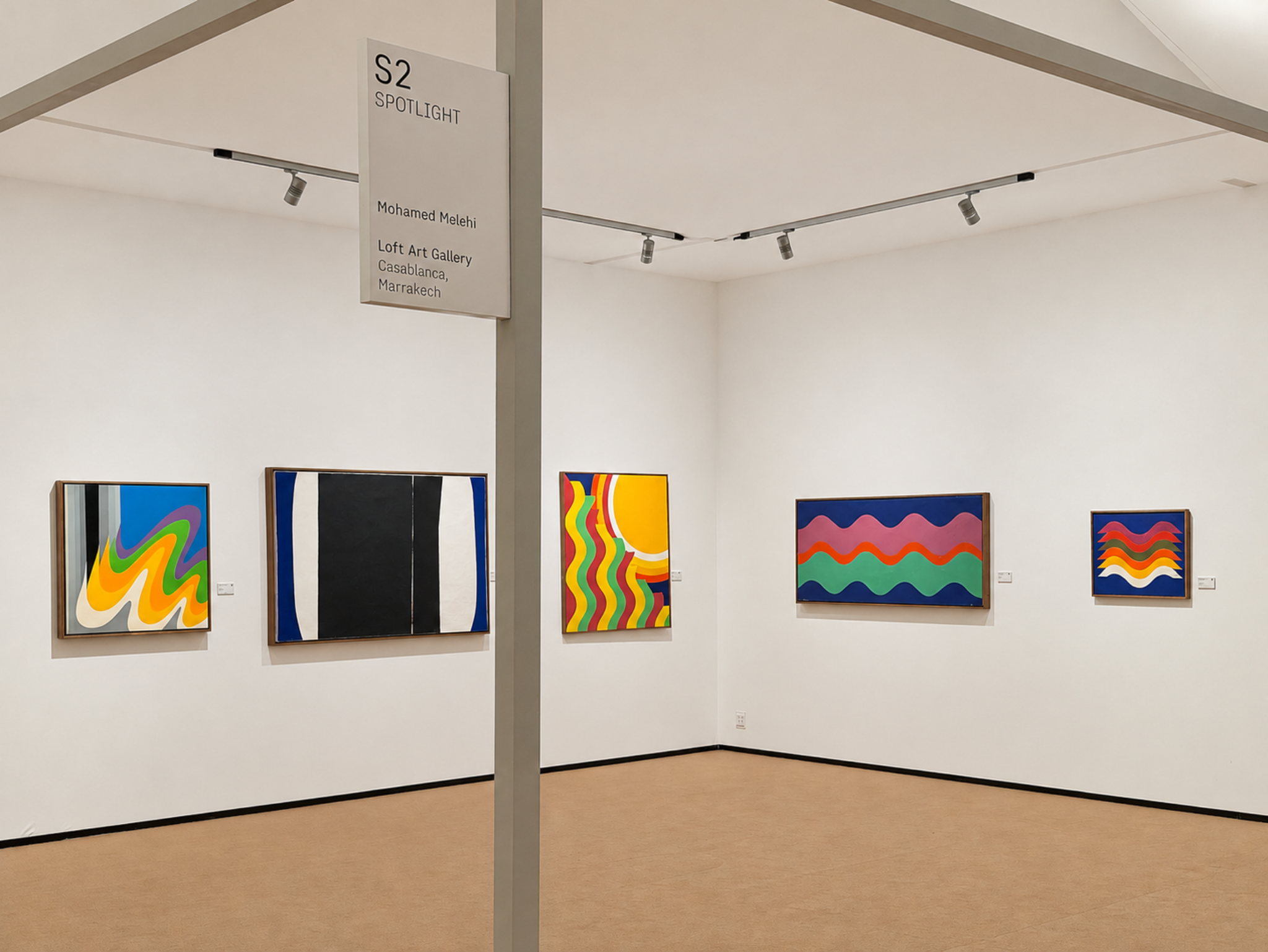
From October 14 to 18, the gallery will showcase “Wave Forms” at The Regent’s Park, bringing together paintings from the 1960s through 1980 that trace the evolution of Melehi’s signature undulating forms.
The exhibition occupies Booth S02 within Spotlight, a section where curators Devika Singh and Sofia Gotti explore the contributions of pioneering 20th-century artists to international art history.
This year’s edition brings together artists from Africa, Asia, Europe, South America, and the Caribbean, encouraging audiences to reconsider artistic movements and exchanges that traditional accounts of modernism have often overlooked.
From Rome and New York to Moroccan modernism
The exhibition opens with “Untitled” (1960), which Melehi painted during his years in Rome, when he first began experimenting with the wave motif.
“Minneapolis” (1962), which he created after arriving in the United States, marks another turning point in his artistic development.
His subsequent experiences in New York introduced him to American abstraction and jazz, influences that brought new movement, rhythm, and energy into his compositions.
After returning to Morocco, Melehi drew inspiration from geometric traditions in Moroccan and Islamic visual culture. He combined these influences with increasingly vibrant colors and dynamic arrangements.
“Flamme et Soleil” (1970) illustrates this evolution through flowing waves that surround a radiant solar form.
By “Untitled” (1980), Melehi had transformed the wave into a visual language that suggested movement, communication, technology, and an increasingly interconnected world.
Through these works, Loft Art Gallery traces the exchanges between Europe, the United States, and post-independence Morocco that shaped Melehi’s artistic practice.
A defining figure of Moroccan modern art
Melehi, who died in 2020, played a central role in the Casablanca Art School, an influential movement that challenged conventional boundaries between fine art, architecture, craftsmanship, and public space.
His practice extended beyond painting to graphic design, murals, publishing, education, and cultural activism. Through these activities, he helped establish a modern Moroccan artistic language that embraced local traditions while engaging with international movements.
Today, major international institutions hold his works in their collections, including Tate in London, Centre Pompidou in Paris, Mathaf Arab Museum of Modern Art in Doha, and the Arab World Institute in Paris.
For Loft Art Gallery co-founder Yasmine Berrada, the London exhibition reflects the gallery’s continuing commitment to promoting Moroccan artistic heritage internationally.
“More than celebrating an individual artist, this presentation reflects our broader mission,” Berrada said in a statement shared with Lifestyle magazine.
Since its founding in Casablanca in 2009, Loft Art Gallery has expanded to Marrakech and developed a program that champions modern and contemporary artists from Morocco, Africa, and the Arab world.
Its Frieze Masters debut comes as international institutions and curators increasingly revisit the histories of modern art through exchanges between different cultures and artistic traditions.