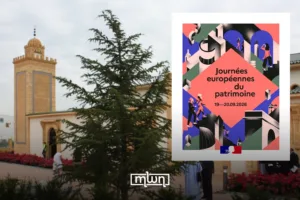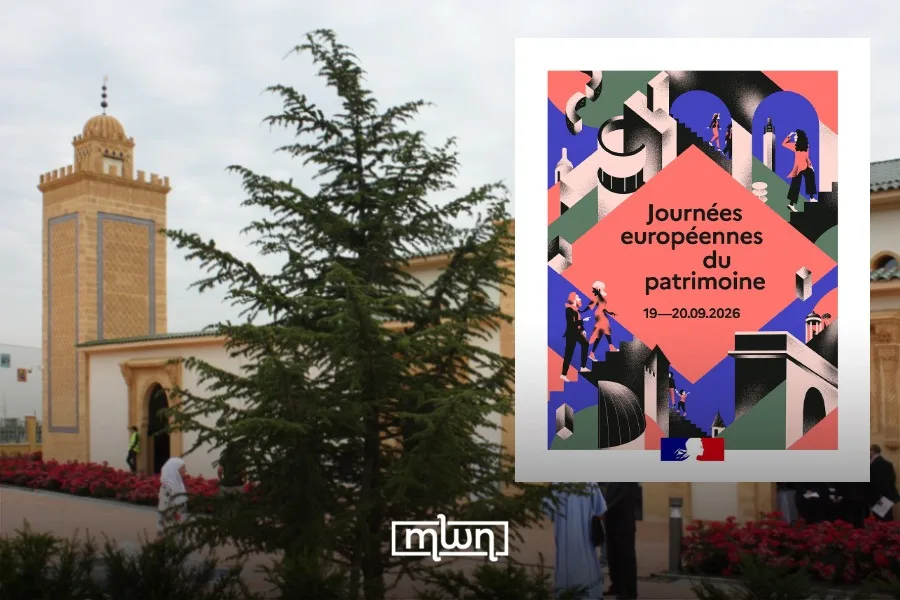
Rabat — Moroccan craftsmanship will take center stage in Saint-Étienne, France, when the Mohammed VI Grand Mosque opens its doors for the European Heritage Days on September 19 and 20.
Free guided tours will introduce visitors to the mosque’s Hispano-Moorish architecture and the Moroccan artisanship behind its interiors. The official program highlights zellige, carved plaster, cedar wood, and traditional brasswork as defining features of the building.
This year’s themes are “Photographic Heritage,” in celebration of the Bicentennial of Photography, and “Heritage in Peril: Revive, Resist, Reimagine.”.
The themes ask questions about how to prioritize and protect cultural heritage.
Cedar, zellige and carved plaster
Inside the mosque, Moroccan cedar is as important to the visual identity as the better-known zellige covering its walls.
The official event description draws particular attention to precious cedar from Morocco’s Middle Atlas, which was carefully carved and painted before being incorporated into the mosque’s interiors. The wood appears alongside sculpted plaster, floral and geometric zellige compositions, and traditional brass chandeliers.
Cedar has long held a prominent place in Moroccan architecture. Morocco’s Ministry of Endowments and Islamic Affairs notes that Middle Atlas cedar is traditionally used for architectural elements including doors and ceilings, where it is frequently carved or painted.
The scale of the craftsmanship in Saint-Étienne is substantial. According to the ministry, Moroccan artisans recruited for the mosque sculpted around 2,400 square meters of cedar and plaster and installed more than 1,800 square meters of zellige.
Construction began in 2004, and the mosque was inaugurated in 2012 after nearly eight years of work. The ministry describes the building as an example of Moroccan architectural craftsmanship abroad, combining a sand-colored minaret with carved pillars, zellige-covered walls, and ceilings executed according to Arab-Andalusian traditions.
More than a monument
This September, that experience moves beyond the architecture itself, as the European Heritage Days invite visitors to step inside and discover the craftsmanship behind the historic sites up close.
Through guided tours and direct encounters with heritage professionals to learn about their knowledge and expertise.
The event offers a glimpse into the traditions that continue to shape Morocco’s cultural identity and introduces them to a whole new audience in the heart of France.