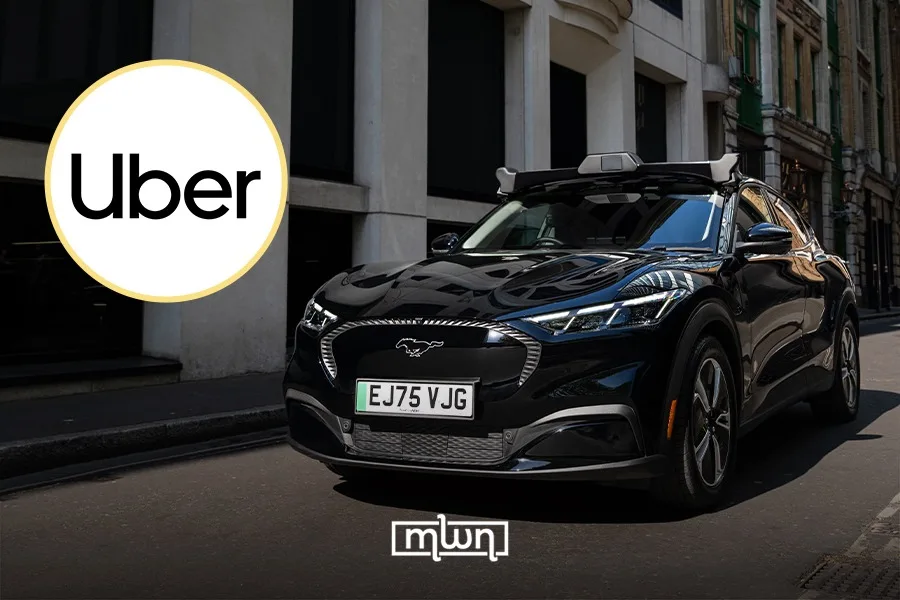
Fez — Your next Uber ride through London could arrive without its driver actually doing much driving.
Uber and British autonomous-driving company Wayve launched supervised self-driving rides in London on September 3, introducing the first autonomous trips available to the British public through a ride-hailing platform.
Passengers requesting UberX, Uber Electric, or Uber Comfort can now be matched with an all-electric Ford Mustang Mach-E equipped with Wayve’s autonomous-driving technology.
And there is no robotaxi surcharge.
Uber says riders matched with one of the cars pay the normal upfront fare and can choose to switch to a conventional vehicle before it arrives.
There is, however, an important detail: London has not gone fully driverless yet.
A trained, Transport for London-licensed private hire driver remains behind the wheel during every autonomous journey and can intervene when necessary.
So, who is actually driving?
Most of the driving is handled by the Wayve AI Driver.
The Mustang Mach-E vehicles use cameras, radar, and other surrounding sensors to interpret London’s roads.
Wayve describes its approach as an AI system that learns from driving experience rather than depending entirely on traditional high-definition maps and manually programmed rules.
That puts the technology into a particularly chaotic testing ground.
London means buses squeezing through narrow streets, cyclists appearing beside traffic, pedestrians crossing unexpectedly, endless roadworks, and black cabs performing maneuvers that can challenge even experienced drivers.
Transport for London already licensed a number of Wayve’s Mustang Mach-E vehicles for private hire use in August after inspections covering its licensing and safety requirements.
Passengers can travel across London using the service, although airports are excluded at launch.
Interactive screens inside the cars allow riders to start their journey and view the vehicle’s planned path. Uber says the interface supports 64 languages.
More than 140,000 Londoners have already opted in through Uber’s ride preferences to improve their chances of being matched with an autonomous vehicle.
Londoners are curious, but not completely convinced
Robotaxis may look futuristic, but public enthusiasm remains mixed.
A YouGov survey commissioned by the London Assembly Transport Committee found that 42% of Londoners opposed autonomous passenger vehicles, while 29% supported them.
Only 29% said they would likely use one.
The biggest concern was how autonomous vehicles would respond to unexpected situations, followed by road safety and possible technical failures.
Britain is nevertheless moving steadily toward wider autonomous transport.
The government opened applications this year for companies seeking to operate self-driving taxi, bus, and private-hire pilot services under stricter safety requirements.
For now, London’s self-driving Uber still comes with a human watching from the driver’s seat.